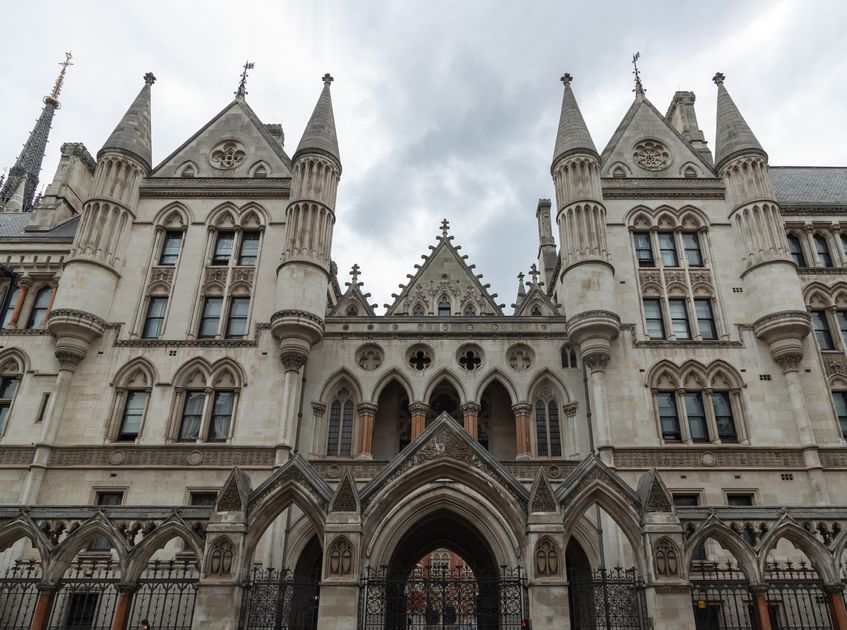
The UK High Court has granted Getty Images permission to appeal certain aspects of its copyright infringement claim against generative AI provider Stability AI. This decision follows a significant ruling on November 4, 2025, where the court addressed the scope of Getty’s claims, particularly in regards to secondary copyright infringement, after Getty narrowed its case by dropping claims related to primary copyright and database rights.
In the legal framework, secondary infringement targets the downstream dealings with goods that infringe copyright. Sections 22 and 23 of the Copyright, Designs and Patents Act 1988 (CDPA) define acts of secondary infringement, particularly emphasizing that any article imported into the UK that is known or believed to be an infringing copy is subject to these provisions. Within this context, Getty argued that its generative AI model, Stable Diffusion, constituted an “infringing copy” because it had been downloaded into the UK and its creation would have infringed upon Getty’s copyrights. However, Getty did not claim that Stable Diffusion itself was a copy of its copyrighted works, choosing instead to interpret Section 27(3) of the CDPA in a manner that did not require a direct copy.
Ultimately, the High Court rejected Getty’s interpretation, ruling that an “infringing copy” must indeed be a direct copy. The court found that Stable Diffusion did not contain or store copies of Getty’s copyrighted materials, thus, it could not be classified as an infringing copy, leading to Getty’s secondary infringement claim being dismissed. The court asserted that the mere use of Getty’s works in the model’s development did not alter this conclusion.
Following this ruling, Getty sought permission to appeal, particularly challenging the court’s interpretation of “infringing copy.” The High Court, recognizing the potential impact of this legal interpretation, granted Getty permission to appeal, noting that the case presents a novel and important legal question that could have far-reaching implications for AI models and intangible articles like software.
Despite this development, Getty appears to have refrained from challenging the court’s conclusion that Stable Diffusion did not contain copies of its works. Any such argument would be complicated by Getty’s earlier stance, as it did not assert that Stable Diffusion included memories of its copyrighted material. This limitation raises questions about the viability of further challenges concerning the nature of the model itself.
The significance of this case extends beyond Getty and Stability AI. The legal definitions surrounding copyright in the context of generative AI models are paramount, especially as most such models are trained and developed outside the UK before entering the market. As the appeal process unfolds, the Court of Appeal will have the opportunity to clarify whether its ruling will align with Getty’s interpretation of what qualifies as an “infringing copy.” Should the court lean towards Getty’s understanding, this may also lead to broader implications regarding primary copyright infringement in similar contexts.
With Getty reportedly spending around £7 million pursuing this claim, the stakes are notably high. The narrow scope of the appeal will not diminish the potential ramifications for the future of copyright law as it pertains to artificial intelligence. As legal frameworks struggle to keep pace with rapidly evolving technology, the outcome of this appeal could serve as a crucial precedent for the interplay between copyright and generative AI.
As developments in this high-profile case unfold, observers will be keenly watching the Court of Appeal’s interpretations and decisions, as they promise to influence the legal landscape for both AI models and copyright law in the UK.
See also Aldar and Visa Launch AI-Driven Voice Payments for Real Estate Services in UAE
 OpenAI’s Sam Altman Declares 0% Excitement for IPO Amid $1 Trillion Valuation Talks
 Invest in AI Giants: Top 3 Stocks—Alphabet, Amazon, TSMC—Set for 2026 Gains
 AMD Stock Soars 6.15% as Analysts Hike Price Targets Amid AI Market Surge