






















































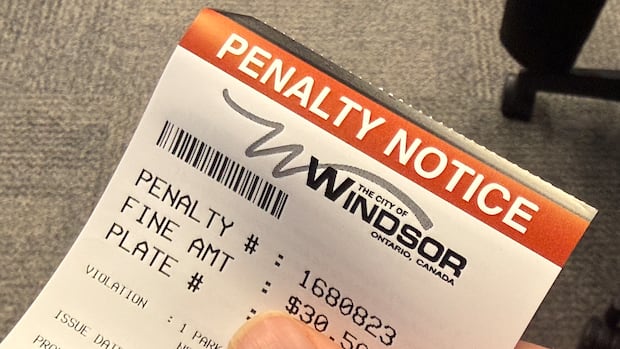
Residents of Windsor will soon find their routine inquiries about speeding tickets and other provincial offences answered by a voice-enabled AI chatbot, following the city’s approval of a six-month pilot project set to launch in the new year. The initiative, which pertains to the Provincial Offences Administration (POA) office, aims to enhance service accessibility by providing 24/7 responses to common questions.
City administration describes the project as a cost-saving measure, designed to reduce the call volume for front-line staff, thereby allowing them to focus on “higher-value” activities. This move aligns with a broader trend among municipal governments across Canada, which are increasingly adopting AI tools to streamline operations and cut costs. However, concerns have been raised by unions regarding potential job losses and data security risks associated with such technologies.
According to a report from city administration, there will be no job losses during the pilot phase. The project will undergo evaluation upon completion to assess potential savings and improvements, which could lead to “new staffing models and structures.” The chatbot is projected to handle calls that currently occupy about 30 percent of the clerks’ tasks, equating to approximately 1.4 full-time equivalent (FTE) positions. By implementing the chatbot, the city anticipates freeing up 0.7 FTE positions at an annual cost of $57,600, which officials expect to recoup within ten months through enhanced staff productivity.
In response to inquiries about the program, a city spokesperson stated, “The pilot is focused on enhancing service efficiency and exploring innovative ways to support staff in delivering high-quality municipal services.” The spokesperson emphasized that the city continuously evaluates operational needs and staffing levels to ensure resources are aligned with service priorities while maintaining a supportive workplace for all employees.
The initiative has drawn criticism from CUPE 543, which represents city workers in various administrative roles, excluding the clerks at the POA office. Administrator Angela Sbrocca expressed concerns about the potential use of chatbots as replacements for existing services, stating, “I haven’t seen an example where it’s helping support jobs. And if this is the case, we want a commitment from the city that the AI is not going to be used for job loss.”
City council has already voted to explore alternative delivery options for 311 services, including outsourcing, with discussions expected in upcoming meetings. As municipalities like Windsor experiment with AI, they are joined by other cities such as Kitchener and Kelowna, which are also integrating AI tools into their systems.
Wendy Gnenz, municipal lead for MNP, a consulting firm serving municipal organizations across Canada, noted that a study conducted in March found that 23 percent of 282 municipal organizations are actively using AI. She observed that cities of all sizes are seeking innovative ways to leverage AI to “do more with fewer resources.” Gnenz highlighted the advancement in AI technologies, noting that municipalities are increasingly integrating solutions beyond traditional AI, spurred by the rise of generative AI tools like Microsoft Copilot and ChatGPT.
While some cities have successfully implemented AI solutions, challenges remain. For instance, Saskatoon has been recognized for its use of an AI-powered predictive maintenance tool for public transit, which detects potential issues in buses before they lead to breakdowns. Conversely, a recent audit of a chatbot used by the Canada Revenue Agency revealed that it provided accurate answers to basic tax-related questions only one-third of the time.
As Windsor considers various AI initiatives—including chatbots for public services, Microsoft Copilot for workflow support, and data-driven tools for operational efficiencies—a city spokesperson indicated that these projects will operate under Ontario’s government directives and the existing Acceptable Use Policy and Information Security Policy until an AI policy is approved. City council is set to vote on a draft AI policy in the new year.
For Sbrocca and the union, the fear of job displacement looms large, reflecting concerns shared by residents. “We have a lot of concerned citizens,” she noted, adding that some are directly contacting 311 and raising questions about the potential contracting out of jobs. As municipal governments continue to explore AI’s capabilities, the balance between efficiency and employment security remains a critical conversation.
See also Texas Legislators Defend AI Regulation Amid Trump’s Threat to Federal Funding
 OpenAI Updates AI Guidelines for Users Under 18, Enhancing Safety and Transparency
 Egypt Advances Global AI Framework with UN Resolution for Telecom Development
 New York Enacts RAISE Act for AI Safety, Mandating Transparency and Reporting Standards















