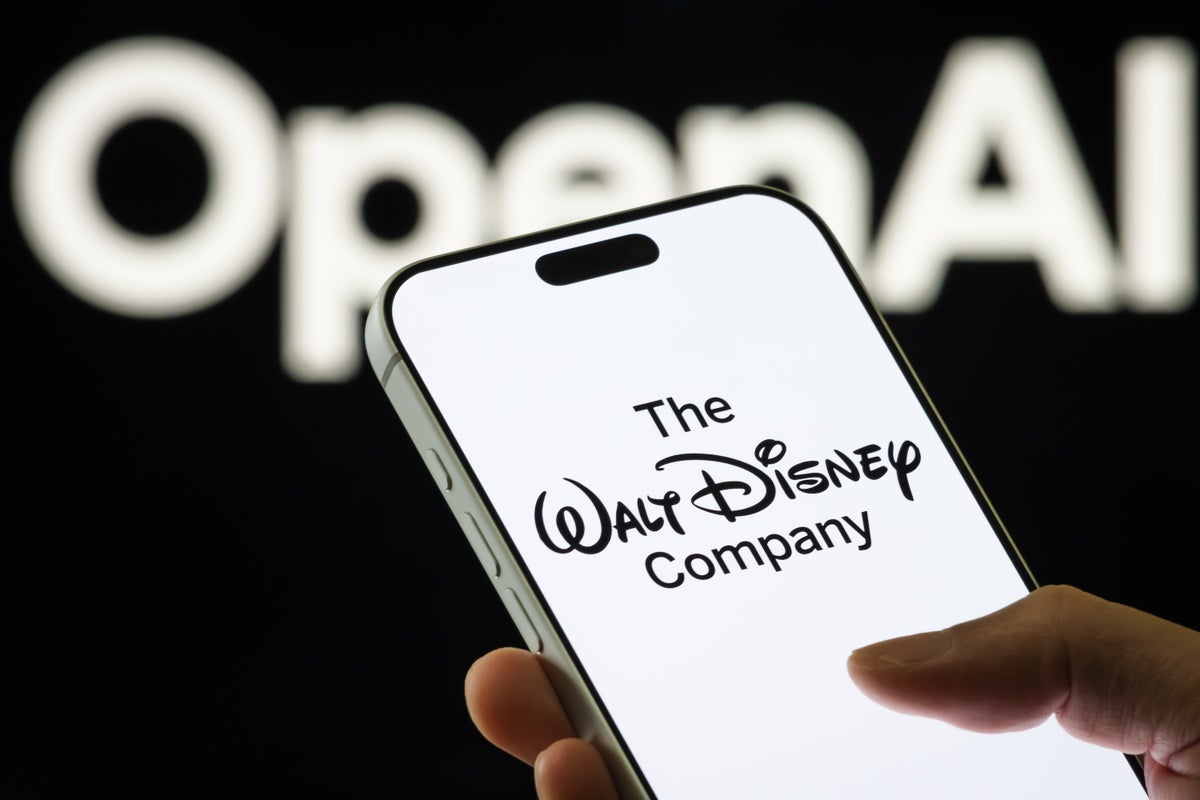
Disney and OpenAI have announced a groundbreaking partnership that aims to leverage artificial intelligence in content creation, marking a significant step in the evolution of video entertainment. Starting in early 2026, OpenAI’s video generator, Sora, will enable users to create videos featuring characters from Disney’s extensive universe, including franchises such as Marvel, Pixar, and Star Wars. This initiative comes as part of a larger agreement in which Disney will invest $1 billion in OpenAI.
The collaboration has sparked interest in how generative AI can extend storytelling capabilities on platforms like Disney+. According to Disney CEO Robert Iger, the aim is to “thoughtfully and responsibly extend the reach of our storytelling through generative AI.” This would allow users not only to watch but also to create content directly within the Disney+ environment, potentially enabling customized scenarios involving beloved characters, although initial clips may only last around 20 seconds.
This new venture echoes the early days of cinema, where skepticism surrounded groundbreaking technologies. Consider the first surviving motion picture, Roundhay Garden Scene, from 1888, which consists of merely two seconds of film showing four people walking. Critics of that era dismissed early cinema as a “foolish curiosity,” much like some contemporary voices question the validity and utility of AI-generated videos. Yet, just as cinema evolved, so too does the landscape of visual storytelling.
The technological foundation for this initiative lies within the complex challenges of image generation. Current AI systems, including OpenAI’s, employ a method called diffusion, which starts with noise that is gradually refined into a coherent image. In the realm of video, this task becomes exponentially more complicated. Each second of high-definition video comprises millions of pixels, necessitating a coordinated approach to ensure fluidity and consistency across frames. OpenAI researcher Bill Peebles described the difficulty of working with video data, noting, “It’s a lot of pixels in these videos.”
To tackle these challenges, OpenAI compresses video data into a simplified format, treating it like a loaf of bread that is sliced into frames and then divided into cubes. This innovative approach allows for coordinated generation across frames, akin to how language models like ChatGPT relate words in a sentence. However, the leap from short clips to longer videos poses significant hurdles, as inconsistencies can accumulate with each additional frame. The prospect of true on-demand AI-generated television would require not only longer clips but also seamless scene transitions, which current technology struggles to deliver.
Despite these hurdles, researchers are exploring more efficient methodologies. Tianwei Yin, a research scientist at AI image editing startup Reve, suggests breaking the video generation process into stages, generating one frame at a time. This could significantly reduce computational demands, making longer videos more feasible. Yin predicts that systems may soon be capable of generating videos lasting up to five minutes, with the potential for feature-length films not far behind.
Industry leaders share this optimism. In a recent interview, Sundar Pichai, CEO of Google, foresees high school students creating AI-generated feature films in the near future. Meanwhile, Cristóbal Valenzuela, CEO of AI-video generation company Runway, believes that achieving consistent characters and narratives for longer formats is on the horizon.
The transformation from short user-generated clips to extensive films will inevitably involve technical innovations and discussions around the compensation of creatives who contribute to these AI models. Historical precedents suggest that the costs associated with such technologies often decrease over time. For instance, the cost of bandwidth has plummeted from approximately $1,200 per megabit per second in 1998 to a mere $0.05 per Mbps today, facilitating the streaming services we rely on.
The cultural acceptance of new mediums presents an equally complex set of challenges. Historical figures like poet Charles Baudelaire criticized photography for detracting from artistic creativity, a sentiment echoed throughout the evolution of visual arts. Today’s skepticism may reflect similar fears regarding AI’s role in creative processes. However, as technological advancements continue to unfold, they will likely enable a new generation of creators to explore possibilities that remain beyond our current imagination.
See also TeleAI Launches Pioneering ‘Information Capacity’ Metric to Transform AI Model Efficiency Evaluation
 Mistral AI Launches OCR 3, Reducing Costs to $1 per 1,000 Pages with Enhanced Accuracy
 Ciena Stock Surges 147% in 2025, Poised for 111% Growth in 2026 Amid AI Data Center Boom
 DeepSnitch AI Surges: Potential 100x Gains as Blockchain Meets AI in 2026
 Mistral AI Launches OCR 3, Achieving 74% Accuracy Boost Over Previous Version