















































As 2026 unfolds, artificial intelligence (AI) has solidified its role as a fundamental component of corporate operations. Companies across various sectors are no longer conducting isolated experiments; instead, they are embedding AI into essential processes, spurred by competitive demands and measurable returns. Insights from recent discussions among reporters at MSN reveal that while AI adoption is accelerating, the emphasis is on practical applications rather than on extravagant pilot projects.
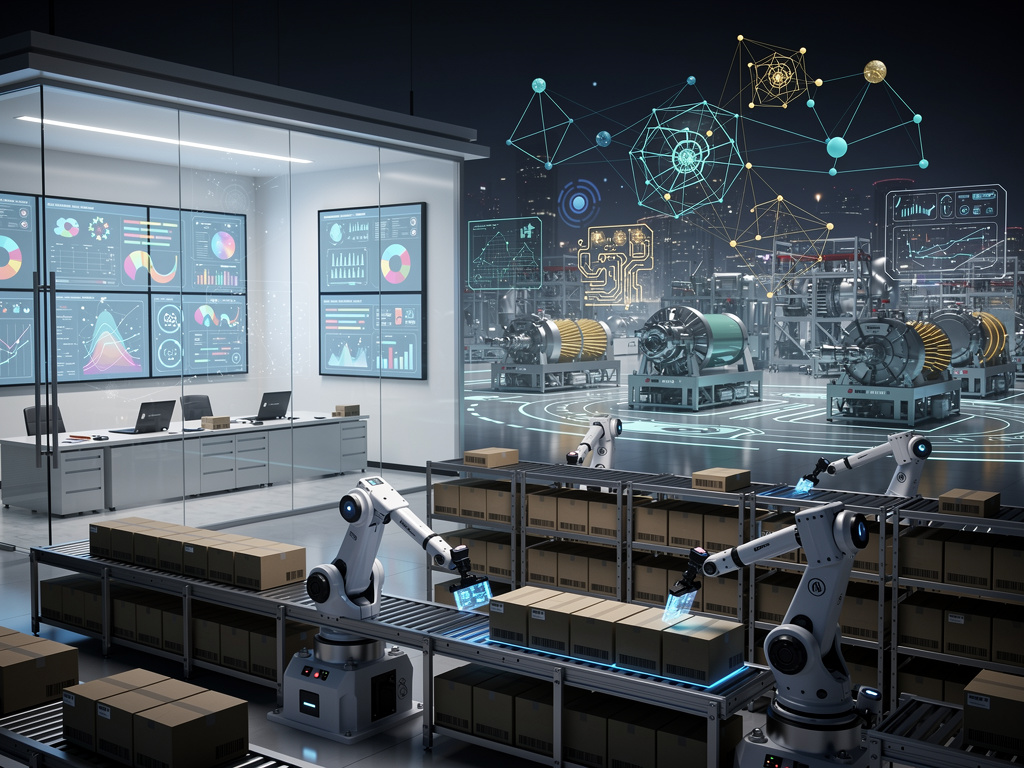
Retailers and manufacturers are harnessing AI for inventory management and predictive maintenance, transforming raw data into actionable insights. One commentator pointed out that, despite the attention generative AI tools receive, the real value lies in backend applications that enhance supply chain efficiency. This trend aligns with findings from recent industry reports indicating that AI is optimizing operations while maintaining human oversight.
Moreover, emerging discussions on X from industry analysts highlight a shift towards “agentic AI.” This refers to systems that not only analyze data but can also execute tasks autonomously. Enterprises are increasingly developing AI agents that manage end-to-end workflows, from customer service to financial forecasting, marking a progressive step in technological integration.
Moving from Pilots to Scalable Deployments
This evolution towards agentic AI is reflected in predictions from major consulting firms. PwC’s 2026 AI Business Predictions suggest a transition from fragmented trials to centralized programs, with companies establishing dedicated AI studios to overhaul processes. Early evidence indicates that agentic workflows yield significant returns on investment through efficiency improvements.
In IBM’s recent report, experts forecast a surge in AI-driven security applications and quantum computing integrations, enabling businesses to address complex challenges such as real-time threat detection in cybersecurity. This capability is becoming critical as the digital landscape evolves with increasing risks. Posts from figures like Rohan Paul on X emphasize the importance of central platforms that unify multiple AI agents, further reducing operational silos and enhancing scalability.
According to the McKinsey Global Survey on AI, while 88% of enterprises utilize AI in at least one function, many remain in pilot phases due to verification issues. However, as firms enter 2026, there is a strong push toward verifiable and scalable implementations, with investments directed towards robust data pipelines that support agentic systems.
Microsoft’s trends report identifies AI as a “true partner” for enhancing teamwork and operational efficiency. Companies are increasingly deploying collaborative tools powered by AI, such as automated research assistants that simulate real-world scenarios, aiding in decision-making.
Despite optimism, McKinsey’s findings indicate that reliable data remains a significant barrier to enterprise-scale AI adoption. Posts on X from the Perceptron Network reiterate this concern, while also suggesting that 2026 may bridge existing data gaps through custom models and voice interfaces.
As AI becomes more integrated into business functions, regulatory considerations are also rising to prominence. The Stanford AI Index’s 2025 report highlights increasing governmental scrutiny, leading to stricter guidelines on AI ethics and transparency. Companies are adjusting by embedding responsible innovation into their strategies, as PwC anticipates a shift toward ethical AI to mitigate associated risks.
VentureBeat’s analysis on AI research trends emphasizes the emergence of self-correcting agents capable of learning from their interactions, a development particularly relevant in sensitive sectors such as healthcare and finance. This evolution is vital for fostering trust as AI systems handle increasingly sensitive data.
Investment strategies for 2026 indicate a potential reckoning in AI funding. Axios reports that leaders from organizations including OpenAI foresee a possible burst of existing AI bubbles, which could pivot investments towards high-value applications with proven returns. With surveys revealing slow ROI in previous years, companies are now prioritizing the most impactful AI solutions.
As noted by TechCrunch, while investors warn of potential labor market disruptions, emerging patterns suggest that AI may enhance rather than replace jobs. Enterprises are likely to allocate budgets for training and integration, promoting a hybrid workforce that leverages human creativity alongside AI capabilities.
Across various sectors, AI’s impact is intensifying. In retail, AI tools optimize pricing and personalization by analyzing consumer behavior in real-time. Meanwhile, manufacturers are using predictive analytics to reduce downtime, reinforcing IBM’s predictions on efficiency gains. Furthermore, businesses in logistics are applying AI for route optimization, significantly reducing costs and emissions—an essential factor for maintaining competitive advantages in global markets.
To remain competitive, companies are setting up innovation hubs as advised by IMD, which emphasizes the importance of assessing AI readiness and fostering cross-functional teams. This collaborative approach is crucial for driving successful adoption. Predictions indicate that AI will continue to reshape workplaces through automation in ways that enhance rather than detract from human creativity.
Despite these advancements, challenges remain in data quality and talent management. McKinsey’s survey notes that fewer than one in three enterprises progress beyond pilot phases due to data issues. Companies are investing in upskilling their workforce, as highlighted by PwC, to cultivate internal expertise essential for effectively managing AI infrastructure.
Looking to the future, the integration of AI with emerging technologies like quantum computing promises groundbreaking advancements in diverse fields, from drug discovery to climate modeling. As enterprises position themselves to capitalize on these developments, the path to sustained innovation becomes clearer. The forward momentum in AI integration will undoubtedly deepen its transformative role in business, driven by a blend of innovative practices and practical applications.
See also Agentic AI Revolutionizes Business: 42% of CIOs Adopt New Strategies by 2025
 Rideflux Secures $13.9M Pre-IPO Funding to Propel Autonomous Truck Commercialization
 Enterprise AI Licenses Shift to Flat-Fee Models, Paving Way for Predictable Pricing in 2026
 India’s NITI Aayog Launches LIPI to Break Language Barriers for 90% of Innovators
 Write3BooksIn24Hours Launches TrilogyForge to Create Novels in Under 24 Hours