

















































In a significant shift for enterprise technology, a new concept dubbed “AI factories” is emerging to revolutionize how businesses leverage artificial intelligence (AI) at scale. Unlike traditional data centers, these sophisticated infrastructures serve as comprehensive ecosystems aimed at continuous production of AI insights and models. According to insights from TechRadar, AI factories represent a crucial architectural framework for operationalizing AI within enterprises, integrating hardware, software, and processes to enhance efficiency and security.
At the heart of the AI factory lies the need to meet escalating demands for computational power and operational efficiency. Companies are increasingly moving beyond experimental AI projects to full-scale production, as evidenced by collaborations such as the one between Lenovo and NVIDIA. This partnership, highlighted in a BusinessWire announcement, emphasizes the development of gigawatt-scale AI factories designed to accelerate enterprise AI through high-performance computing and advanced networking solutions.
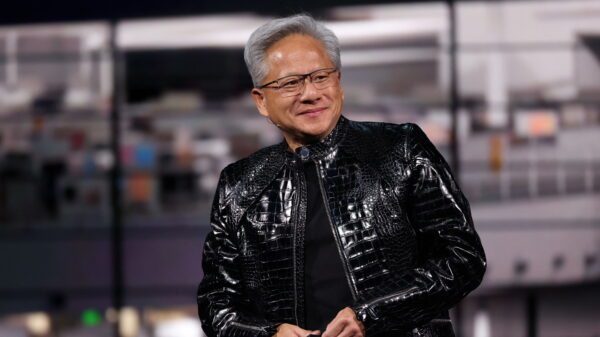
The term “AI factory” gained traction through the vision articulated by NVIDIA CEO Jensen Huang, who likened these facilities to “factories for intelligence.” This metaphor underscores the industrial-level manufacturing of AI outputs, including tokens and models. Industry observers have noted that vast investments—amounting to trillions—are pouring into GPU data centers, marking a transformative approach to AI infrastructure that is increasingly viewed as integrated production lines rather than isolated servers.
Building the Backbone of AI Production
A closer examination reveals that AI factories consist of several key components: energy sources, specialized chips, robust infrastructure, foundational models, and application layers. According to discussions inspired by Huang’s talks, these elements create a five-layer framework essential for modern AI operations. Energy serves as the foundation, powering the immense computational requirements, followed by advanced chips like NVIDIA’s Blackwell series, which facilitate unprecedented processing capabilities.
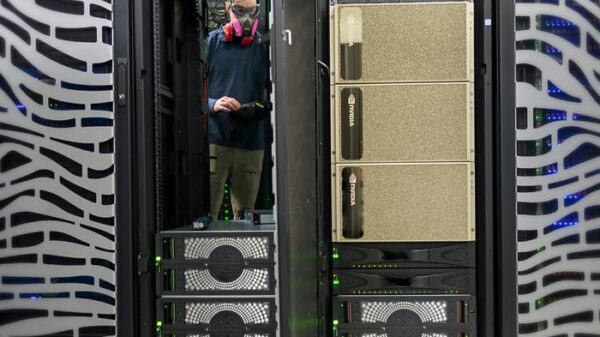
Infrastructure includes networking and cooling systems, vital for maintaining performance amid high-density environments. Innovations such as liquid cooling technologies, mentioned in recent discussions about AI data centers, highlight how companies like Cisco and Arista are evolving to address the heat generated by dense GPU clusters. Models and applications form the upper layers of this stack, allowing businesses to tailor AI solutions for specific needs, ranging from predictive analytics to automated decision-making.
The rise of AI factories can be attributed to the limitations of traditional cloud computing, which often falls short in scale and customization for enterprise AI. As pointed out in an article from Data Center Frontier, NVIDIA is leading the charge with purpose-built systems for manufacturing intelligence, marking a pivotal moment in the next industrial revolution. This evolution enables organizations to control their AI capabilities, lessening dependence on public clouds while enhancing data sovereignty.
Major tech players are racing to adopt AI factories. Amazon Web Services (AWS) recently unveiled dedicated AI factory infrastructure within customer data centers, as shared in updates from X. Customers supply space and power, while AWS oversees deployment with Trainium3 chips and NVIDIA GPUs. The inaugural deployment in Saudi Arabia’s HUMAIN project will utilize up to 150,000 AI chips, showcasing the immense scale of these operations.
In parallel, Microsoft is advancing its AI factory initiatives through partnerships, including one with NVIDIA. A Microsoft News feature on AI trends for 2026 emphasizes how these factories enhance teamwork, security, and operational efficiency. Enterprises are not merely adopting these solutions; they are embedding them into their core functions, evolving AI from a mere tool into a continuous production asset.
As AI factories expand, vertical integration is also accelerating. Companies such as OpenAI, Meta, and xAI are investing in their own infrastructures, creating sprawling “campuses” dedicated to AI production. This trend reflects a broader movement toward controlling the entire AI value chain, from chip design to application deployment.
Technological Innovations Driving Efficiency
Innovation within AI factories is primarily focused on boosting efficiency and sustainability. The inclusion of neuromorphic hardware is anticipated to significantly reduce energy consumption while enhancing processing capabilities. Another breakthrough, termed agentic AI, allows for increased autonomy within these factories, enabling the automation of complex tasks with minimal human oversight.
Power management and cooling remain critical challenges. Companies like Schneider Electric and Vertiv are providing solutions to address the substantial power draw associated with AI operations. NVIDIA’s NVLink and liquid cooling technologies ensure that these factories can operate continuously, delivering AI outputs around the clock. Security is another crucial consideration, with the integration of advanced encryption and access controls necessary to safeguard sensitive enterprise data and comply with regulatory standards.
The rise of AI factories is also reshaping global economies. Trillions of dollars are being invested in these initiatives, igniting discussions about the economic ramifications of sovereign and enterprise spending. In regions like Saudi Arabia, such projects are integral to broader digital transformation strategies, while initiatives like the HUMAIN project are designed to build domestic AI capabilities. In the U.S., partnerships like Lenovo and NVIDIA are poised to enhance local AI advancements, positioning these companies as leaders in the global market.
However, challenges persist. The vast physical footprint required for AI factories, which entails considerable land, power, and water resources, raises environmental concerns. As discussions unfold on platforms like X, the intricacies of the AI factory model are gaining attention, illustrating the substantial investment needed in the data center ecosystem.
As we look ahead, 2026 is expected to bring further breakthroughs. Emerging technologies, including quantum computing, are set to converge with AI, potentially transforming factory outputs. Despite the promise of AI factories, significant hurdles remain, particularly in navigating supply chain complexities and addressing talent shortages in this rapidly evolving field. Businesses that strategically embrace this new paradigm will position themselves to thrive in what is increasingly being termed the intelligence economy.
See also South Africa Leads AI Adoption in Africa with 21% Adoption Rate by 2025, Followed by Kenya
 Google Launches AI Mode Checkout with Universal Commerce Protocol and Business Agent
 McKinsey Reveals 40% of Its 65,000 Workforce are AI Agents, Driving Industry Transformation
 Australia’s AI Funding Reaches $839M in 2025, Concentrated in Four Major Companies