















































NEW YORK: The holiday season has long been a battleground for retailers seeking to capture shoppers’ attention, whether in New York, London, or elsewhere. This year, however, companies are not just chasing human eyes—they are targeting artificial intelligence to reach consumers.
Globally, online sales during festive periods are expected to exceed hundreds of billions of dollars, with traditional website visits and search engine ads still dominating. Yet generative AI tools, such as OpenAI’s ChatGPT and Google’s Gemini, are increasingly shaping how people discover products and make purchasing decisions.
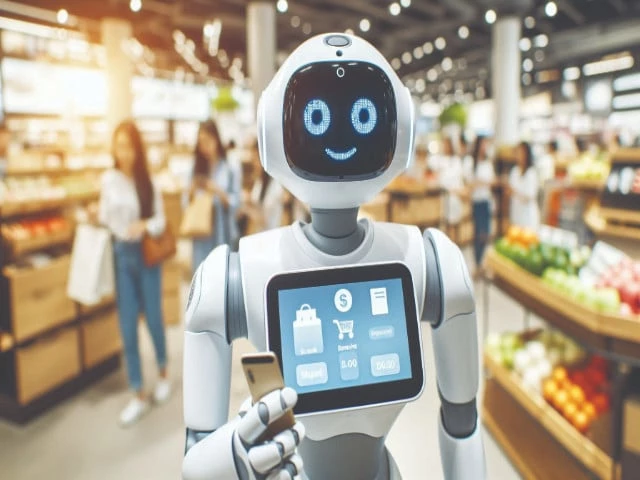
AI chatbots now provide product descriptions, compare prices, and even allow purchases through large-language models. Retailers from the US to Europe are adjusting strategies to ensure their offerings appear in AI-generated recommendations, targeting tech-savvy consumers in cities such as Dubai, Singapore, and London.
Brian Stempeck, chief executive of Evertune.ai, which helps retailers optimise content for AI, said brands are dramatically increasing content production. “We’ve seen brands that previously were putting out three or four new blog posts or articles a month are now trying to do 100 or 200,” he explained.
Companies are creating AI-specific websites designed solely for AI scrapers, automated tools that extract product information and feed it to chatbots. These platforms can suggest everything from holiday apparel to electronics, helping brands appear in AI-driven shopping results.
Early data suggest AI’s influence is growing. In November, AI-driven traffic to retail sites rose 830% year-over-year, according to Adobe Analytics, and these visitors were 30% more likely to purchase than those coming from conventional searches.
Despite this surge, AI referrals remain a small portion of overall traffic. ChatGPT links to major e-commerce platforms such as Amazon, Walmart, and eBay accounted for less than 1% of visits in October. Yet the high intent of these shoppers has encouraged retailers to invest in AI discoverability.
Brands from Brooklinen in the US to tech companies across Europe and Asia are crafting influencer campaigns and submitting products for awards to increase visibility. Voice and AI assistants are also reshaping commerce, with Amazon’s Alexa and Google Shopping AI tools guiding consumers to products based on recommendations.
Amazon CEO Andy Jassy said users interacting with the company’s Rufus AI agent are 60% more likely to complete purchases.
Meanwhile, global retailers including Walmart and Target have announced apps enabling direct chatbot shopping, signaling that AI is becoming a key channel in holiday retail.
For retailers, the season brings additional challenges. US President Donald Trump’s shifting tariffs on goods from China, a major supplier for many companies, have forced small firms like Loftie to choose between steep levies or sourcing from costlier suppliers abroad.
“It’s been very difficult to prepare. We have sold down to extremely low stock levels – we probably have about 10% of the inventory we need,” said Matt Hassett, founder of New York-based sleep wellness brand Loftie. Import tariffs disrupted supply chains for items such as sunrise lamps and phone-free alarm clocks.
November and December typically account for a third of US retailers’ annual profits, adding pressure. Brooklyn-based Lo & Sons, which sells travel bags online, scouted eight factories across India and Cambodia before returning to its long-time Chinese supplier.
“On top of costing us a ton in tariff payments, the uncertainty prevented us from placing purchase orders,” CEO Derek Lo said. “Now we’re sitting on lower-than-ideal inventory.” Big-box retailers such as Walmart and Costco can absorb supply jitters more easily than smaller firms.
“For the first time since the pandemic, average profit has dipped into negative territory, disproportionately impacting smaller companies that lack the scale to absorb these pressures,” said James Gellert, executive chairman of RapidRatings. Some firms have placed large orders to beat tariffs, risking unsold inventory amid fragile consumer confidence.
More than a dozen small US retailers told Reuters they faced significant cost increases, leading some to cut jobs or trim offerings. Haus of Brilliance, a New York jewellery brand, shifted production to Thailand and the US to offset 50% tariffs on India, hoping inventory will arrive in time for the holidays.
Still, shortages are inevitable. Loftie’s Hassett expects a shipment for Black Friday but has missed potential sales. “We could’ve made 50% more sales if we had enough inventory,” he said, highlighting how tariffs and global supply disruptions continue to strain smaller holiday retailers.
See also Appficiency Invests to Accelerate AI-Driven ERP Implementations with AskCipher
 Enterprise Architecture Shifts to Strategic Enabler in AI-Driven Business Models
 Michael Burry Bets Over $1B Against Nvidia and Palantir Amid AI Valuation Concerns
 Dell Technologies Expands AI Factory with Automated Solutions for Enhanced Enterprise Performance
 Dr. Bhargav Patel Sues Sully.AI for Termination After FDA Compliance Concerns