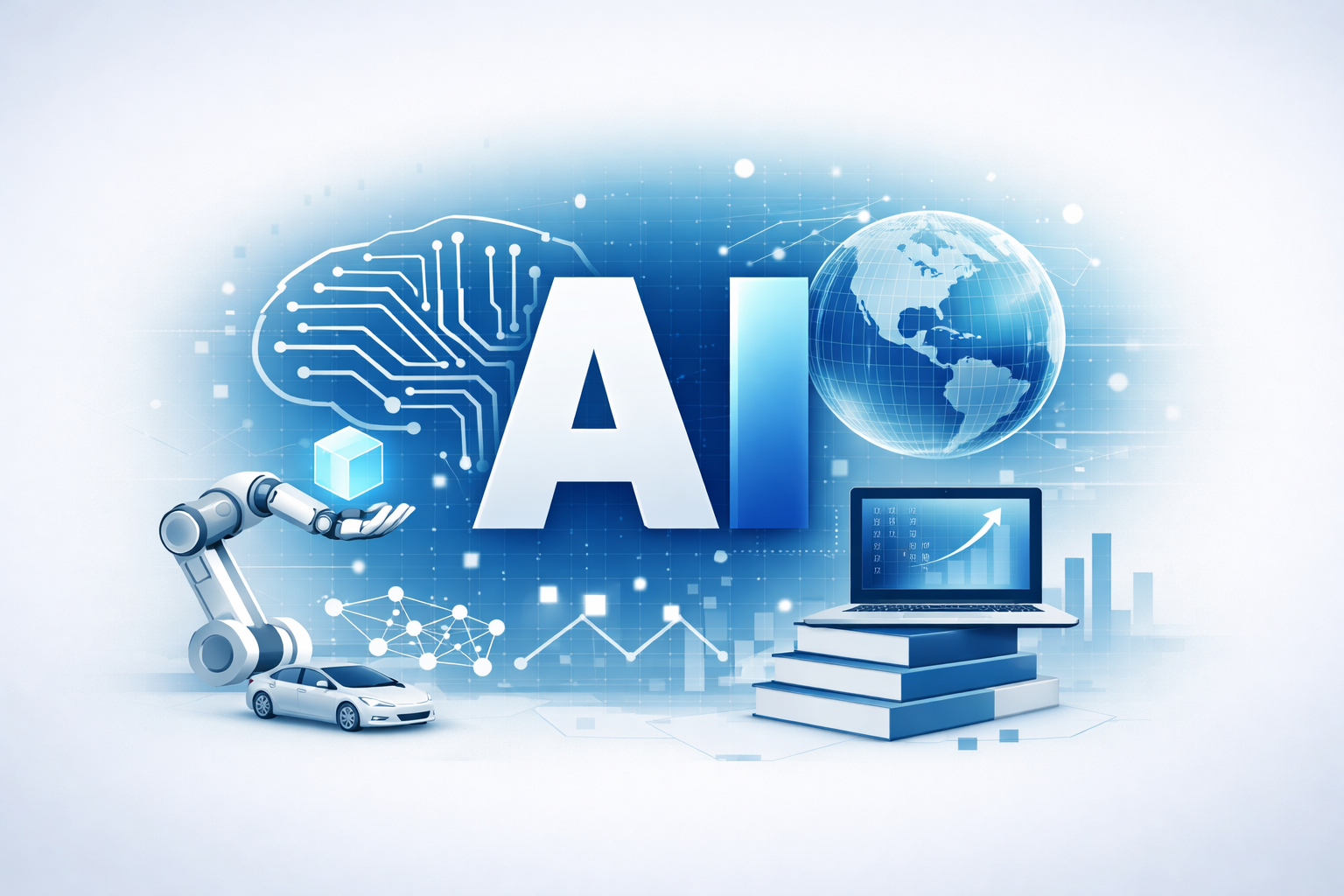
As artificial intelligence transforms sectors ranging from healthcare to autonomous systems, the demand for premier AI education in the United States is escalating in 2026. Carnegie Mellon University and the Massachusetts Institute of Technology are leading this surge, consistently sharing the top position in various rankings for their programs that integrate innovative research, hands-on projects, and strong industry connections.
The latest rankings from U.S. News & World Report, QS World University Rankings by Subject for Data Science and Artificial Intelligence, and specialized evaluations reveal a stable elite group of institutions. These schools excel due to their dedicated AI degrees, interdisciplinary research labs, faculty expertise, and impressive placement rates into top tech companies and research organizations.
Carnegie Mellon University (Pittsburgh, Pa.) frequently ranks as the top institution for AI. Its School of Computer Science houses the Robotics Institute and offers specialized AI programs, including a Master of Science in Artificial Intelligence and Innovation. With over 120 AI-focused faculty members and pioneering research in machine learning, computer vision, and robotics, CMU graduates often secure high starting salaries and find employment at leading firms such as Google, OpenAI, and Meta. The university’s location near tech hubs and focus on practical applications make it a favored choice for students.
Similarly, the Massachusetts Institute of Technology (Cambridge, Mass.) often ties for the top spot, thanks to its Computer Science and Artificial Intelligence Laboratory (CSAIL), one of the world’s largest AI research centers. MIT’s programs merge AI with engineering, ethics, and policy, offering specialized tracks in machine learning and human-centered AI. The institute’s strong industry ties and culture of innovation attract top talent, with many alumni founding significant AI companies.
Stanford University (Stanford, Calif.) benefits from its proximity to Silicon Valley, where its Human-Centered AI Institute and robust computer science department provide exceptional collaboration opportunities with tech giants. The university’s AI programs focus on ethical AI, natural language processing, and multimodal systems, bolstered by substantial research funding and support for startup incubation.
The University of California, Berkeley (Berkeley, Calif.) is home to the BAIR (Berkeley Artificial Intelligence Research) lab, which spearheads advancements in deep learning and reinforcement learning. The combination of affordable public university tuition, exceptional faculty, and access to San Francisco’s tech ecosystem makes Berkeley a competitive choice. Its AI offerings encompass both theoretical frameworks and applied methodologies across engineering and data science.
Georgia Institute of Technology (Atlanta, Ga.) is recognized for its high-quality online Master of Science in Computer Science with AI specializations. Known for its work in robotics and machine learning, Georgia Tech’s Tech AI Hub fosters interdisciplinary research. The institution’s strong industry connections facilitate excellent internship and job placement opportunities for its graduates.
The University of Washington (Seattle, Wash.) benefits from Seattle’s growing reputation as an AI hub, showcasing strengths in natural language processing, computer vision, and AI for social good. The Paul G. Allen School of Computer Science & Engineering offers comprehensive undergraduate and graduate programs that leverage the proximity to major tech employers like Amazon and Microsoft.
At the University of Illinois Urbana-Champaign (Urbana, Ill.), the Grainger College of Engineering features leading research in trustworthy AI and large-scale systems. The large program size allows for diverse specializations, and resources at this public university ensure high levels of research output while maintaining accessibility.
Cornell University (Ithaca, N.Y.) emphasizes ethical and societal impacts alongside technical training through its AI Initiative, which spans multiple colleges. Partnerships with Cornell Tech in New York City provide urban industry exposure, appealing to students interested in AI policy and applications.
The University of Pennsylvania (Philadelphia, Pa.) integrates AI with business through its Wharton School, offering unique perspectives on AI entrepreneurship and decision-making systems. The university’s focus on interdisciplinary research and strong East Coast networks aids career placement in finance, healthcare, and consulting.
Lastly, Harvard University (Cambridge, Mass.) fosters significant Data Science and AI initiatives, often in collaboration with MIT, providing rigorous training grounded in a liberal arts perspective. The programs focus on responsible AI and its societal implications, appealing to students seeking a comprehensive educational experience.
These institutions lead the 2026 rankings due to shared strengths, including substantial research funding, a high number of specialized faculty, access to advanced computing resources, and close industry partnerships. Many offer dedicated master’s degrees in AI or specialized tracks within computer science, allowing students to tailor their education.
Competition for admission remains fierce, with acceptance rates often below 10% at the top programs. Successful applicants typically showcase strong backgrounds in mathematics, programming, and research or project experience. Tuition costs vary widely, with public universities like Berkeley and Georgia Tech providing more affordable options, especially for in-state students, while private institutions offer significant financial aid and scholarships for top candidates.
As the AI job market continues to thrive, graduates from these premier programs can expect median starting salaries often exceeding $150,000. High-demand roles in machine learning engineering, research science, and AI product development span the tech, finance, healthcare, and government sectors.
With AI expected to reshape virtually every industry, choosing the right university is a critical investment in future career prospects. As these top institutions enhance their curricula to include cutting-edge topics like generative AI and ethical deployment, they remain poised to lead in producing innovative research and highly skilled graduates ready to address complex challenges in this dynamic field.
See also MIT Tops 2026 Global Rankings for AI Studies, Followed by Stanford and Oxford
 AFGI Research Launches AI Lab for Enterprise Finance in US, India, and Singapore
 South Carolina Launches AI-Driven Initiative to Boost Biomedical Device Research and Funding
 Researchers in Brazil Launch AI-Enhanced Blood Test for Early Leprosy Detection