


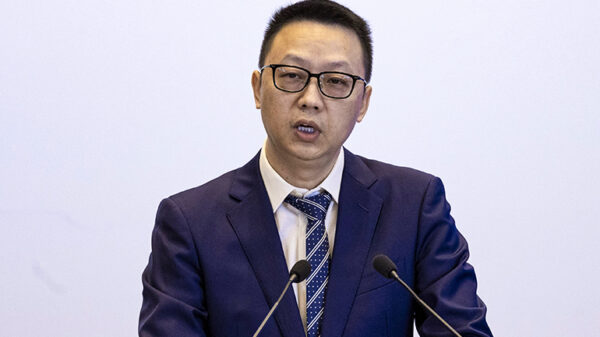





































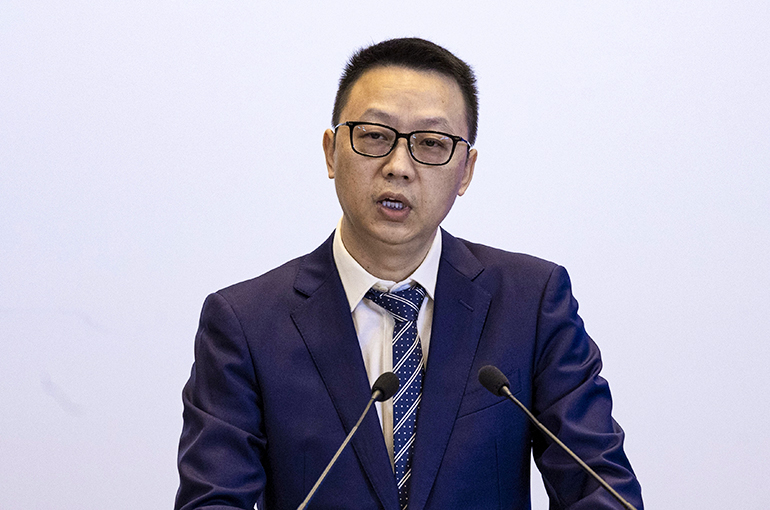
(Yicai) April 9 — Alibaba Group Holding has established a group-level artificial intelligence technology committee under the leadership of Chief Executive Officer Eddie Wu, as the Chinese internet giant advances its AI-driven business transformation. The new committee will guide Alibaba’s AI strategy while centrally managing computing power and human resources, as outlined in a letter Wu sent to employees yesterday.
Chief Technology Officer Wu Zeming will convene the committee, with Zhou Jingren serving as its AI chief architect. Another committee member, Li Feifei, has been tasked with overseeing Alibaba’s cloud technology and AI infrastructure. This strategic formation is part of a broader initiative to enhance Alibaba’s competitiveness in the burgeoning AI landscape.
The Hangzhou-based company initiated its AI business restructuring last month with the launch of Alibaba Token Hub, a new business division focused on three core priorities: creating tokens, delivering tokens, and applying tokens. The purpose of this unit is to consolidate strategic coordination across Alibaba’s various AI ventures.
Wu has prioritized AI as a crucial growth pillar for the company. Alibaba is positioning itself around this technology, investing in its full stack—from large language models like Qwen to chips and cloud infrastructure. This restructuring aims to expedite execution and drive large-scale commercialization of enterprise-focused applications.
In his letter, Wu announced that Alibaba will elevate the status of Tongyi Laboratory, its division dedicated to developing large models, renaming it the Tongyi Large Model Business Unit with Zhou at the helm. Meanwhile, Li will take over Zhou’s previous role as CTO of Alibaba Cloud, while Wu Zeming will pass the CEO responsibilities of Taobao Flash Buy to Lei Yanqun.
This organizational shift further underscores the strategic importance of Tongyi. As a designated business unit, it will be entrusted with greater responsibilities in AI commercialization and ecosystem development, reflecting Alibaba’s commitment to harnessing AI effectively.
The latest restructuring emphasizes Alibaba’s goal of refining its AI strategy and enhancing coordination across its business lines. The company aims to implement a more centralized management structure at the group level, which features clearer responsibilities and a coherent strategic pathway.
Alibaba is significantly investing in AI, having launched a substantial five-year initiative with a budget of USD 53 billion. The objective is to generate USD 100 billion in annual revenue from AI and cloud services within the same timeframe. According to its earnings report released on March 19, Alibaba’s revenue from AI-related products has exhibited triple-digit year-on-year growth for ten consecutive quarters, exemplifying the sector’s robust potential.
This aggressive push into AI aligns with broader trends within the tech industry, where companies are increasingly recognizing the transformative power of AI technologies. As Alibaba intensifies its focus on AI, its actions will likely serve as a bellwether for other businesses navigating the intersection of cloud computing and artificial intelligence.
See also Bank of America Warns of Wage Concerns Amid AI Spending Surge
 OpenAI Restructures Amid Record Losses, Eyes 2030 Vision
 Global Spending on AI Data Centers Surpasses Oil Investments in 2025
 Rigetti CEO Signals Caution with $11 Million Stock Sale Amid Quantum Surge
 Investors Must Adapt to New Multipolar World Dynamics