




































Shares of Infosys surged as much as 5 percent to Rs 1,430.95 on the BSE on Tuesday following the announcement of a strategic collaboration with Anthropic. This partnership has provided relief to investors who have been concerned about the potential disruptive impact of artificial intelligence on traditional software services. The stock rally marks a significant turnaround for Infosys, which has faced pressure due to fears that generative AI could render conventional IT outsourcing and software services obsolete.
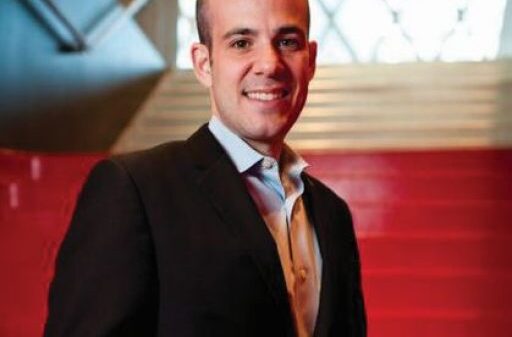
Under the partnership, Anthropic’s Claude models, including Claude Code, will be integrated with Infosys’s proprietary Topaz AI platform. The collaboration targets sectors such as telecommunications, financial services, manufacturing, and software development. “There’s a big gap between an AI model that works in a demo and one that works in a regulated industry — and if you want to close that gap, you need domain expertise,” said Dario Amodei, CEO and co-founder of Anthropic. “Infosys has exactly that kind of expertise across important industries: telecom, financial services, and manufacturing,” he added.
Infosys CEO Salil Parekh emphasized that the company envisions AI unlocking six new service lines: AI strategy and engineering, agentic legacy modernization, data readiness, process reimagination, physical AI, and AI trust. “AI is not just transforming business — it is redefining the way industries operate and innovate,” Parekh stated. The company estimates a market opportunity of $300–$400 billion by 2030 and positions itself strategically to capture a share of this emerging demand.
At the heart of the collaboration is the concept of agentic AI — systems capable of independently executing multi-step tasks such as processing insurance claims, generating and testing code, or running compliance reviews, rather than merely responding to prompts. Using tools like the Claude Agent SDK, Infosys plans to develop AI agents that can operate persistently across complex enterprise workflows. Legacy modernization, historically a significant revenue stream for Indian IT firms, will also be a core focus as the two companies aim to accelerate migration away from aging infrastructure.
The partnership will initially establish a dedicated Anthropic Center of Excellence focused on the telecom sector, with plans to expand into financial services, manufacturing, and other verticals. Market participants have reacted positively to the announcement, interpreting it as an encouraging sign for the Indian IT sector, which has grappled with ongoing concerns regarding AI-led disruption. “This development is encouraging, as it suggests that next-generation AI applications are unlikely to disrupt Indian IT companies’ business models to the extent initially feared,” remarked Vinod Nair, head of research at Geojit Investments.
Nair pointed out that these solutions are expected to be incorporated into existing and new projects, which should help alleviate concerns about long-term business sustainability. However, he cautioned that uncertainties remain regarding deal sizes, pricing evolution, and the net margin impact as employee cost efficiencies are balanced against productivity gains. He described the sector’s outlook for fiscal years 2027-2028 as “muted” compared to the strong performance of the past two to three years, although subdued valuations may present re-entry opportunities for long-term investors.
Sumit Pokharna of Kotak Securities characterized the collaboration as “definitely a step in the right direction and the need of the hour,” emphasizing the necessity for governance, transparency, compliance, reliability, and security in regulated industries’ AI adoption, thereby underscoring the value proposition Infosys is now promoting.
The broader significance of the announcement extends beyond this partnership. Indian IT firms have spent nearly two years addressing investor concerns that generative AI could lead to reduced headcounts, smaller project scopes, and erosion of the labor-arbitrage model that has historically fueled sector growth. The Infosys-Anthropic deal signifies a deliberate attempt to reposition Indian IT not as a casualty of the AI wave but as a crucial intermediary between cutting-edge AI models and the compliance-heavy, operationally complex realities of global enterprises. Whether this strategic pivot results in sustained deal flow, improved pricing power, and stronger margins will depend on effective execution. However, for now, the market appears to be optimistic, as reflected in Infosys’s notable stock performance on Tuesday.
See also India’s Tech Giants Deploy NVIDIA AI Agents to Transform Call Centers and Healthcare
 NHS Expands Oracle’s AI Note-Taking Tool to Over 300 Hospitals, Boosting Efficiency
 Royal Bank of Canada Launches AI Group Aiming for 2027 Value Creation Goal
 Nvidia Partners with AIGI to Launch 500 AI Startups in India’s $130B Market
 Sunil Mittal: AI Poised to Revolutionize Healthcare and Education Sectors