

















































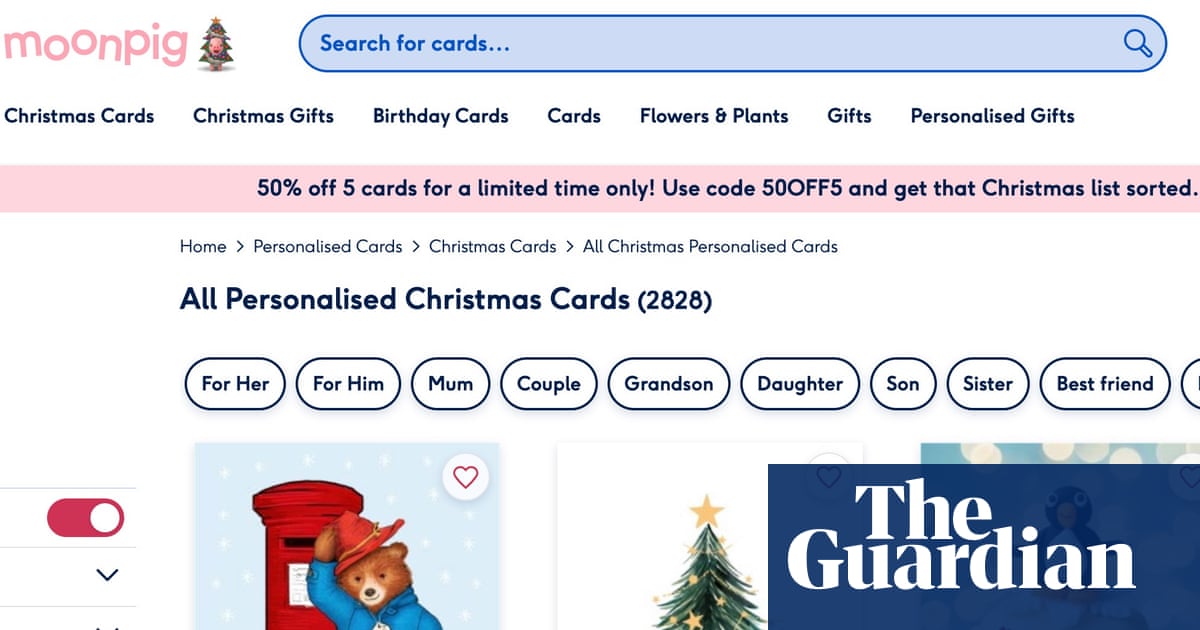
The online card service Moonpig has reported a 6.7% increase in sales, reaching £169 million in the six months ending October 31, partly attributed to its enhanced use of artificial intelligence. The company indicated that strong sales momentum has continued into the subsequent weeks, bolstered by increased orders and higher spending per order at its flagship brand.
“AI is now designing a lot of cards for us,” said Nickyl Raithatha, Moonpig’s chief executive. He noted that the technology aids in creating various card types, from baby and birthday cards to corporate greetings tailored for specific businesses. Despite the involvement of AI, Raithatha emphasized the importance of human oversight, stating that an in-house team reviews all designs to ensure they remain relevant and engaging, avoiding a saturation of generic options.
The uptick in sales has propelled Moonpig back into profitability, recording a pre-tax profit of £26.6 million for the half-year, a stark contrast to a £33.3 million loss during the same period last year. This resurgence in financial performance comes as the company also operates Greetz in Europe and offers vouchers for experiences ranging from spa days to cinema outings.
Notably, approximately half of all purchases now utilize AI-driven features that allow customers to personalize their messages with creative elements such as stickers, photos, or personalized handwriting. This is a significant increase from just 2% two years ago. Recent advancements enable customers to automatically modify a wide array of designs to meet specific criteria, such as targeting a particular age group or family member.
Moonpig’s new AI chat system has also gained traction, resolving around one-third of customer queries. Feedback indicates that these AI interactions are rated significantly higher by customers compared to those handled by human representatives. Raithatha expressed that the company views AI as a tool for enhancing productivity rather than a job threat, as it can suggest a multitude of designs for users to edit, rather than limiting them to one or two options in a day.
“We still need that creativity,” he said, highlighting the ongoing need for human input even as the company integrates more technology. Raithatha is slated to step down at the end of this month, with Catherine Faiers, chief operating officer of the secondhand car marketplace AutoTrader, stepping into the role.
On the macroeconomic front, Raithatha mentioned that the recent tax and spending changes revealed in the chancellor’s budget have not noticeably affected customer behavior. He described recent trading as “very encouraging,” noting a “great start to peak trading” as the festive season approaches. With the budgetary measures now announced, Raithatha expressed hope for reduced uncertainty, which could empower businesses to make more confident decisions moving forward.
See also Check Point Launches Quantum Firewall R82.10 with 20 New Features for AI Security
 Instacart’s AI Pricing Tests Could Cost Shoppers an Extra $1,200 Annually, Study Reveals
 Sharp HealthCare Faces Class Action Over AI Recording Violations: 6 Essential Steps for Businesses
 Surf Secures $15M Funding Led by Pantera Capital, Aims for $10M Revenue by 2026
 OpenAI, Anthropic, and Block Launch Agentic AI Foundation for Open Standards