











































New Delhi
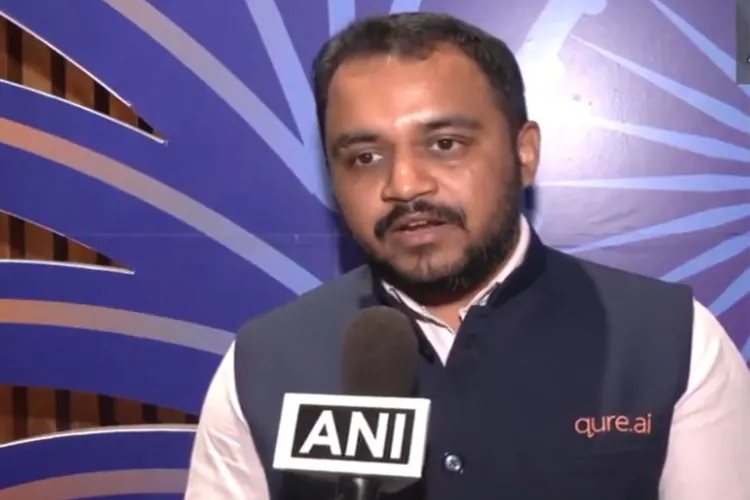
The artificial intelligence (AI) solutions for medical imaging developed by Qure.ai are significantly enhancing the early detection and diagnosis of diseases such as tuberculosis, lung cancer, oncology, and cardiology conditions, impacting approximately 40 million people across more than 100 countries. This was highlighted by Ankit Modi, Founding Member and Chief Product Officer (CPO) of Qure.ai, during an exclusive interview with ANI at the AI Impact Summit in New Delhi.
Modi emphasized that the company aims to showcase its global healthcare impact and explore international collaborations aimed at improving population-level health screening. “We build AI solutions for medical imaging, impacting oncology, cardiology, tuberculosis, and multiple disease areas. We are at the summit to showcase the impact that we have created for 40 million people across 100-plus countries,” he stated. During the summit, Qure.ai also organized a panel discussion featuring notable figures such as the CEO of the National Authority of India and the Chief of CDC in Africa, focusing on mutual learning opportunities between India and Africa based on Qure’s experience implementing population-level projects in both regions.
According to Modi, AI is playing a crucial role in improving early disease detection, particularly through the analysis of chest X-rays. He explained that the technology can identify early signs of diseases, enabling timely interventions that are vital in densely populated areas where infections can spread rapidly. Modi referenced the Mahakumbh, where Qure.ai deployed its AI-based screening solutions to assess chest X-rays of individuals with cold and pneumonia symptoms. The analysis revealed that around 3 percent of the scans indicated the presence of tuberculosis, demonstrating the effectiveness of AI in public health surveillance.
He further detailed a significant population-level health screening project conducted in Goa, which focused on the early detection of lung cancer. While chest X-rays were already being performed, the integration of AI facilitated a more efficient identification of early indicators of the disease. Modi noted that implementing AI in conjunction with traditional X-ray procedures helped to reduce diagnosis times by 50 percent, leading to faster treatment and improved healthcare outcomes.
Modi concluded by asserting that AI-powered medical imaging is pivotal in enhancing early detection, reducing diagnosis times, and elevating healthcare delivery across multiple regions. These advancements not only benefit millions of individuals globally but also highlight the transformative potential of AI in strengthening healthcare systems and improving disease management. The ongoing initiatives in India and Africa serve to exemplify how innovative technology can address pressing public health challenges.
See also Infosys Partners with Anthropic to Unlock $400B AI Market Opportunity
 India’s Tech Giants Deploy NVIDIA AI Agents to Transform Call Centers and Healthcare
 NHS Expands Oracle’s AI Note-Taking Tool to Over 300 Hospitals, Boosting Efficiency
 Royal Bank of Canada Launches AI Group Aiming for 2027 Value Creation Goal
 Nvidia Partners with AIGI to Launch 500 AI Startups in India’s $130B Market