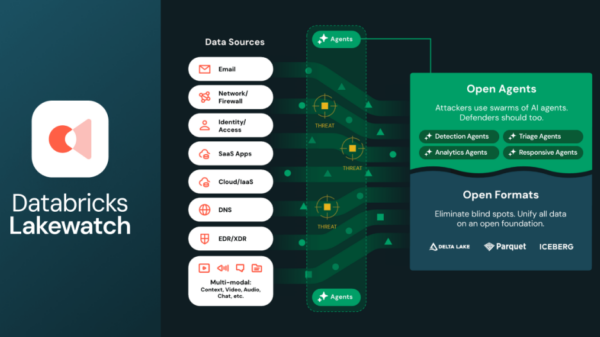


















































Snowflake and Databricks are advancing their positions in the rapidly evolving AI landscape, each adopting distinct strategies aimed at enhancing enterprise capabilities. While Snowflake is leveraging its Cortex and Native App Framework to enable businesses to construct AI-driven applications and agents close to governed data, Databricks is concentrating on agent workflows through its Mosaic AI. This approach underscores model development, orchestration, and evaluation linked to its innovative lakehouse architecture, as noted by Robert Kramer, principal analyst at Moor Insights and Strategy.
According to Kramer, the contrasting methodologies highlight how each company seeks to tackle the challenges faced by enterprises in utilizing AI technologies. In a similar vein, Walter emphasized that Teradata differentiates itself by positioning its Enterprise AgentStack as a vendor-agnostic execution and operations layer. This design is intended to function seamlessly across hybrid environments, allowing businesses greater flexibility compared to the tightly integrated agent frameworks often found in platforms like Snowflake and Databricks.
This strategy aligns with Teradata’s use of third-party frameworks such as Karini.ai, Flowise, CrewAI, and LangGraph. These partnerships afford enterprises and their developers the adaptability to evolve their agent architectures over time. Walter pointed out that this flexibility contrasts sharply with the more rigid structures imposed by Snowflake and Databricks, which tend to optimize for end-to-end control within their respective ecosystems.
The increasing focus on AI in enterprise settings underscores a broader trend of organizations seeking to harness data more effectively. As AI technologies continue to mature, companies are becoming more attuned to the importance of integrating these innovations into their operational frameworks. Snowflake’s approach of embedding AI capabilities directly into its data management solutions represents a significant step toward enabling businesses to make data-driven decisions swiftly.
In contrast, Databricks’ emphasis on agent workflows through its lakehouse architecture illustrates a commitment to enhancing the scalability and efficiency of AI model development. This architecture is designed to facilitate seamless integration between data storage and processing, thereby improving the overall lifecycle of AI models from creation to deployment. The different trajectories taken by these companies reflect varying philosophies regarding how best to empower enterprises in their AI journeys.
As competition intensifies in the AI sector, the diversity of approaches may catalyze innovation and lead to enhanced solutions for businesses. The agility offered by Teradata’s Enterprise AgentStack could prove advantageous for organizations seeking not to be confined to a single cloud provider. This flexibility may allow enterprises to adopt a more tailored approach to their AI implementations, potentially promoting a better alignment with specific business needs and goals.
In a landscape marked by rapid technological advancements, the decisions made today by companies like Snowflake, Databricks, and Teradata will likely play a critical role in shaping the future of AI in enterprise settings. As organizations increasingly prioritize data governance and operational efficiency, these developments signal a paradigm shift toward more integrated and adaptable AI frameworks. The ongoing evolution of AI capabilities will undoubtedly influence how businesses leverage their data assets, marking a pivotal period in the intersection of technology and enterprise strategy.
See also ChoiceTech Korea’s AI Skin Scan Surpasses 1 Million Uses, Transforming Beauty Diagnostics
 SAP Shares Plunge 11% on Q4 Cloud Backlog Growth Miss, Worst Drop Since 2020
 Agrani Labs Secures $8M Seed Funding to Advance AI GPU Development in India
 Microsoft’s Earnings Miss Triggers $400B Wipeout, Sparking AI Skepticism