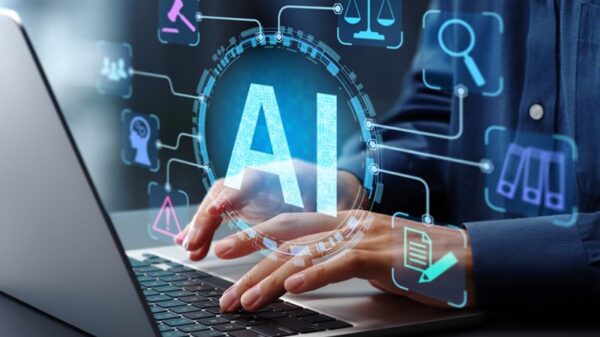








































Organizations are increasingly embracing a dual approach to cybersecurity that combines the principles of **Zero Trust** with the capabilities of **artificial intelligence** (AI). This convergence is reshaping how businesses secure their data while maintaining accessibility, ultimately aiming for a state described as “Zero Trust” enabling “Zero Downtime.” By adopting a “never trust, always verify” mindset, firms can enhance resilience, minimize downtime, and implement stringent access controls.
The traditional separation between cybersecurity and business continuity has often led to friction. Security teams focused on reinforcing systems and verifying access credentials, while operational teams prioritized seamless data access. This divergence, however, is now facing a critical intersection. For instance, the cumbersome nature of **two-factor authentication** can hinder immediate data recovery, prolonging downtime as users scramble to recall forgotten passwords or codes. The emergence of AI within the framework of Zero Trust is addressing these challenges, offering a new paradigm that interlinks strong access controls with efficient data recovery.
Zero Trust is more than just a security model; it is a comprehensive strategy that emphasizes thorough verification of users and devices. As defined by **Microsoft**, this approach comprises three foundational elements. First, it mandates extensive verification, requiring multiple forms of authentication beyond a simple password. Second, it promotes **least privilege access**, ensuring that users can only access the data necessary for their roles through mechanisms like **Just-In-Time** and **Just-Enough-Access** (JIT/JEA). Lastly, the model operates under the assumption that a breach is always possible, thereby advocating for **end-to-end encryption** and constant vigilance.
A notable application of Zero Trust is **Google’s BeyondCorp**, which emerged in response to cyber threats faced in 2011. Following these incidents, Google transitioned away from traditional VPNs, implementing an identity-based access model that requires ongoing verification for every employee, on any device, regardless of location.
AI significantly enhances the ability to recover from incidents while maintaining security. By integrating AI into the recovery process, organizations can make their security measures more adaptive rather than static. During crises, such as a ransomware attack, the ability to verify access requests becomes critical. AI systems analyze various factors—such as location, timing, and historical behavior patterns—to ensure that only legitimate recovery efforts take place, effectively thwarting potential attempts by attackers to exploit system vulnerabilities.
This leads to the concept of **least privilege access** during recovery scenarios. AI-powered systems can closely monitor incidents and grant access selectively. For instance, if a critical system fails, only verified engineers might be given access to backup repositories and recovery environments. This refined approach minimizes the risk of unauthorized access while ensuring that necessary actions can still be taken swiftly.
In the current cybersecurity landscape, the mantra of “assume breach” has become a standard recovery strategy. This perspective requires organizations to operate under the assumption that a threat actor may already be inside their systems. By doing so, companies can streamline their systems to remain vigilant against potential threats, leveraging AI to quickly identify backup data and determine the most recent secure version of critical systems. AI facilitates a combination of **security information and event management** (SIEM) systems with recovery processes, thus enabling organizations to respond to incidents promptly while ensuring that restored systems are not vulnerable to re-infection.
The integration of AI with Zero Trust principles not only fortifies security measures but also transforms downtime from a potential disaster into a learning opportunity. By treating downtime as a security event, businesses can glean insights about malicious activities and refine their recovery methods. The rigorous authentication and verification processes ensure that even if an unauthorized attempt is made to access systems, such efforts will be met with stringent controls.
As emphasized by Microsoft, the ability to integrate various capabilities allows organizations to detect threats more effectively, respond to incidents promptly, and mitigate risks associated with undesired events. The combination of Zero Trust and AI is paving the way for more resilient operations, ensuring that in times of crisis, recovery is not just a possibility but a streamlined, efficient process.
See also Anthropic’s Claims of AI-Driven Cyberattacks Raise Industry Skepticism
 Anthropic Reports AI-Driven Cyberattack Linked to Chinese Espionage
 Quantum Computing Threatens Current Cryptography, Experts Seek Solutions
 Anthropic’s Claude AI exploited in significant cyber-espionage operation
 AI Poisoning Attacks Surge 40%: Businesses Face Growing Cybersecurity Risks