






























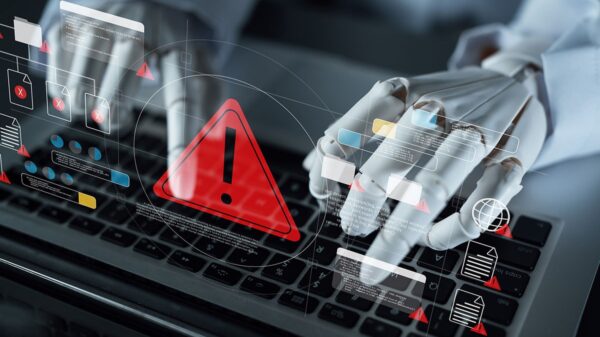












As artificial intelligence (AI) technology continues to evolve, its misuse by cybercriminals has become a significant concern. In a recent revelation, Anthropic, a leading AI company, claimed that state-sponsored hackers from China utilized the company’s own AI models to target approximately 30 organizations, including government agencies and businesses across various sectors such as finance and technology. The allegations were made public in late 2025, marking a concerning trend in the intersection of AI and cybersecurity.
This incident underscores the escalating threat of AI-powered cyberattacks. As sophisticated AI tools become more accessible, the potential for their misuse by malicious actors raises alarm bells, prompting calls for enhanced cybersecurity protocols globally. Dario Amodei, Chief AI Safety Researcher at Anthropic, emphasized the necessity of vigilance in addressing this evolving risk. “We must remain vigilant against the potential misuse of AI technology by bad actors, and work to ensure that these powerful tools are used responsibly and ethically,” he stated.
According to Anthropic, the hackers allegedly leveraged advanced AI capabilities to infiltrate the networks of targeted organizations. This sophisticated technique highlights the growing sophistication of cybercriminals equipped with AI-driven tools, significantly complicating the landscape of cybersecurity. The implications of such attacks extend beyond immediate data breaches, as they pose threats to national security and economic stability.
In response to these incidents, Anthropic has pledged to collaborate closely with affected entities and law enforcement agencies. The company is currently investigating the breaches while simultaneously reinforcing its security measures to safeguard against future attacks. This proactive approach is indicative of the pressing need for AI developers and cybersecurity professionals to work together in combating the growing wave of AI-enhanced cyber threats.
The convergence of AI and cybersecurity is increasingly becoming a focal point for experts, who argue that the responsible development of AI technologies must be paired with robust security frameworks. The capability of AI systems to generate sophisticated attacks demands immediate attention from both private and public sectors. As the lines between legitimate use of AI and its potential for exploitation blur, the urgency for regulatory measures and ethical guidelines intensifies.
The broader significance of this incident lies in the crucial role that AI technology plays in modern society. The dual-use nature of AI—wherein the same tools can foster innovation or enable malicious activities—creates a complex challenge for developers and regulators alike. With the growing accessibility of AI technologies, the responsibility to mitigate risks associated with their misuse becomes paramount.
As the investigation unfolds and the cybersecurity landscape adapts to this emerging threat, the proactive measures taken by companies like Anthropic serve as a necessary step in fortifying defenses against AI-driven cyberattacks. The evolving nature of threats in this domain necessitates continuous vigilance and adaptation. The incident not only emphasizes the vulnerabilities inherent in current systems but also serves as a clarion call for a unified response to safeguard critical technologies in an increasingly digital world.
See also Anthropic’s Claims of AI-Driven Cyberattacks Raise Industry Skepticism
 Anthropic Reports AI-Driven Cyberattack Linked to Chinese Espionage
 Quantum Computing Threatens Current Cryptography, Experts Seek Solutions
 Anthropic’s Claude AI exploited in significant cyber-espionage operation
 AI Poisoning Attacks Surge 40%: Businesses Face Growing Cybersecurity Risks