






















































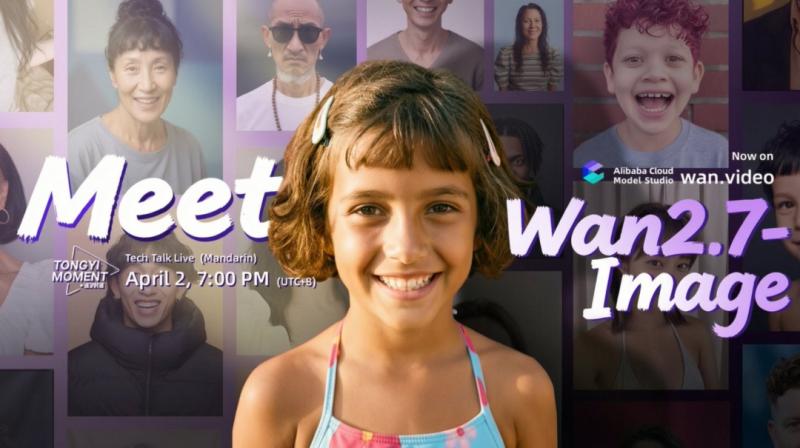
Alibaba Group’s Tongyi Lab has launched Wan 2.7, the latest version of its generative AI platform, which marks a significant advancement in AI-driven content creation. The upgrade introduces a host of features designed for professionals, including a groundbreaking “Thinking Mode” that enhances the model’s ability to understand prompts, plan compositions, and produce coherent outputs. This innovative approach aims to elevate the quality of AI-generated content across various industries.
Wan 2.7 sets a new standard in the realm of generative AI with its capability for hyper-realistic character rendering, precise color control, and improved long-text rendering. This upgrade addresses many common issues associated with AI-generated images, such as the notorious “AI same-face” phenomenon, by allowing unmatched control over facial characteristics, like bone structure and eye details. Such advancements make Wan 2.7 particularly appealing to content creators, advertisers, and filmmakers.
A key feature of Wan 2.7 is its Thousand-Face Realism, which eliminates repetitive features by providing users with significant customization options for character generation. In addition, the platform supports HEX color codes and various color palettes, ensuring that visuals remain consistent with brand identities. This level of precision aims to attract designers who require exacting standards in their visual content.
Another notable improvement in Wan 2.7 is its industry-leading text rendering capabilities. The platform can now handle over 3,000 tokens and can accurately render long texts, tables, formulas, and 12 different languages. This feature is particularly beneficial for sectors such as education and scientific research, where clarity and precision in textual representation are paramount.
Wan 2.7 also introduces advanced image editing tools, allowing users to work with up to nine reference images. This multi-reference editing capability enables pixel-level adjustments and group image generation, further enhancing creative flexibility. In addition, the platform includes a complete video suite, which features text-to-video, image-to-video, and intelligent video editing functionalities. These tools ensure that video outputs maintain motion consistency and audio synchronization, addressing common challenges faced by content creators in the digital landscape.
“Wan 2.7 marks a major leap forward in controllable generative AI,” stated a spokesperson from Tongyi Lab. “We are delivering tools that combine creative freedom with precise control like never before.” This sentiment reflects the ongoing evolution of AI technologies aimed at enhancing user experience and creative potential across various fields.
For those interested in utilizing Wan 2.7, the platform is readily available for access at its dedicated website. Users can explore the full range of features through the AI Image Generator and AI Video Generator pages, which are tailored to deliver a seamless creative experience. This accessibility underscores Alibaba’s commitment to democratizing advanced AI technologies for creators worldwide.
As industries increasingly embrace AI-driven solutions for content creation, the introduction of Wan 2.7 could signal a transformative shift in how visual and multimedia content is produced. With its focus on advanced capabilities, Wan 2.7 not only sets a high bar for competitors but also positions itself as an essential tool for professionals striving for excellence in their creative endeavors.
See also Filer Launches AI Solutions for Content Safety Amid Rising “AI Slop” Concerns
 Roblox Launches Multimodal AI for Real-Time Moderation, Neutralizing 5,000 Servers Daily
 Alibaba Launches Wan 2.7 with Revolutionary Thinking Mode for Enhanced AI Content Creation
 Sakana AI Achieves $2B Valuation, Leading Japan’s 2026 Robotics and Generative AI Surge
 AI-Driven Brand Visibility: Companies Must Optimize for Generative Engine Performance















