















































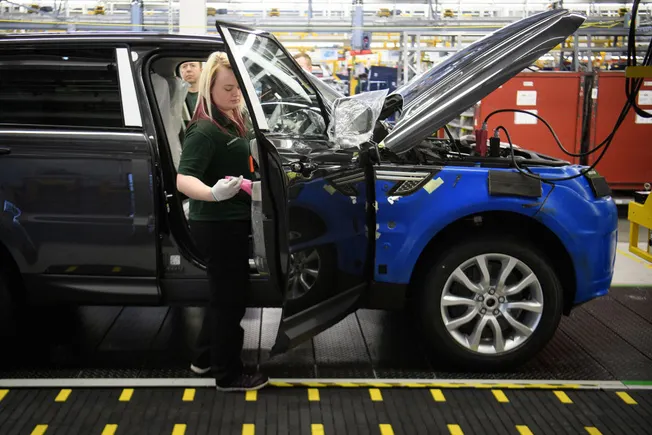
In August, a cyberattack forced Jaguar Land Rover, the automobile manufacturing giant, to halt production for a month, resulting in approximately $260 million in cybersecurity costs and $650 million in losses due to production disruption, U.S. tariffs on imported cars, and the phasing out of older models. The unexpected shutdown of the manufacturer’s highly automated production lines in the U.K., which typically produce around 1,000 vehicles daily, also disrupted a broader global supply chain. Unions and officials have estimated that thousands of workers could face layoffs, and smaller suppliers might go bankrupt due to the sudden loss of business.
As manufacturers increasingly digitize their operations, incidents like this are becoming more frequent. Experts express concern that cybersecurity measures are often an afterthought as companies rapidly adopt artificial intelligence (AI) and cloud systems, aiming for efficiency, profitability, and reduced reliance on human labor. The 2025 Deloitte Smart Manufacturing Survey indicated that 57% of the 600 executives surveyed at large U.S. manufacturing companies reported using cloud systems, while an estimated 29% said they are implementing AI and machine learning at the facility or network level. In 2024, North America accounted for almost 50% of the global market for cloud-based manufacturing infrastructure, according to Market Research Future.
However, this rapid technological growth presents significant challenges. Experts warn that the pace of tech adoption has far outstripped the cybersecurity measures necessary to safeguard these systems. The IBM X-Force Threat Intelligence Report 2025 revealed that the manufacturing sector has been the most-attacked industry by cybercriminals for four consecutive years. “The biggest cybersecurity risk in manufacturing right now comes from the amount of connectivity being introduced into environments that were never designed for it,” said Nick Nolen, vice president of cybersecurity strategy and operations at Redpoint Cyber, which collaborates with manufacturers.
Historically, manufacturers flew under the radar concerning cyberattacks because their systems were not connected to the internet. Todd Moore, VP of encryption at Thales, noted that until recently, systems were primarily designed for performance, without cybersecurity considerations due to the lack of digitization. The integration of advanced technologies such as AI and cloud systems with outdated infrastructure has intensified vulnerabilities. “Security is often bolted onto these systems rather than built with secure-by-design principles, making manufacturers susceptible to everything from ransomware and malware to phishing and even denial-of-service attacks,” he stated.
The expansion of AI and cloud systems has amplified these risks by significantly enlarging the attack surface area. According to Nolen, manufacturers now have a much broader attack surface than many realize. “Modern manufacturing relies heavily on third-party integrators, connected machines, vendor-supplied software, and data exchange between business units,” he explained. Each of these touchpoints introduces additional opportunities for compromise. Once an attacker gains entry into even a small segment of the environment, the interconnected nature of manufacturing systems can facilitate rapid movement toward more sensitive areas.
Kevin Albano, global head of X-Force Threat Intelligence at IBM, emphasized the risk of unauthorized access to sensitive data uploaded to AI and cloud systems. “To mitigate this, manufacturers need to treat AI datasets as high-value assets,” he advised. This involves classifying and protecting sensitive data across cloud, on-premises, and hybrid environments, encrypting all personally identifiable information both at rest and in transit, and implementing robust key management practices.
Monitoring AI usage presents its own challenges, as many manufacturers lack complete visibility into the components their vendors utilize, leading to security blind spots. Ferhat Dikbiyik, chief research and intelligence officer at Black Kite, pointed out that manufacturers need clarity on which vendors have access to production data and how AI is being integrated into their systems. “Once you upload any design or process information into an AI tool, you need confidence about where that data is going, who can see it, and how it might be used,” Nolen cautioned.
Moreover, the centralization of sensitive design files, production parameters, and supplier information in cloud systems poses additional risks, as a single compromised account can affect multiple facilities. “Companies need proper segmentation between IT, cloud, and operational systems so that a breach in a digital tool can’t cascade into production,” Dikbiyik stressed. While significant upfront costs are associated with establishing and maintaining security systems, Nolen indicated that more spending does not necessarily equate to greater security.
Manufacturers must weigh the costs of investing in evolving cybersecurity programs against the risks of potential attacks exacerbated by increased digitization. “I am never in favor of slowing innovation for the sake of cybersecurity,” Dikbiyik noted, “but I always believe we can ensure that the digital factory of the future is built on a security model that matches its complexity.” As the industry continues to advance, the imperative for robust cybersecurity measures will only increase.
See also CrowdStrike Unveils AI Cybersecurity Accelerator with AWS, Nvidia; Stock Rises 1.4%
 US AI Cybersecurity Firms Launch Scalable Solutions for Small Businesses in 2026
 60% of African Firms Report AI-Powered Cyberattacks; Only 29% Have Defenses in Place
 AI-Driven Cyber Attacks Surge in UK, Causing £1.9B Impact and Major Service Disruptions