




































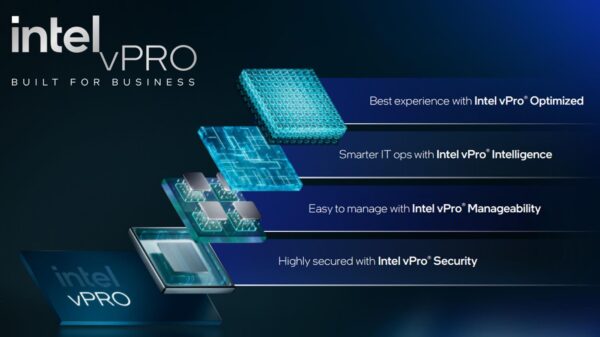











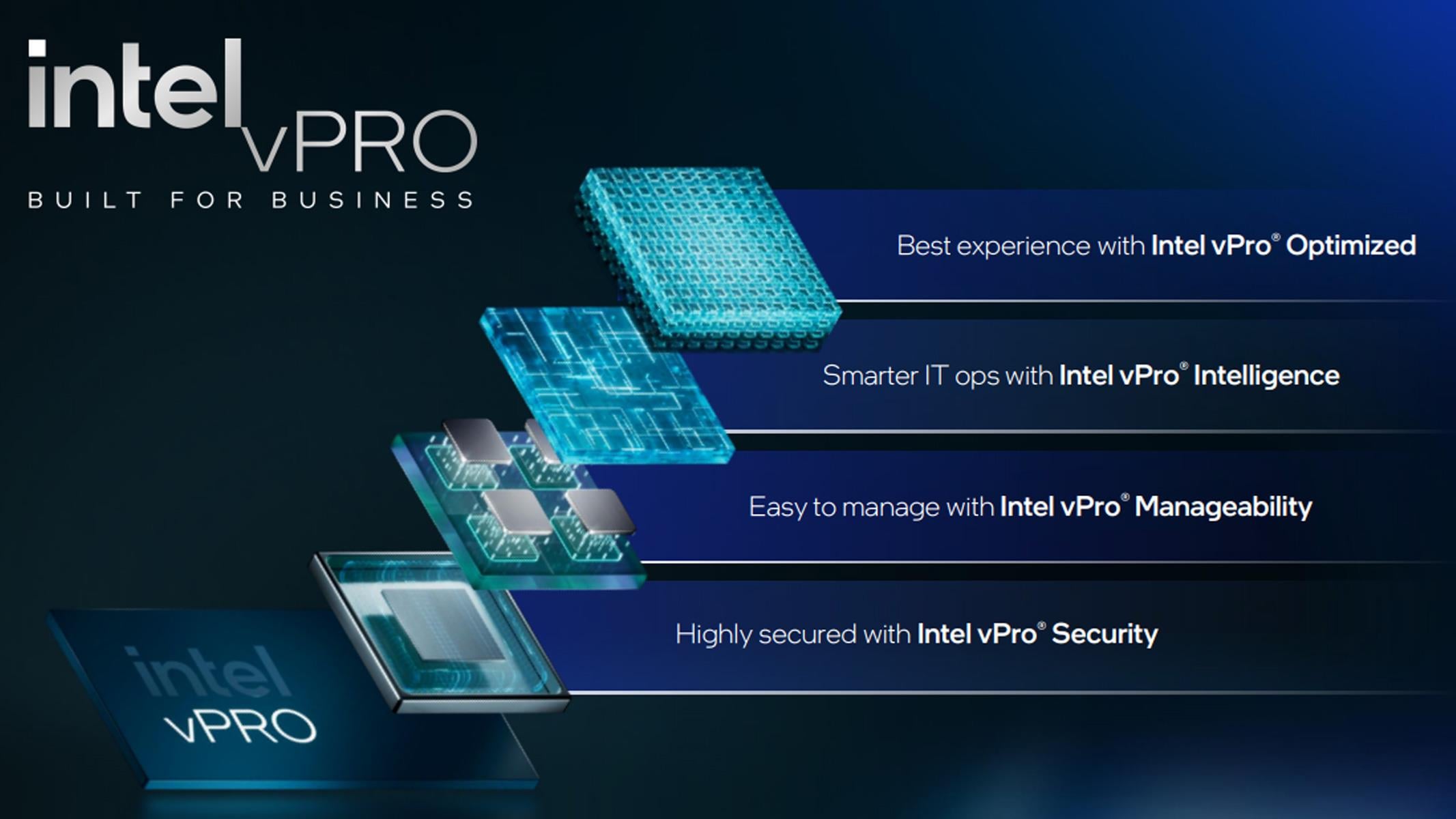
At Intel Pro Day, the chip maker unveiled its latest round of vPro processors based on Panther Lake, also known as the Core Ultra Series 3 with vPro. These new chips are designed specifically for business PCs and IT administrators, offering advanced security and management features that are not available on standard processors. A significant highlight of the new lineup is an upgrade to Intel’s Threat Detection Technology, referred to as DTECT or TDT-DETECT, which employs AI to enhance malware detection capabilities.
DTECT combines CPU telemetry with AI models offloaded to neural processing units (NPUs) and graphics processing units (GPUs). This allows for real-time detection of malware attempting to execute malicious code. “It can detect AI-generated attacks and malicious processes by analyzing hardware-level activity as it occurs, providing faster detection than traditional signature- or behavior-based approaches,” Intel explains. This capability is increasingly vital as hackers utilize large language models (LLMs) to create malware that can adapt on the fly.
According to Intel, DTECT enhances the visibility of sophisticated threats for IT and enterprise security administrators, enabling faster responses to attacks before they impact end-users. The company is actively collaborating with leading security independent software vendors (ISVs) to integrate these capabilities into commercial endpoint solutions.
In addition to the security enhancements, Intel claims substantial improvements in application and accessory performance through its vPro certification program. Early testing indicates a 59% reduction in CPU utilization, a 56% boost in power efficiency, and a 74% decrease in disruptive background tasks, thanks to close collaboration with software vendors and ecosystem partners. The latest vPro processors also introduce AI-driven analytics via vPro Intelligence with Device IQ, aiming to reduce downtime and ease pressures on IT support by proactively detecting, diagnosing, and resolving device issues.
Performance Enhancements
The Core Ultra Series 3 lineup, built on Intel 18A technology, promises over 30% faster single-threaded and multi-threaded performance, up to 80% faster graphics, and a 4x increase in AI performance compared to systems that are four years old. The processors eligible for Intel’s latest vPro offerings include nine SKUs across its Core Ultra 5, Core Ultra 7, Core Ultra x7, Core Ultra 9, and Core Ultra x9 models.
Beyond the vPro announcements, Intel also introduced its Xeon 600 Granite Ridge processors for workstations. These new chips aim to replace both the Xeon W-2500 and Xeon W-3500 series, offering up to 9% higher single-threaded performance and up to 61% higher multi-threaded performance. The Xeon 600 series is priced from $499 for the Xeon 634 model with 12 performance cores, scaling up to $7,699 for the Xeon 698X with 86 performance cores.
As businesses increasingly turn to hybrid work environments, the need for robust security and enhanced performance has never been greater. Intel’s latest vPro processors, with their AI-driven threat detection and impressive performance metrics, are positioned to meet these demands effectively. The integration of advanced analytics and proactive device management could represent a significant step forward for enterprises navigating the complexities of modern cyber threats.
See also Anthropic’s Claims of AI-Driven Cyberattacks Raise Industry Skepticism
 Anthropic Reports AI-Driven Cyberattack Linked to Chinese Espionage
 Quantum Computing Threatens Current Cryptography, Experts Seek Solutions
 Anthropic’s Claude AI exploited in significant cyber-espionage operation
 AI Poisoning Attacks Surge 40%: Businesses Face Growing Cybersecurity Risks