
















































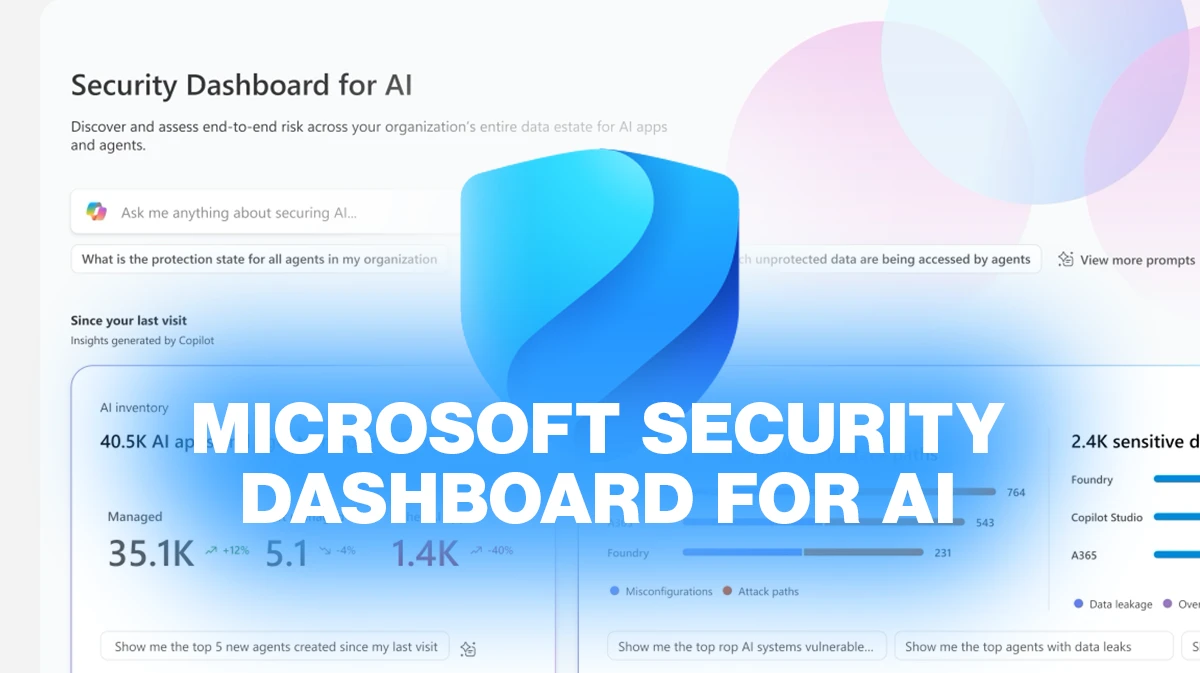
Microsoft has launched the Security Dashboard for AI in public preview, aimed at enterprise environments. This new tool aggregates posture and real-time risk signals from Microsoft Defender, Microsoft Entra, and Microsoft Purview, providing users with a comprehensive view within their security frameworks. The dashboard’s introduction reflects an increasing focus on managing AI-related security risks as organizations rapidly integrate artificial intelligence into their operations.
Amanda Lowe, Senior Product Manager at Microsoft, stated that the dashboard serves as a governance tool for Chief Information Security Officers (CISOs) and AI risk leaders. It facilitates the discovery of agents and AI applications, tracking AI posture and drift, and correlating risk signals to allow for thorough investigation and action across an organization’s entire AI ecosystem.
In addition to aggregating risk signals, the dashboard features an inventory of AI assets, which includes AI agents, models, MCP servers, and applications. This inventory not only covers Microsoft’s AI offerings integrated with Entra, Defender, and Purview but also third-party AI models and applications, thereby encompassing a wide array of tools that organizations may utilize.
The dashboard presents AI-related security risks in a consolidated view, augmented by the capabilities of Security Copilot for investigation and prioritization. Security teams can use natural language queries to identify unmanaged or shadow AI agents, review related activities, and explore risk contexts associated with specific assets. This functionality simplifies the often complex process of risk assessment in the context of AI.
Moreover, the dashboard assesses how security controls related to AI are implemented within an organization. It provides actionable recommendations based on identified risks, which can be assigned to relevant users for coordinated remediation. This feature supports ongoing risk management as AI systems evolve over time, addressing the dynamic nature of threats in the AI landscape.
The Security Dashboard for AI is accessible to organizations utilizing eligible Microsoft security products. Those already securing their AI workloads with Microsoft security tools can leverage the dashboard during its public preview phase, highlighting a significant step by the company in enhancing AI security frameworks.
This development comes at a time when the integration of AI technologies is expanding rapidly across various sectors. As organizations increasingly adopt AI solutions, the need for robust security measures becomes paramount. Microsoft’s initiative aims to equip businesses with the necessary tools to navigate the complexities of AI security, thereby fostering a safer digital environment.
Looking forward, the Security Dashboard for AI may set a new standard for risk management practices in AI deployment, potentially influencing how organizations worldwide approach their AI security strategies. As the landscape continues to evolve, the importance of comprehensive security solutions tailored for AI will only grow, making Microsoft’s latest offering a timely addition to its portfolio.
See also AI Enhances Cybersecurity for Schools Amid Rising AI-Powered Cyber Threats
 World Economic Forum Reveals Cyber Resilience as Key to Enterprise Stability Amid AI Threats
 Researchers Unveil SiamXBERT, Boosting Unknown IoT Attack Detection by 78.8%
 Seceon Unveils AI-Driven SOC Automation Strategies to Cut Response Times by 80%