





























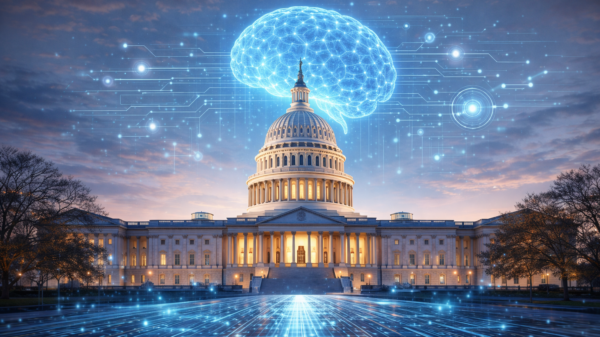













The U.S. State Department has officially established a new Bureau of Emerging Threats aimed at addressing the growing risks posed by adversaries such as Iran, China, Russia, North Korea, and various foreign terrorist organizations. The bureau will focus on countering the weaponization of advanced technologies, including artificial intelligence, cyberattacks, and space-based threats. This initiative was announced as part of a broader reorganization plan within the State Department, signaling a strategic pivot to preemptively tackle evolving technology-driven threats to national security.
Officials have noted a notable rise in cyberattacks, particularly from adversaries like Iran, which have increasingly targeted U.S. interests. The establishment of the Bureau of Emerging Threats is intended to enhance the United States’ capacity to anticipate and respond to these challenges, especially in light of recent military actions that have prompted a surge in such activities.
Led by Anny Vu, who previously served as the Trump administration’s chargé d’affaires to China, the Bureau of Emerging Threats will comprise five distinct divisions. These divisions will address key areas of concern: cybersecurity, critical infrastructure security, disruptive technology, space security, and threat assessment. The creation of the bureau was formally communicated to Congress on March 23, 2026, coinciding with the White House’s release of its national policy framework for artificial intelligence.
Tommy Pigott, the State Department’s principal deputy spokesperson, emphasized that the new bureau will target both current and future threats in various domains, including cyberspace, outer space, critical infrastructure, and the misuse of disruptive technologies. “The bureau will address not only the current threats we face today in cyberspace, outer space, critical infrastructure, and through the misuse of disruptive technology like AI and quantum but those we will face in the decades ahead,” Pigott stated.
In parallel, Anny Vu remarked on the importance of leveraging foreign policy and national power to safeguard U.S. interests. “We must leverage foreign policy and all tools of national power to protect U.S. interests,” she noted, underscoring the mission’s urgency.
The Bureau of Emerging Threats is set to commence operations immediately, with an emphasis on understanding and mitigating tech-based threats that could compromise national security. This initiative highlights the increasing significance of advanced technology in the security landscape, particularly as it relates to the actions of state and non-state actors.
The formation of this bureau signifies a proactive approach to national security in an era where technological advancements are rapidly evolving. The U.S. government aims to position itself strategically against the backdrop of a growing reliance on technology by adversaries, ensuring that it remains vigilant in the face of emerging threats.
See also Anthropic’s Claims of AI-Driven Cyberattacks Raise Industry Skepticism
 Anthropic Reports AI-Driven Cyberattack Linked to Chinese Espionage
 Quantum Computing Threatens Current Cryptography, Experts Seek Solutions
 Anthropic’s Claude AI exploited in significant cyber-espionage operation
 AI Poisoning Attacks Surge 40%: Businesses Face Growing Cybersecurity Risks