A research team from Jilin University has significantly advanced the field of nuclear physics by utilizing a deep neural network (DNN) model to predict nuclear charge density distributions with unprecedented precision. This breakthrough was reported in the journal *Nuclear Science and Techniques* on March 19, 2026, marking a shift toward data-driven methodologies in a field traditionally dominated by theoretical calculations.
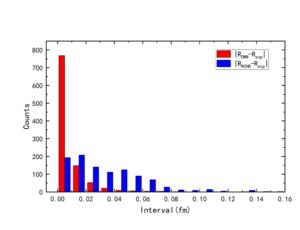
The charge density distribution of atomic nuclei is crucial for understanding nuclear structure, yet obtaining high-precision predictions has been a historical challenge due to experimental limitations and the complexities of theoretical models. Conventional approaches, largely reliant on density functional theory, often struggle with accuracy. The Jilin University team’s innovation integrates experimental data from 1,014 nuclei to train their DNN, which reduces the root-mean-square error in charge radius predictions by over 50% compared to traditional methods.
In their pioneering research, the team employed a “physics-informed” training strategy that combines physical mechanisms with artificial intelligence. Initially, the DNN was trained to predict Fourier–Bessel coefficients using the Relativistic Continuum Hartree–Bogoliubov (RCHB) theory. The model was subsequently fine-tuned using experimental charge radius data. It takes inputs such as proton and neutron numbers, distance to magic numbers, and a pairing parameter, producing 17 Fourier–Bessel coefficients that detail the charge density distribution.
Validation tests on isotopes of nickel, palladium, mercury, and bismuth demonstrated that the DNN-predicted charge radii closely align with experimental measurements, yielding a root-mean-square error of just 0.0149 femtometers (fm). This marks a substantial improvement over previous DNN models and RCHB theory, showcasing the model’s enhanced capability in predicting central density and tail structures for elements like chromium and zinc.
The implications of this research extend beyond nuclear structure theory, offering new avenues for multidisciplinary applications. Accurate nuclear charge-density distributions can refine atomic spectral calculations and constrain parameters of the nuclear-matter equation of state. Additionally, they provide crucial inputs for nuclear-reaction networks in extreme astrophysical environments and serve as benchmarks for testing quantum electrodynamics and exploring physics beyond the Standard Model.
As the research team aims to refine the model further, they plan to extend its applications to a broader range of nuclear regions and incorporate additional experimental data. This initiative is expected to deepen understanding of nuclear structure and its relevance in both fundamental and applied sciences.
“By deeply integrating physical mechanisms with machine learning, we have not only improved the accuracy of nuclear charge density predictions but also provided a reliable data foundation for nuclear physics, atomic physics, and even fundamental physics research,” said Prof. Jian Li, the lead researcher. “This work demonstrates the immense potential of artificial intelligence in basic scientific inquiry, and we will continue to promote its application to a wider range of nuclear structure problems in the future.”
The study, titled *Predictions of charge density distributions for nuclei with Z ≥ 8*, underscores a new era in nuclear physics characterized by intelligent predictions and data-driven insights, promising to influence various scientific domains. As the team looks ahead, the integration of AI with physical theories may become increasingly pivotal for advancing research across multiple fields.
See also AI-Powered Surgical Tools Raise Ethical Concerns in Pediatric Care, Johns Hopkins Warns
 AI-Powered Multi-Level Prompt Engineering Transforms Scientific Discovery Process
 Oomiji Report Reveals 45% of Agency Roles May Vanish as AI Transforms Marketing Landscape
 Nokia Shares Drop 3.6% Amid Analyst Downgrades Despite AI Innovation in Healthcare
 UK’s TinyML Network Forms to Advance Low-Cost, Decentralized AI Solutions