











































Summary: Mexican state governments are intensifying investments in AI education and digital inclusion as part of broader strategies aimed at developing technology talent and enhancing workforce readiness for the digital economy. Initiatives in Aguascalientes and Nuevo Leon, spearheaded by Governor Tere Jiménez and supported by firms such as Softtek and DEACERO, seek to bolster STEM training, improve access to digital tools, and expand opportunities in technology-driven sectors. These programs underscore a growing trend of public-private collaboration aimed at addressing skills gaps, promoting digital inclusion, and enhancing Mexico’s competitiveness in advanced technology domains.
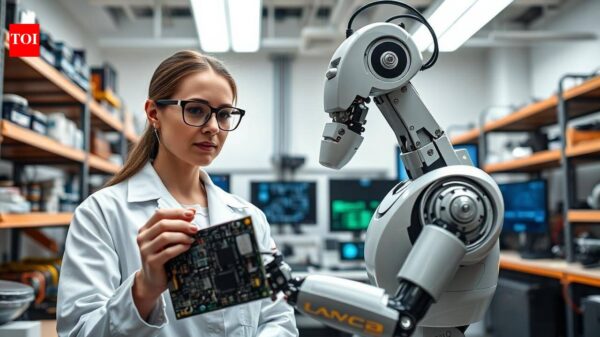
The government of Aguascalientes has inaugurated a new artificial intelligence laboratory at the Aguascalientes Center for Science and Technology Studies (CECyTEA) Rincon de Romos campus. This initiative, led by Governor Tere Jiménez, is designed to enhance students’ digital competencies and broaden their academic and professional prospects in technology-centric industries. Jiménez stated that the facility will grant students access to technological tools intended to foster innovation, scientific learning, and digital literacy among the youth of the state.
“With these kinds of initiatives we want our young people to be better prepared to face the challenges of the future,” Jiménez remarked during the inauguration ceremony. “We want them to compete globally and achieve their ambitions, and that requires perseverance and the determination to build their dreams.” The establishment of this laboratory reflects a broader strategy by the state government to align educational training with the increasing demands of a global economy influenced by digital transformation and advanced technologies. Officials indicated that this facility will enable students to develop vital skills related to artificial intelligence, innovation, and applied science, providing hands-on experience that could propel careers in emerging industries.
Jorge Saucedo, Director of the CECyTEA Rincon de Romos campus, emphasized that the laboratory signifies an investment in students’ futures and the cultivation of essential competencies for the modern workforce. “This artificial intelligence laboratory represents much more than technology,” Saucedo said. “It symbolizes opportunities, dreams, and possible futures for our students. With this support, they will be able to develop creativity, innovation, and skills to face the challenges of today’s world.”
During her visit, Governor Jiménez also acknowledged the accomplishments of the Owl Turbo Racing Team, a student group that qualified for the STEM Racing World Finals in Singapore, where they will represent Mexico against international competitors. The visit included several activities highlighting academic achievement and civic engagement among students. Jiménez led the traditional flag ceremony, presented awards to high-performing students, and conducted a bicycle raffle for attendees. Members of the school’s honor guard were also recognized for securing third place in a national honor guard competition organized by the CECyTE network.
Student representative Renata Hernández expressed her belief that the new facility marks an essential step in providing young people with access to advanced technology and educational opportunities. “Today we are not only inaugurating a laboratory,” she stated. “We are opening a door to the future; a space where our ideas can become projects, where curiosity turns into knowledge, and where our dreams begin to take shape.”
In parallel, authorities in Nuevo Leon are advancing digital inclusion through a partnership involving government and private-sector organizations. The state’s Ministry of Equality and Inclusion, in collaboration with DEACERO and Softtek, inaugurated the Softtek/DEACERO Technology Classroom at the Valle Soleado Community Center. This initiative aims to broaden access to digital tools and training for children, youth, and adults.
The classroom is equipped with computers, internet connectivity, furniture, and climate control systems. It also features digital training programs focused on technological skills, logical thinking, and STEAM education. “We believe in the power of technology to change lives,” said Fernando Nava, Corporate Sustainability Director at Softtek. “This classroom does not just bring computers; it opens doors to learning, employment, and social mobility. Every alliance that expands digital access is an investment in Mexico’s future.”
This initiative is part of a larger strategy led by Martha Herrera, Minister of Equality and Inclusion for Nuevo León, aimed at fostering partnerships among government, business, and community organizations to generate sustainable social impact. Alicia Núñez, Director of Fundación DEACERO, noted that enhancing access to technology is essential for strengthening communities. “Access to technology is a tool for equity,” Núñez stated. “We support projects that strengthen communities through education and employability. This alliance with Softtek and the Ministry of Equality and Inclusion reflects our commitment to a fairer and more prepared Mexico.”
Mauricio Canseco, Deputy Minister of Social Investment and Strategic Alliances in Nuevo Leon’s Ministry of Equality and Inclusion, highlighted the potential of cross-sector collaboration to address digital inequality and create economic opportunities. “Technology is not just a tool; it is a gateway to well-being and social mobility,” Canseco explained. Juan Carlos Meade, Director of Strategic Alliances at the Ministry of Equality and Inclusion, elaborated on how the program combines corporate backing with public administration to ensure long-term sustainability. “Here in Nuevo Leon, companies provide the computers while we handle operations, maintenance, data, and management,” Meade said. “Many people lack access to computers or do not know how to use them, so digital inclusion requires careful attention.”
According to program estimates, each technology classroom generates a social return on investment of 7:1, indicating that for every peso invested, communities receive seven pesos in measurable social benefits. This initiative represents a collaborative development model wherein government, business, and civil society unite to enhance educational access and promote inclusive economic growth in Mexico.
See also Andrew Ng Advocates for Coding Skills Amid AI Evolution in Tech
 AI’s Growing Influence in Higher Education: Balancing Innovation and Critical Thinking
 AI in English Language Education: 6 Principles for Ethical Use and Human-Centered Solutions
 Ghana’s Ministry of Education Launches AI Curriculum, Training 68,000 Teachers by 2025
 57% of Special Educators Use AI for IEPs, Raising Legal and Ethical Concerns