






































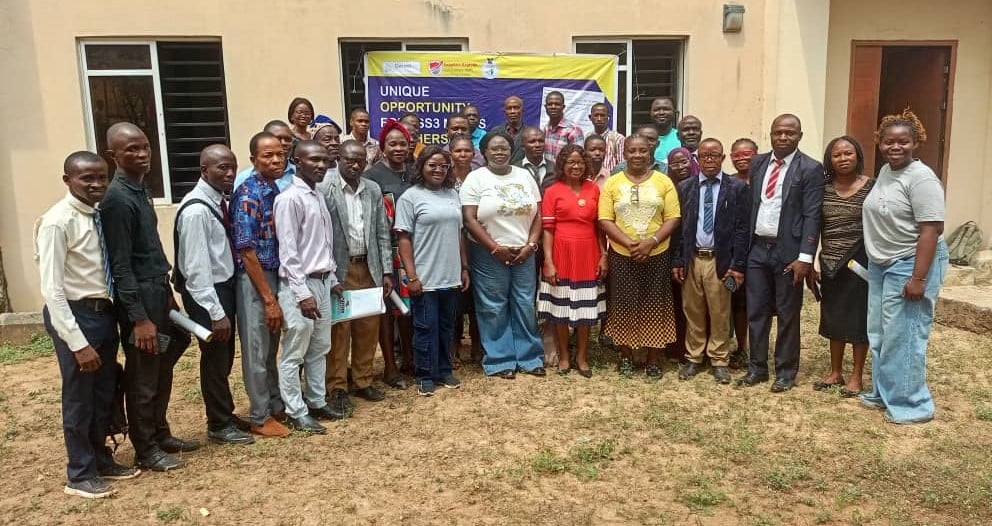
Wunmi Tolu-Alalade, an education technology specialist and implementation partner of the Darsel Learning Platform, has emphasized the importance of integrating Artificial Intelligence (AI) into mathematics education. Speaking at a stakeholders’ engagement session at the Lagelu Grammar School in Ibadan, Oyo State, on Wednesday, she urged governments at all levels to prioritize the use of AI in teaching and learning.
Tolu-Alalade noted that digital learning innovations are essential tools in addressing the persistent issues of poor mathematics performance among junior secondary school students. “The AI-powered Darsel Learn-by-Text Chatbot provides an interactive, practice-driven learning environment aligned with Nigeria’s national mathematics curriculum for Basic 7 to Basic 9 (JSS1-3) learners,” she explained.
The system enables students to tackle mathematics problems via a WhatsApp-based chatbot, making it accessible even to those without computers or high-end digital devices. “If we want different results in mathematics education, we must adopt different methods. Artificial intelligence allows students to practise daily, build confidence, and learn independently while still supporting classroom teachers,” Tolu-Alalade added.
Furthermore, she pointed out that the AI system generates performance reports for educators, helping them to identify weak areas and tailor their interventions. “Teachers can see student progress in real time. They know where a learner is struggling and can step in strategically. AI is not replacing teachers; it is empowering them,” she concluded.
Tolu-Alalade called on the government to back EdTech partnerships, expand AI pilots in public schools, and encourage parents to facilitate supervised daily practice, even if it is for limited periods. Her comments were echoed by Bosede Abiodun, a director in the Mathematics and Technical Department of the Oyo State Ministry of Education. Abiodun described the initiative as a forward-looking intervention that could significantly reshape students’ attitudes toward mathematics.
“In many testimonies we’ve received, students who once feared mathematics are now more confident. The AI approach makes learning engaging and less intimidating,” Abiodun said, emphasizing the need for policy and financial support to scale the program.
A mathematics teacher, Fowotade Adeniyi, shared positive feedback from students using the chatbot. “When students answer correctly, the chatbot responds with encouraging words like ‘Excellent’ and ‘Well done.’ When they get it wrong, it gives hints before the solution. This motivates them. Many who feared mathematics now attempt questions confidently,” he stated.
The integration of AI in education, particularly in mathematics, highlights a broader trend in educational technology aimed at enhancing learning outcomes. As the demand for skilled professionals in STEM fields continues to grow, initiatives like the Darsel Learn-by-Text Chatbot could play a pivotal role in shaping the future of education in Nigeria and beyond.
See also Amazon Launches AI Skills Vans to Provide Education for 9,000 Students in India
 Skillsoft Lays Off Entire Codecademy Curriculum Team Amid AI Shift
 AI Transforms Student Assessment: Experts Discuss Promise and Risks in Upcoming Webinar
 ShikshaNext Launches Rs 170 Cr Initiative to Enhance AI-Driven Learning for 13M Indian Children