
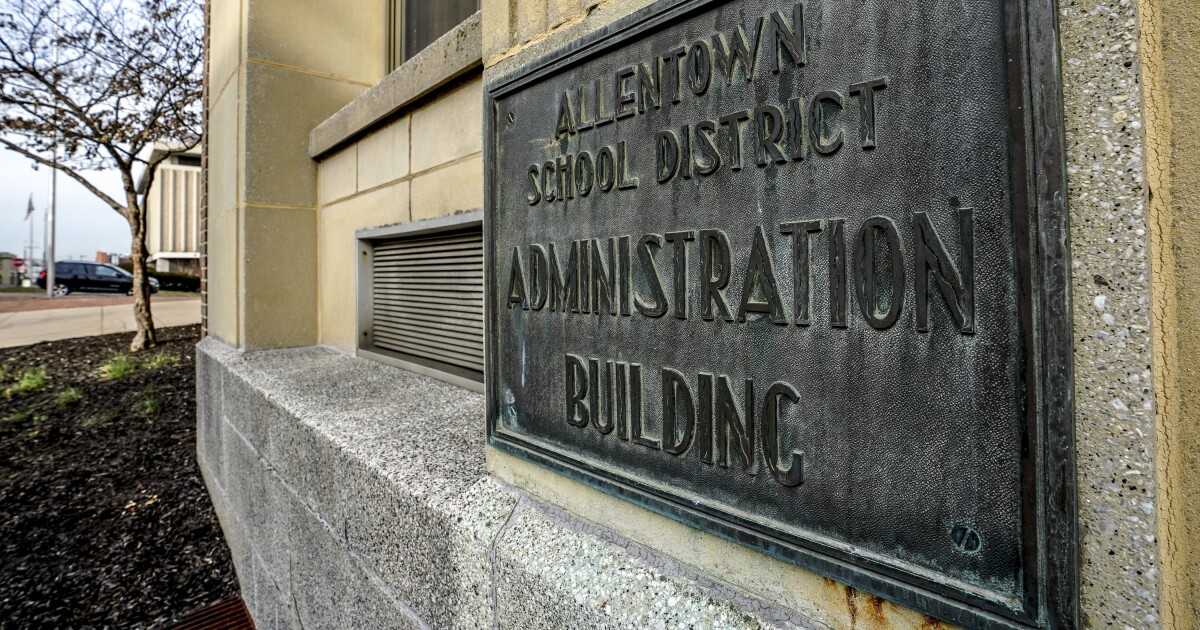
ALLENTOWN, Pa. — In the first episode of her new podcast, “Lighting the Way with Dr. Carol D. Birks,” Allentown School District Superintendent Carol Birks discussed the district’s initiatives in artificial intelligence (AI). The podcast, streamed on Thursday, aims to highlight the strategic plan “Lighting the Way: A Blueprint for Innovation and Excellence 2030.”
Birks expressed pride in the district’s implementation of AI technologies across various educational settings. The hour-long episode featured a conversation with Jayden Santos, a senior from the district’s Bridgeview Academy, a theme-based high school offering career pathways in AI, computer science, and healthcare. Santos shared his experiences using the school’s new media lab to create a public service announcement on gun violence for his government class.
“It was so much more engaging than just writing a paper,” Santos said. He is also a member of the superintendent’s student advisory committee and participates in the technology team at Bridgeview Academy, which is part of the Verizon Innovative Learning Schools (VILS) program. This initiative provides students with iPads and 24/7 internet access to enhance digital equity and improve educational outcomes.
Students involved in the technology team receive advanced training on various tools, including 3D printers in the school’s new makerspace. Santos noted that the VILS program includes a pilot initiative focused on educating students about digital identity and the ethical use of AI. “AI has gone from the thing that we don’t talk about in classes or in schools to being something that we use in many of our classes,” he remarked.
Teachers at Bridgeview Academy are also integrating AI into their curricula. Santos highlighted how his English teacher, Charles Schmied, has effectively utilized AI to create a classroom behavior app that allows students and their families to monitor conduct in real-time. Additionally, Schmied has utilized AI to develop a reading tool that assists with text annotation.
Discussions around AI’s ethical implications are also part of the curriculum. Santos recounted an instance in which his U.S. government teacher, Shannon Salter, addressed students using AI to complete assignments. Rather than penalizing the students, Salter illustrated that AI-generated conclusions did not meet the quality of those crafted by the students themselves. “By talking about it instead of banning the topic in class, we’re learning more about when and when not to use AI to help us,” Santos explained.
The panel also featured Brennan Pursell, a business professor at DeSales University and director of the Center for Data Analytics and Applied AI. Pursell emphasized the dual nature of AI as a general-purpose technology that will transform various sectors, particularly in business operations. He estimated that approximately 80% of jobs will be impacted by AI in some capacity.
Pursell cautioned against the potential negative aspects of AI, noting that it can be toxic or addictive, particularly for vulnerable populations. He advocated for a balanced approach, stating, “I don’t demonize it, but we have to identify the risks.” His comments were underscored by recent legislative initiatives, including a bill co-sponsored by State Senator Nick Miller aimed at enhancing AI safety, particularly for children. This bill mandates transparency and certain safeguards from AI technology companies.
In a contrasting move, former President Donald Trump recently signed an executive order aimed at preventing states from regulating AI, advocating for a cohesive national framework. Experts have indicated that this order may face legal challenges.
Amid these discussions, the Allentown School District has prioritized the safety of AI tools used in classrooms. Kyle Kauffman, director of innovation and instructional technology, highlighted the use of Google Gemini, which incorporates a guided learning mode designed with educational safety in mind. “We’re very serious about our chatbots and our models that we’re using,” he noted.
The district also employs tools like Google Notebook LM for research, alongside design platforms such as Canva and Adobe Express. For secondary math, the district has introduced ALEKS, a personalized learning tool, and Coursemojo for sixth-grade English classes, aimed at providing instant feedback and individualized learning experiences.
Kauffman reiterated the importance of equipping students with the skills to leverage AI effectively. “AI is radically changing the work our students do when they leave us and we need to prepare them better,” he stated. The forthcoming episodes of “Lighting the Way with Dr. Carol D. Birks” have not yet been announced, leaving anticipation for the next discussions surrounding technology’s role in education.
See also AI Study Reveals 75% Growth in Language Education Applications and Ethical Concerns
 AI Homeless Man Prank Sparks Outcry, Exposing Moral Crisis in Digital Education
 Disney and OpenAI Reach $1B Licensing Deal for AI Video Creation on Sora
 China’s CICBE 2025 Unveils AI Initiative to Transform Global Basic Education
 Nigeria’s AI Talent at Risk: Expert Urges Urgent Education Reform to Retain Innovators