
























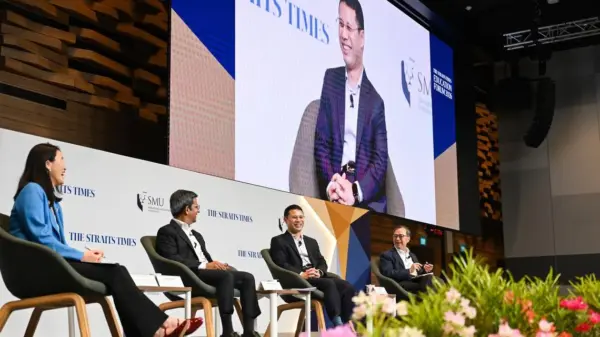



















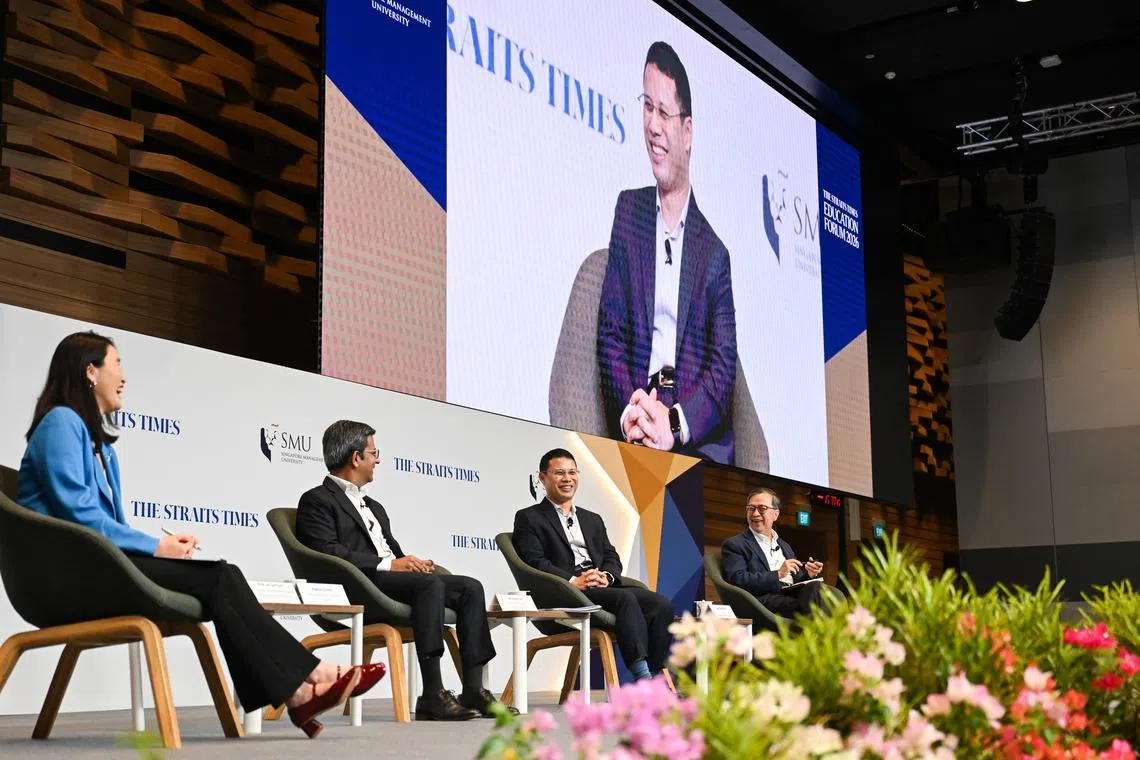
SINGAPORE – The rapid evolution of artificial intelligence (AI) has shifted humanoid robots from mere novelties to critical symbols of the technology’s substantive role in modern life. This was echoed during discussions at The Straits Times Education Forum 2026 on April 1, where panellists emphasized the need for educational frameworks to adapt in light of AI’s increasing presence in daily life.
Education Minister Desmond Lee, a key speaker at the forum, asserted that the focus of education must shift from rote knowledge acquisition to fostering essential human traits such as judgement, resilience, and empathy. “Ultimately, what we want is to be able to… help our children and our young people to learn deeply… to be able to imbibe knowledge, adapt it, apply, and be critical about it,” he stated.
The panel, which also featured Mr. Raghav Gupta, head of education for Asia-Pacific at OpenAI, and Alan Chan, provost of Singapore Management University (SMU), discussed the imperative to move beyond broad knowledge to pursue deeper, more applied expertise. This shift arises as AI increasingly excels at “horizontal” tasks—such as writing and summarising—leaving human success reliant on “vertical” expertise.
Moderated by Professor Lim Sun Sun, SMU’s vice-president of partnerships and engagement, the discussion underscored the importance of maintaining a rigorous educational foundation in the face of AI advancements. Mr. Lee illustrated the distinction between AI’s capabilities and human expertise, particularly in the legal field. He remarked, “These tools allow lawyers to generate submissions for a case… but the senior lawyer… will look at the submission and say, ‘Will this fly in front of the judge?’”
He cautioned that relying solely on AI tools could be detrimental, stressing that the rigour of traditional training remains paramount. This perspective signals a potential transformation in the role of universities, from being primary knowledge providers to facilitators that help students apply knowledge and navigate societal needs.
Mr. Gupta pointed out the rapid pace of AI adoption in Singapore, noting that while personal productivity gains are evident, broader societal impacts remain elusive. “Technology is evolving very quickly, but there’s a lot to be done when it comes to diffusion of that technology,” he stated, emphasizing the role of educational institutions in fostering social skills and critical thinking.
Professor Chan echoed this sentiment, asserting the necessity for universities to cultivate fundamental human-centred capabilities. He likened the discipline of learning to kung fu, emphasizing that mastering core concepts is essential before students engage with advanced topics. “Without fundamentals, I think… that many students will simply be driven by what comes out next,” he cautioned.
As the panel explored the implications of AI on education, they agreed on the new goal of “learning beyond AI,” focusing on critical inquiry and ethical discernment. Resilience emerged as particularly vital for future success, with Mr. Lee highlighting that academic excellence alone is insufficient in a rapidly changing workplace. “You can have the best academic mind, but if you don’t have the steel of resilience… that will not go well,” he stated.
To address these educational challenges, the Ministry of Education plans to engage partners, students, and researchers in “honest conversations” aimed at rethinking the educational landscape. Mr. Lee expressed a desire to reduce the competitive “arms race” in education while ensuring it does not diminish motivation or drive. “With AI’s opportunity and impact, it’s even more important to double down on those efforts,” he added.
The discussion concluded with a note of cautious optimism regarding the future of AI. Mr. Gupta voiced concerns about the potential rise of “autocratic AI” but maintained hope that technology could be democratized to address fundamental human needs in sectors like healthcare and education. Mr. Lee reinforced this viewpoint, stating, “Our greatest fear is if AI hobbles us… The greatest hope is that it augments humanity and empowers us.”
See also Andrew Ng Advocates for Coding Skills Amid AI Evolution in Tech
 AI’s Growing Influence in Higher Education: Balancing Innovation and Critical Thinking
 AI in English Language Education: 6 Principles for Ethical Use and Human-Centered Solutions
 Ghana’s Ministry of Education Launches AI Curriculum, Training 68,000 Teachers by 2025
 57% of Special Educators Use AI for IEPs, Raising Legal and Ethical Concerns