




























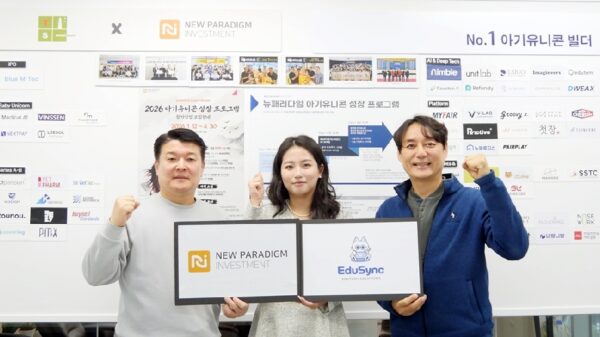
















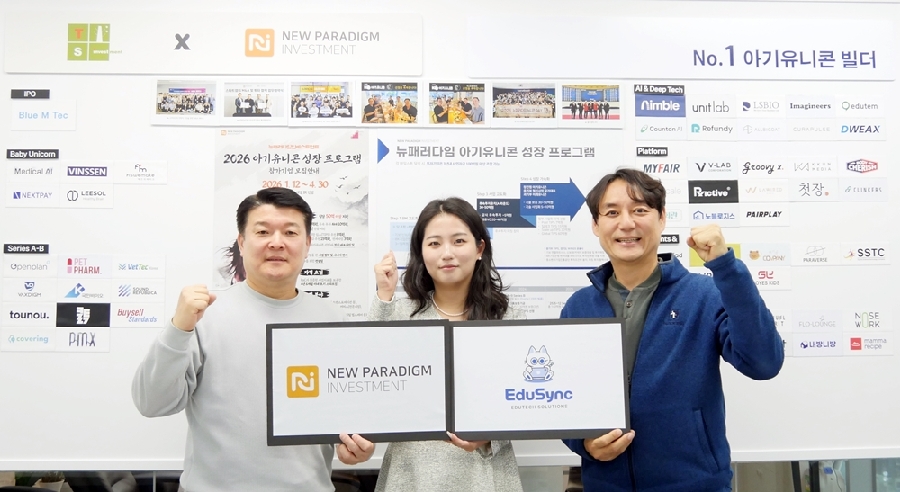
EduSync, a South Korean edtech startup focused on real-time screen synchronization technology, has successfully closed a seed investment round with New Paradigm Investment. This funding marks a significant milestone for the company as it aims to revolutionize classroom interactivity through its innovative software solutions.
The South Korean edtech market has surged to an estimated $6.9 billion USD (10 trillion KRW), bolstered by government initiatives aimed at enhancing smart education infrastructure. These initiatives include the deployment of interactive whiteboards and student tablets in public schools. However, despite this hardware expansion, classrooms have frequently struggled with a lack of dedicated software to effectively integrate these devices and foster genuinely interactive lessons. EduSync is targeting this gap with its offerings.
EduSync has developed KlassMate, a real-time collaborative learning platform designed to unify interactive whiteboards, teacher PCs, and student tablets within a single classroom environment. Utilizing low-latency messaging technology, KlassMate facilitates synchronization of handwriting and shared content in mere milliseconds, even with large groups of students engaging simultaneously. The platform operates entirely in-browser—eliminating the need for installation—and users can connect using a simple six-digit code, making it user-friendly for everyday classroom scenarios.
In its strategic approach to distribution, EduSync has opted not to sell directly to schools. Instead, the company is embedding KlassMate as pre-installed software through original equipment manufacturer (OEM) agreements with educational device manufacturers. This model reduces marketing costs while accelerating adoption within the public school system, potentially positioning KlassMate as a standard solution across various classrooms.
Looking forward, EduSync is planning to incorporate an “AI Classroom Copilot” feature, which will leverage accumulated learning data to automate lesson planning and assessments. The company’s transition toward a Software as a Service (SaaS) revenue model reflects its ambition to evolve from a collaboration tool into a platform that actively enhances teaching quality.
“We plan to build on our proven model in the public education market and expand into private tutoring and global markets,” said CEO Gawon Kwon in a statement. “Our goal is to grow into a platform that simultaneously bridges the education gap and transforms the learning experience.”
New Paradigm Investment expressed similar optimism regarding EduSync’s potential. “EduSync has both the technology and the market timing to translate hardware-led digitalization into genuine classroom innovation,” noted co-CEO Jehyun Park. “We expect the company to establish a strong competitive position not just in Korea but in global education markets, backed by its cost competitiveness and technically mature product.”
In addition to its investment in EduSync, New Paradigm Investment is currently accepting applications for its 2026 Baby Unicorn Growth Program through April. This initiative aims to support promising startups in the AI, B2B SaaS, and deep tech sectors, providing up to approximately $3.5 million USD (KRW 5 billion) per team in investment and growth funding, along with TIPS referrals and follow-on investment support built into the program.
See also Andrew Ng Advocates for Coding Skills Amid AI Evolution in Tech
 AI’s Growing Influence in Higher Education: Balancing Innovation and Critical Thinking
 AI in English Language Education: 6 Principles for Ethical Use and Human-Centered Solutions
 Ghana’s Ministry of Education Launches AI Curriculum, Training 68,000 Teachers by 2025
 57% of Special Educators Use AI for IEPs, Raising Legal and Ethical Concerns