











































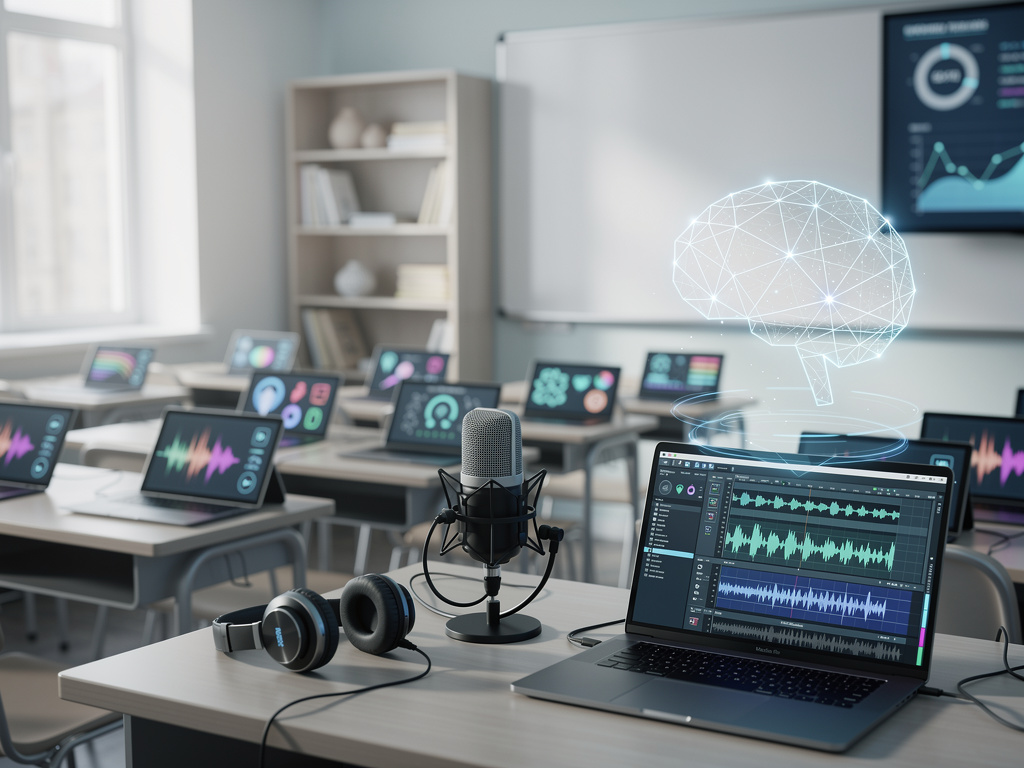
In a significant advancement for educational technology, Google has launched a new feature that allows teachers to create podcast-style audio lessons through its AI model, Gemini, as of January 6, 2026. This feature, announced via the Google Workspace Updates blog, is designed to revolutionize how educators deliver content and enhance student engagement by integrating audio lessons into Google Classroom.
The introduction of this feature comes at a pivotal moment as digital learning platforms strive to innovate in response to the evolving educational landscape post-pandemic. The new tool enables teachers to generate engaging audio materials that resemble professional podcasts, complete with narration, sound effects, and structured segments tailored to various lesson plans. By automating the creation of audio content, educators can alleviate some of the burdens associated with administrative tasks and devote more time to interactive student engagement.
Teachers can access the audio lesson feature by navigating to the Gemini tab within Google Classroom, where they can input lesson details and allow the AI model to generate the audio content. Google has stressed the importance of human oversight, advising educators to review and refine AI-generated materials to ensure they meet local policies and educational standards. This cautious approach reflects a commitment to responsible AI use in educational settings.
The rollout builds on Gemini’s expanding capabilities in education, which have been in development since 2025. Earlier iterations provided tools for creating practice tests and personalized quizzes, and the addition of audio lessons further diversifies the learning modalities available to students. This shift towards auditory content caters particularly to students who may benefit from listening rather than reading, including those with visual impairments or those who may be multitasking.
Early feedback from educators highlights the potential of these audio lessons to make learning more accessible and engaging. For instance, a history teacher could create a 10-minute podcast on significant events like the American Revolution, complete with dramatic voiceovers and appropriate soundscapes. Such innovations are seen as essential in addressing diverse learning styles and promoting inclusivity in educational environments.
While the initial response has been largely positive, the rollout is not without its challenges. The feature is available exclusively to Google Workspace Education Fundamentals, Standard, and Plus users, with a full deployment expected over a period of 1 to 3 days starting January 6. Google’s phased approach aims to minimize disruptions in classrooms, directing educators to the Help Center for guidance and best practices during the transition.
Discussions on social media platforms indicate a mix of excitement and caution among educators. Many are dubbing the feature a “game-changer” for personalized learning, with discussions emerging around how to best layer audio content with visual aids. However, there are concerns regarding an over-reliance on AI, reflecting broader discussions about the role of technology in traditional teaching methods.
This latest feature aligns with Google’s broader strategy to integrate AI throughout its educational offerings. A year-in-review report from 2025 noted the increased adoption of Gemini tools across global educational institutions, which have streamlined communication and resource creation. The audio lessons represent a natural extension of these efforts, incorporating multimodal elements that enhance the learning experience.
Industry analysts suggest that this innovation could accelerate the shift toward hybrid learning models. With audio lessons, remote learners may gain immersive experiences that rival those in traditional classrooms, potentially reducing dropout rates in online education. Early discussions among educators indicate that they are already experimenting with integrating audio content into their lesson plans, assigning it alongside traditional assignments in Google Classroom.
Despite the enthusiasm surrounding this development, challenges related to content quality and bias remain. Google encourages educators to refine AI-generated outputs, but critics argue that stronger safeguards against bias in educational materials are necessary. The company underscores its commitment to data privacy, ensuring that student information is not utilized to train AI models.
As the education sector continues to evolve, the launch of Gemini’s audio lessons signals a pivotal shift in how knowledge is delivered and consumed. These advancements not only promise to enhance the efficiency of teaching but also challenge existing paradigms in educational delivery. As engagement metrics are observed, the potential for audio lessons to redefine classroom dynamics and augment traditional teaching methods will become clearer.
See also John FitzGibbon Appointed Director of Digital Learning Innovation and AI at Boston College
 Clemson Launches AI Microcredential Program for K-12 Educators in February 2026
 Colorado Introduces First-of-Its-Kind AI Framework for Higher Education Accountability
 BASE Fellowship Launches to Support Black Researchers in AI Safety, Governance, and Security
 OpenAI Launches Nonprofit AI Jam in India to Empower Local Organizations with AI Solutions