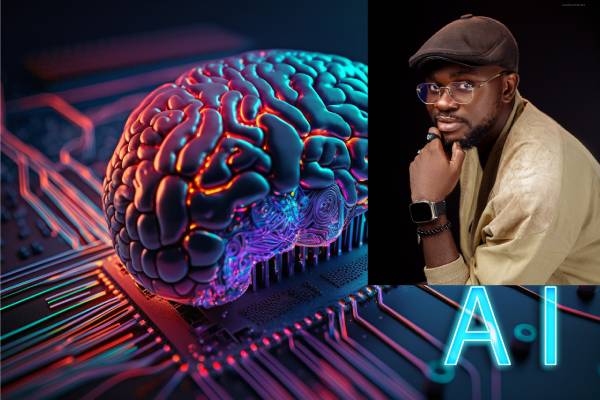
Digital business consultant and technology strategist Alabi Alexander Olalekan has called on the Nigerian government to prioritize artificial intelligence (AI) education, labeling it a critical national development initiative. Speaking in an exclusive interview, Olalekan warned that without decisive action, Nigeria risks losing its brightest innovators to foreign markets. He emphasized that the nation stands “at a critical crossroads,” with over 60 percent of its population under the age of 25 lacking the structured training and innovation infrastructure necessary to retain emerging talent.
“We are not lacking brilliance in Nigeria. What we lack is the infrastructure and opportunity to keep that brilliance here,” he stated. Olalekan stressed that AI should be treated as “basic literacy” within the national school system, reflecting its growing significance in the global economy. Currently, fewer than one percent of Nigerian universities offer formal AI or data-science programs, compelling many young people to seek knowledge through informal channels such as YouTube tutorials, online bootcamps, or peer learning groups.
Olalekan acknowledged existing initiatives like AltSchool Africa, Zindi Africa, and the government’s 3 Million Technical Talent (3MTT) program, but argued that these efforts only reach a fraction of the youth population. He expressed alarm over the rising tide of migration among digital professionals; over 20,000 Nigerian tech workers have reportedly relocated in the past two years due to limited career opportunities, unstable infrastructure, and economic uncertainty. “When an AI engineer leaves, we don’t just lose coders. We lose problem-solvers—the very people who could develop early-warning flood systems, local-language health chatbots, or smarter learning platforms,” he said.
Olalekan underscored that continued exportation of Nigeria’s best minds could compromise the nation’s long-term competitiveness. In light of this, he proposed urgent policy actions to fortify the country’s AI pipeline and address the migration issue. He advocated for the integration of AI into the national curriculum starting from secondary schools, emphasizing the need for practical, locally relevant applications.
“There is also the need to invest in scalable EdTech platforms such as uLesson and Afrilearn that can deliver personalized learning even in low-connectivity environments,” he suggested. Furthermore, he recommended that the government incentivize local employment through tax breaks and grants for firms hiring Nigeria-trained AI professionals. Strengthening the 3MTT program through transparent funding, consistent evaluation, and deeper collaboration with technology hubs would also be vital, he argued. Additionally, empowering women in AI through targeted scholarships and mentorship in underserved communities should be prioritized.
“These steps, even if implemented halfway, could transform our youth from job seekers into innovators contributing meaningfully to Nigeria’s future,” Olalekan concluded. His assertions highlight a pressing need for a comprehensive approach to AI education and talent retention in Nigeria, which could ultimately play a significant role in the nation’s economic advancement and global competitiveness.
See also UK Students Use GenAI in 90% of Assessments: Emphasizing Human Learning Essentials
 Straia Emerges from Stealth with $1M a16z Investment to Transform Higher Ed Data Use
 RAND Reports Reveal Pre-K Teacher Insights on Generative AI, Pay, and Training Gaps
 Sylacauga City Schools Expand AI Integration, Enhance Blended Learning for Educators
 Corporate Training in Italy Surges 80% with AI Integration, Reveals New CEC Study