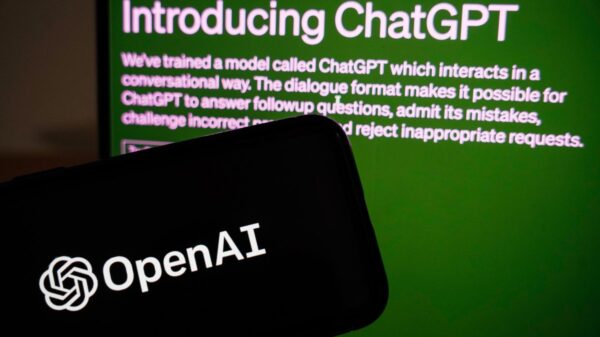


























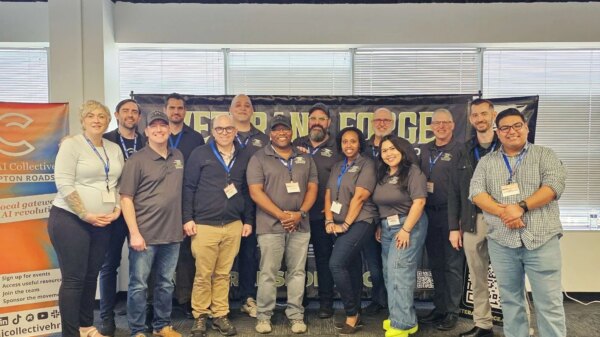












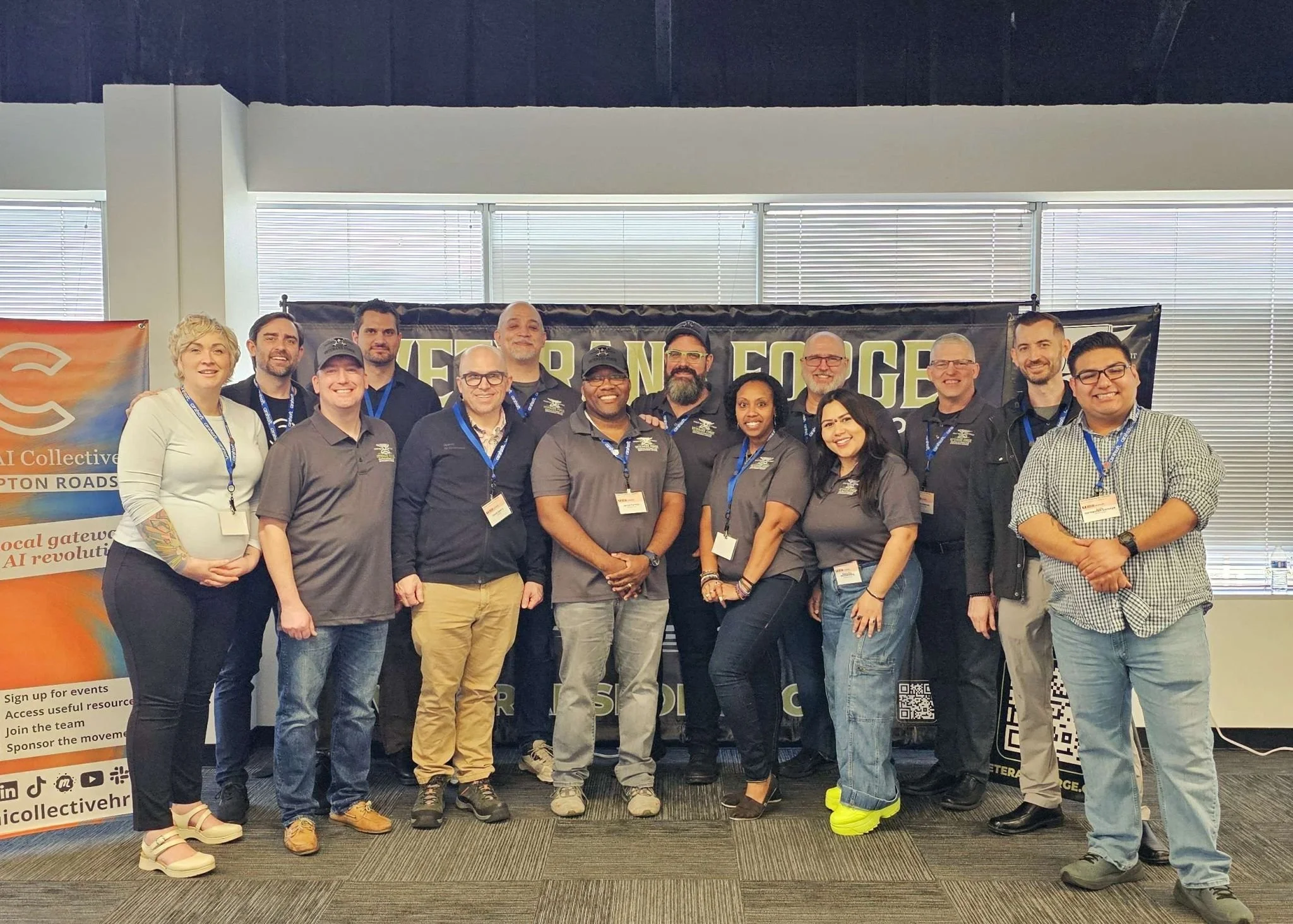
OpenAI Academy, Veterans Forge, Carahsoft, and The AI Collective recently hosted a hands-on AI training event in Virginia for nearly 100 veterans and active-duty service members. This initiative aims to enhance access to practical AI skills as workforce groups and community organizations strive to equip individuals with tools necessary to adapt to evolving job markets.
The event, conducted at Carahsoft in Reston, emphasized applied generative AI and the use of ChatGPT, providing participants with a dynamic learning experience through workshops rather than passive lectures. This format underscores a broader trend in AI training, where various stakeholders—nonprofits, local communities, and industry partners—are banding together to offer fast, targeted education for those at risk of being left behind due to rapid workplace changes.
Ted Patterson, Product & GTM Engineer at reelist and Regional Director & Founding Member at The AI Collective, expressed enthusiasm for the event on LinkedIn, stating, “Just wrapped an OpenAI Academy event here in Virginia, and I’m 𝐟𝐢𝐫𝐞𝐝 𝐮𝐩 from the energy in the room. 🔥 Nearly 100 veterans and active-duty service members picked up essential AI skills, and took a strong step into the future.” He described the event as a model for local collaboration, asserting, “This is what real collaboration looks like, and this is the kind of work that puts Virginia on the map in the AI era.”
Veterans Forge identifies as a nonprofit dedicated to helping veterans acquire skills in AI and emerging technologies, emphasizing hands-on training, mentorship, and career transitions into civilian tech roles. The training was supported by OpenAI Academy, OpenAI for Government, Carahsoft, and The AI Collective, with a focus on practical applications rather than theoretical discussions. Patterson noted that attendees gained “essential AI skills,” and follow-up comments encouraged participants to request materials from lessons on custom GPTs.
Feedback from attendees highlighted the workshop as a crucial entry point into applied AI. Zully G. Goya Paz, an Executive Strategy & Operations Leader and USAF Veteran, remarked on LinkedIn, “Today I learned how to build my own AI agents—and it was only the beginning.” She connected this learning directly to employability, stating, “Access to free, hands-on AI education helps our community stay competitive, explore new career paths, and continue serving through innovation.” Similarly, Nick Kesler, another participant, emphasized the event’s significance in a rapidly changing workforce: “The goal is simple – make sure veterans aren’t left behind as AI reshapes the workforce. Today is a meaningful step in that direction.”
The event exemplifies a growing trend of community-led efforts to deliver AI training, moving beyond traditional educational institutions or national programs. The AI Collective operates as a grassroots nonprofit community that encompasses founders, researchers, operators, and investors across major tech hubs. Its Hampton Roads branch is positioning itself as a local access point for AI events, support, and partnerships.
Patterson indicated that the Virginia event is just the beginning, promising similar initiatives for the Hampton Roads area in the near future. Carahsoft’s involvement as the venue host highlights the increasing intersection between public sector technology ecosystems and workforce skilling efforts. The company operates across government, education, healthcare, and private sector technology markets, making it a natural hub for public-interest AI training initiatives.
In a related development, the ETIH Innovation Awards 2026 have opened submissions to recognize education technology organizations making a measurable impact across K–12, higher education, and lifelong learning. The awards are available for entries from the UK, the Americas, and internationally, with submissions evaluated based on evidence of outcomes and real-world application.
See also Andrew Ng Advocates for Coding Skills Amid AI Evolution in Tech
 AI’s Growing Influence in Higher Education: Balancing Innovation and Critical Thinking
 AI in English Language Education: 6 Principles for Ethical Use and Human-Centered Solutions
 Ghana’s Ministry of Education Launches AI Curriculum, Training 68,000 Teachers by 2025
 57% of Special Educators Use AI for IEPs, Raising Legal and Ethical Concerns