






















































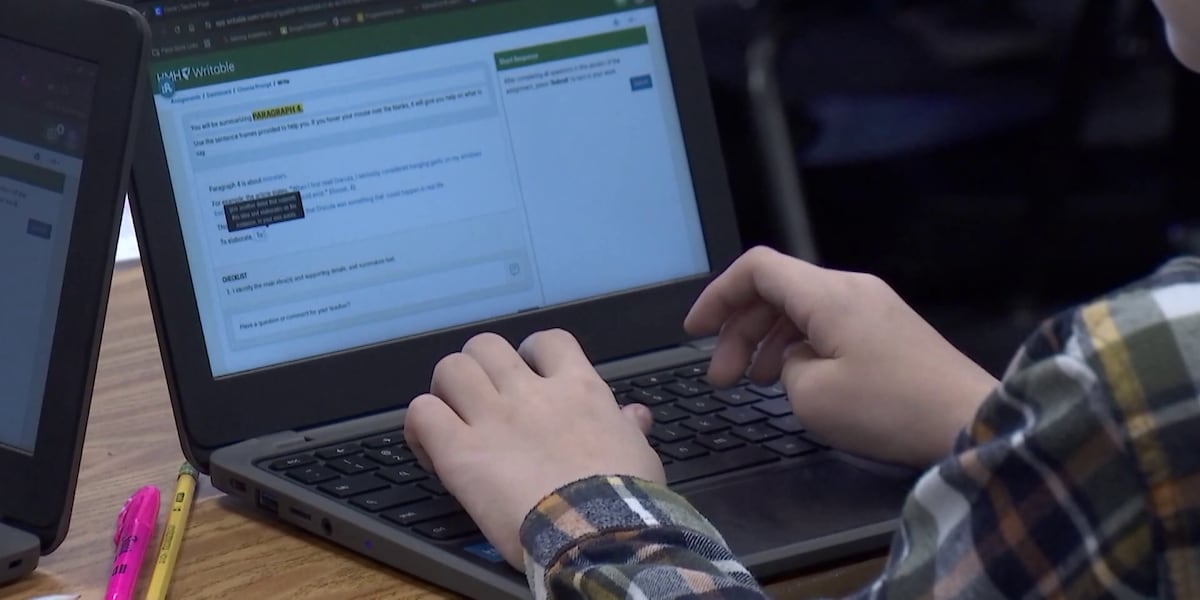
HINESBURG, Vt. (WCAX) – As the prevalence of artificial intelligence (AI) increases, educators in Vermont are grappling with how to effectively teach their students without relying too heavily on tools like ChatGPT. This ongoing dialogue has led to various strategies, including unsuccessful attempts to implement AI scanners and outright bans on the technology in some schools.
Marc Natanagara, a representative from AI Vermont, emphasizes the importance of preparing students for a future increasingly influenced by AI. “Our students’ future is our future. If we don’t set them off right in the use of AI, then we’re gonna be in trouble,” he said. The nonprofit aims to assist schools in embracing AI as a learning tool while ensuring that students remain engaged in their educational journeys.
The introduction of AI has presented unique challenges within Vermont classrooms. Stan Williams, a learning facilitator at the Champlain Valley School District, described the situation as a “storm” that has left educators scrambling to adapt. “It’s been a steep learning curve,” he noted, as schools seek to ensure that students are genuinely absorbing the material rather than relying on AI to complete their work.
Williams cautioned against allowing AI to “fake” a student’s understanding of a subject. “If you’re a novice or you’re learning a new concept or idea, you can’t let AI automate and kind of fake your ability to do this skill,” he explained. This perspective underscores the need for educational frameworks that prioritize critical thinking and personal engagement in learning.
AI Vermont is advocating for a shift in educational practices. Natanagara pointed out that the rise of AI provides an opportunity to reevaluate traditional teaching methods. “One of our fundamental underlying goals is to disrupt the status quo,” he said. He believes that harnessing AI’s disruptive potential can lead to innovative educational practices that are more aligned with the demands of the digital age.
Traditionally, students learn concepts in class and then complete assignments at home. However, with AI tools available, students might bypass understanding by using a bot to generate their homework. AI Vermont encourages educators to rethink their teaching approaches, emphasizing that AI should not become a crutch but rather a resource that enhances learning.
Natanagara stressed the importance of knowing when and how to use AI responsibly. “We should not look at it as normal until we’re convinced that our use of it is safe, effective, ethical and meaningful,” he asserted. This careful consideration is crucial as schools navigate the complexities of integrating AI into curricula.
Within the Champlain Valley School District, transparency plays a key role in how educators communicate with students about their assignments. Williams noted that it’s important for students to understand the purpose behind their tasks, especially in an era where information is readily accessible. “It is not that the world needs more essays about the impact of fear from ‘Lord of the Flies,’ but what it does need is people who can make sense of something, who can come up with their own ideas and who can communicate that,” he said.
Educators are also teaching students the appropriate contexts for AI use and stressing that the technology has its limitations. As these discussions evolve, the Vermont Agency of Education is in the process of developing a set of AI guidelines for schools, which are expected to be released in the coming months. This initiative highlights the state’s commitment to navigating the challenges posed by AI in education.
As Vermont schools adapt to this technological shift, the focus remains on fostering an environment where students can develop critical thinking skills and learn to use AI responsibly. The ongoing conversations among educators, parents, and policymakers will shape how the next generation navigates an increasingly AI-influenced world.
See also Employers Prioritizing AI Literacy See 76% Adoption Rate, Boosting Talent Retention
 EdTech Market Projects $92 Billion by 2033 as AI Adoption Surges to 50% in Schools
 OpenAI’s Chris Lehane Advocates for Federal Safety Standards for Frontier AI Models
 Brandon Amos Joins Reflection AI to Advance Reinforcement Learning and Open Models
 BoodleBox Secures $5 Million to Enhance AI Collaboration Across 1,200+ Institutions