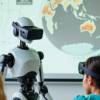
















The U.S. Department of Education, in collaboration with advocacy groups, has announced a significant reform initiative aimed at enhancing the rights of immigrant students and integrating artificial intelligence (AI) into educational settings. These reforms, which will commence with pilot programs in select districts, are set for full implementation in the 2027 school year and will include increased funding for bilingual education and the adoption of AI-driven platforms designed to personalize learning experiences.
A key element of this initiative focuses on improving language support for immigrant students, who often encounter barriers related to language proficiency and documentation status. Under these reforms, schools will receive dedicated funding to bolster bilingual programs and counseling services, assisting students in navigating the complexities tied to their immigration circumstances.
In addition to safeguarding immigrant rights, the reforms advocate for the deployment of AI-powered educational tools that empower teachers to tailor lessons to meet the diverse needs of individual students. These AI systems will analyze student performance and provide real-time feedback on their progress, fostering a more personalized and efficient learning environment.
Dr. Maria Delgado, the Secretary of Education, underscored the significance of these reforms, stating, “Education must be inclusive and forward-thinking. These reforms will ensure that immigrant students have the resources they need to thrive while also preparing all students for success in an AI-driven future.”
While the integration of AI in the classroom is generally well-received by educational technology experts, some educators have expressed concerns regarding the potential for these tools to deepen existing inequalities. Critics warn that without adequate resources and training, the application of AI could exacerbate the digital divide, consequently widening disparities in access to technology and educational support.
The reforms signal a concerted effort to address the educational needs of immigrant students while concurrently enhancing digital literacy across the student population. By prioritizing the development of inclusive educational practices and advancing technological integration, the U.S. is positioning itself to take the lead in both educational equity and innovation.
See also AI in K-12 Education Market Projected to Reach $9B by 2032, Growing at 14% CAGR
 AI’s Impact on African Education Threatened by Digital Divide, Analysis Reveals
 Ghanaian Students Embrace Generative AI, Enhancing Learning Autonomy and Creativity
 Top 5 Essential AI Books for Professionals to Enhance Decision-Making in 2026
 AI Transforms Personal Growth: 5 Key Ways to Leverage Data for Change