
















































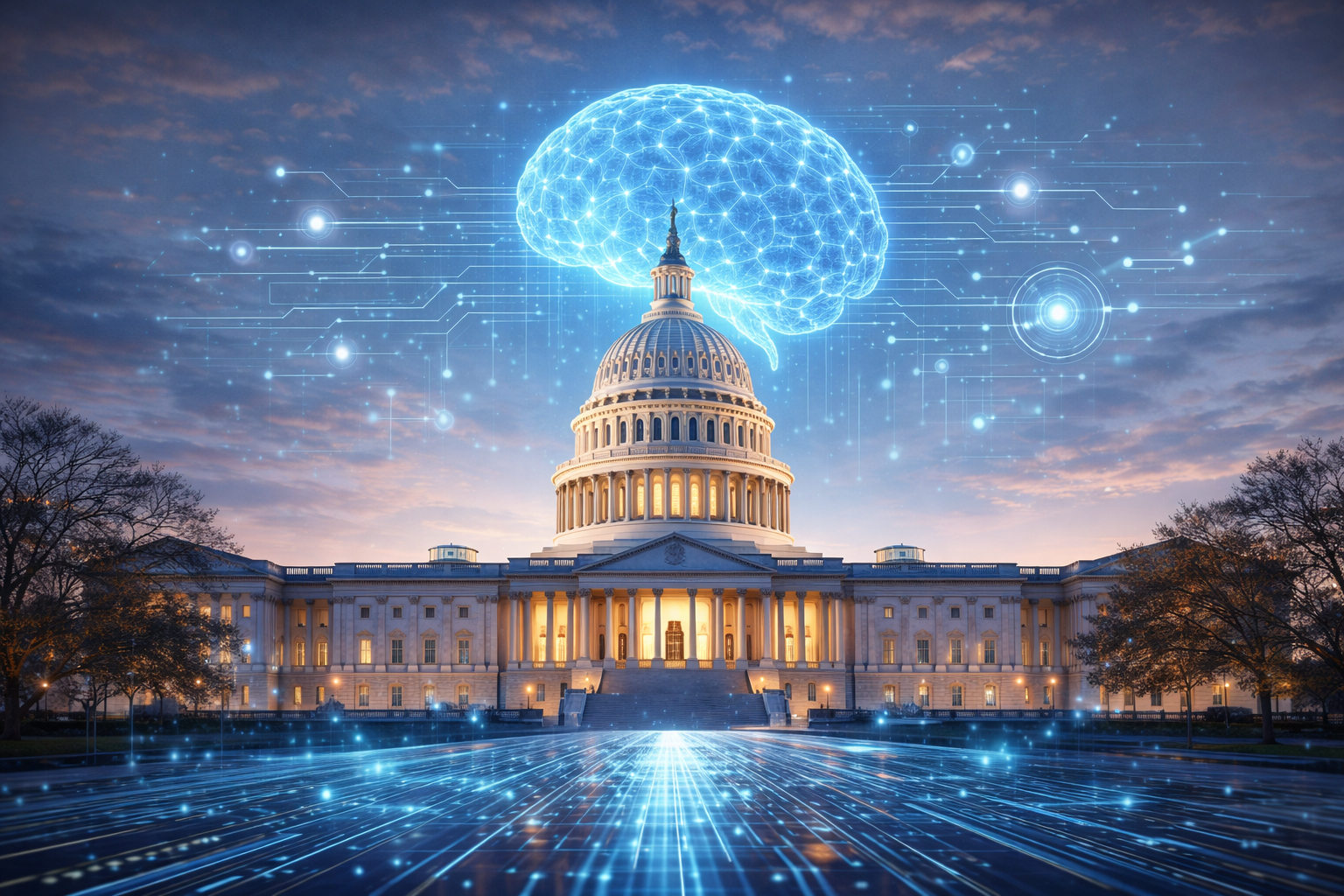
The White House has introduced a National Policy Framework for Artificial Intelligence, detailing the U.S. strategy to align AI development with workforce training, educational systems, and national regulation. This framework represents a significant advancement over previous AI announcements by explicitly linking policy to jobs and skills. It proposes the integration of AI training into existing educational and workforce initiatives while enhancing the government’s ability to monitor AI’s impact on the labor market.
In a post on LinkedIn, Keith Sonderling, United States Deputy Secretary of Labor, characterized the framework as “a bold step toward ensuring America leads the world in AI development and that American workers share in the benefits that AI creates.” He emphasized that this approach aims to avoid creating “a 50-state patchwork” of regulations, advocating instead for a unified federal policy.
Central to the framework is the concept of workforce readiness. The policy expects AI skills to be woven into current training programs rather than established as separate initiatives. Proposals include incorporating AI training into existing pathways like apprenticeships and enhancing federal efforts to analyze the task-level job changes brought about by AI adoption. This is intended to provide policymakers and employers with a clearer understanding of how job roles are evolving with increased AI integration.
Particularly noteworthy is the emphasis on enhancing the role of educational institutions, such as land-grant universities. These entities are expected to play a pivotal role in delivering AI-focused education, providing technical assistance, and supporting youth development programs. This marks a shift from a high-level strategic focus to practical implementation, requiring education providers to adjust existing models to meet the evolving skill demands of the industry.
Moreover, the framework outlines a more cohesive federal stance on AI regulation, aiming to mitigate the risks associated with inconsistent state-level regulations. It advocates for a national standard while allowing states to enforce existing laws concerning consumer protection, fraud, and child safety. The document also stipulates that oversight of AI should remain within current regulatory bodies, without the establishment of a new federal entity. Regulatory sandboxes are recommended to facilitate the testing and deployment of AI applications.
In addition to regulatory measures, the framework stresses the need for making federal datasets more accessible in AI-ready formats to foster development across both industry and academia. This accessibility is crucial for advancing AI capabilities and ensuring their alignment with societal needs.
Furthermore, the framework connects AI expansion with necessary infrastructure requirements, particularly regarding data center growth. It suggests streamlining federal permitting processes for AI infrastructure projects and allowing on-site energy generation to meet increasing demand, while also striving to curb rising electricity costs for residential customers.
On the safety front, the framework specifies that AI platforms must implement protective measures for children, including parental control tools, content moderation features, and age verification mechanisms. It also addresses intellectual property issues, asserting that disputes concerning AI training on copyrighted material should continue to be settled through the judicial system. The framework indicates that Congress might explore licensing or collective rights solutions for content creators.
Sonderling highlighted several of these concerns in his LinkedIn commentary, emphasizing the need to safeguard “free speech,” “intellectual property,” and “children” while promoting “American innovation.”
While the framework does not introduce immediate regulations, it establishes a clearer path for implementing AI policy across education, workforce systems, and industry. For educational technology providers and training organizations, the focus will be on integration, where AI capabilities are incorporated into existing programs. This strategy aims for measurable skills development that aligns with labor market demand.
This new direction illustrates a pragmatic approach to AI, positioning it as an integral aspect of government strategies related to employment, training, and economic advancement. The framework seeks not only to harness the potential of AI but also to ensure that its benefits are broadly shared across the workforce.
ETIH Innovation Awards 2026 are now open for entries, recognizing education technology organizations that demonstrate measurable impact in K–12, higher education, and lifelong learning sectors. The awards welcome submissions from the UK, the Americas, and other international regions, with entries evaluated based on evidence of outcomes and real-world application.
See also Andrew Ng Advocates for Coding Skills Amid AI Evolution in Tech
 AI’s Growing Influence in Higher Education: Balancing Innovation and Critical Thinking
 AI in English Language Education: 6 Principles for Ethical Use and Human-Centered Solutions
 Ghana’s Ministry of Education Launches AI Curriculum, Training 68,000 Teachers by 2025
 57% of Special Educators Use AI for IEPs, Raising Legal and Ethical Concerns