










































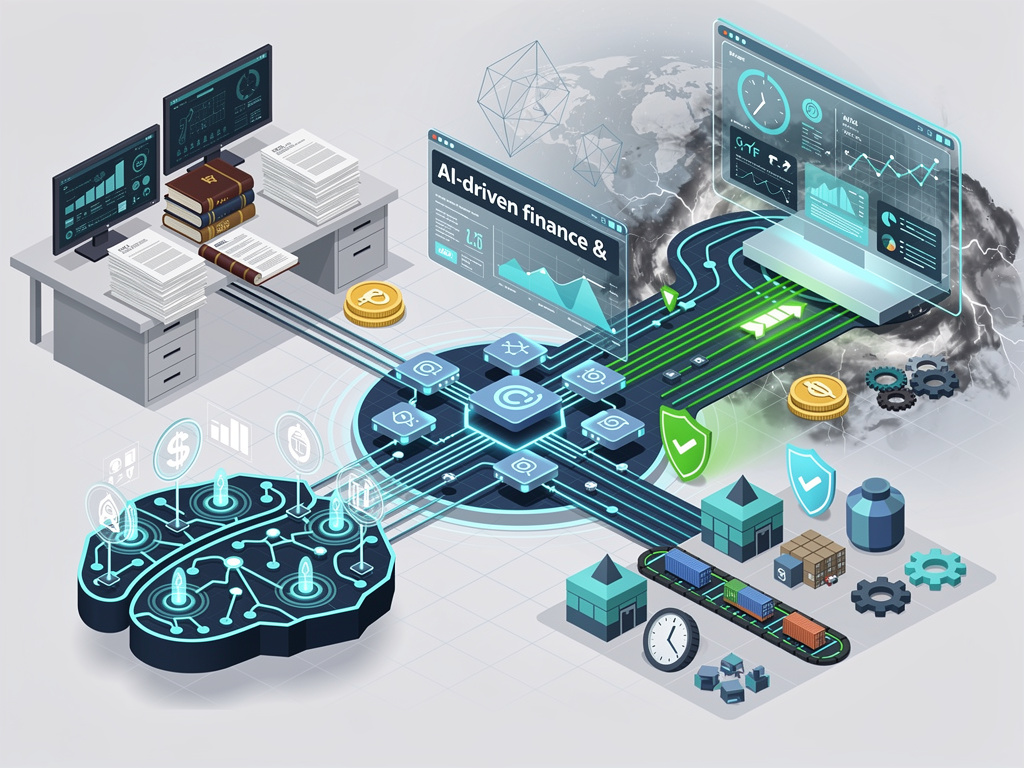
In a landscape increasingly shaped by supply shocks, labor shortages, and geopolitical tensions, finance and procurement functions have shed their traditional back-office roles to become central to corporate resilience. Etosha Thurman, chief marketing officer for finance and spend management at SAP, highlighted this evolution, stating, “The last few years have stress-tested every assumption about stability as supply shocks, labor shortages, interest rate swings and geopolitical tensions all hit at once.” Today, procurement teams actively secure supplies, renegotiate contracts, and mitigate risks, while finance professionals are tasked with relentless forecasting, cash preservation, and funding expansion, as detailed in an analysis by Axios sponsored by SAP.
This transformation underscores that resilience now encompasses forecasting accuracy, risk mitigation, spend oversight, and rapid responses derived from networks of suppliers, partners, and customers. “Resilience is no longer just a supply chain or IT concern. It lives in how companies forecast and mitigate risks, spend and manage cash, and how quickly teams can act on signals from their network of suppliers, partners, and customers,” asserted Thurman. This shift necessitates integrated intelligence rather than fragmented tools.
SAP aims to address this need by embedding artificial intelligence directly into core workflows, from sourcing events to supplier interactions and financial processes. “Companies do not need more tools; they need intelligence built into the work they already do,” Thurman explained. This integration allows teams to detect risks early and pivot swiftly, turning disruptions into strategic advantages.
AI Agents Enter the Fray
SAP’s recent innovations, including task-specific AI agents paired with the Joule co-pilot, signify a transition from query-based AI to embedded decision-making. A survey conducted with The Economist revealed that 75% of respondents experienced productivity or efficiency gains from AI, reinforcing its shift from optional to essential. For sourcing teams, SAP’s Sourcing Assistant can scan supplier bids in seconds, highlighting variances and flagging issues. “The result is more time spent on judgment and strategy and less on gathering information,” Thurman noted.
These efficiencies free teams to focus on mitigating performance risks, strengthening supplier relationships, developing strategies, and collaborating earlier with stakeholders. “Efficiency gains are creating space for influence. With room to think ahead rather than react, teams can assess long-term risks more deeply and explore new opportunities that once felt out of reach,” Thurman elaborated in the Axios piece. SAP’s Q4 2025 Business AI release further expanded Joule Agents across finance, HR, and supply chain, introducing new models like SAP-RPT-1 and zero-copy data sharing with Snowflake.
The integration of AI technologies aims to break down silos within organizations. The SAP Business Suite connects finance, procurement, supply chain, and HR, allowing leaders to gain insights and coordinate more effectively. “When the business is connected at the data level, leaders can see impact earlier, coordinate more effectively, and make decisions that reflect the full context of the organization,” Thurman asserted. A study from Economist Impact found that 89% of procurement professionals felt confident in leveraging AI for efficiency, with 78% trusting it for external risk management—a notable 37% increase year-over-year.
Thurman’s emphasis on breaking down silos at SAP Connect highlighted the need for cross-departmental collaboration. “Hey, these are the priorities that your finance colleagues are facing, and this is how we’re easing that… it opens up the conversation about how procurement needs to shift.” Customers like Heartland Dental have demonstrated this holistic approach via SAP Ariba.
In an interview with Procurement Magazine, Thurman discussed how AI integration transforms SAP Ariba’s procure-to-pay processes. “AI integration enables procurement teams to meet today’s demands while simultaneously reducing manual intervention, enforcing compliance, and enhancing user experience.” Features like guided buying promote risk-aware, sustainable purchases with financial incentives, positioning procurement as a strategic enabler.
Leadership Imperatives in the AI Era
Thurman emphasized that effective AI adoption begins with visionary leadership. “What we see working well… is leaders setting a vision for AI and communicating it broadly. This creates transparency, which builds understanding and trust in AI. Providing AI training and change management is essential.” She advised companies to start small in high-impact areas, prioritize people, and align AI initiatives with goals such as growth and resilience.
As the demand for new skills continues to rise, professionals are increasingly focused on relationship management to interpret AI signals, judgment to evaluate risk, and creativity to generate novel solutions. “AI doesn’t replace creativity—it augments it,” Thurman noted. The Supply & Demand Chain Executive reported that CFOs are prioritizing sustainability (62%), AI integration (41%), and supply chain reconfiguration (37%) over cost savings (17%).
At SAP Sapphire 2025, the company unveiled agentic AI for finance and spend, with Joule enhancing tasks like bid retrieval in SAP Ariba Procurement. Thurman’s keynote stressed the importance of harmonized data and integrated applications to ensure agility amid uncertainty.
Looking ahead, experts predict that AI will automate routine tasks—such as managing expenses, receipts, and approvals—thus freeing teams to focus more on strategic initiatives. The capabilities of SAP Concur have been noted for outperforming startups in receipt-scanning AI. The Procurement Magazine highlighted SAP Ariba’s global Intake Management for streamlined requests and compliance.
As we approach 2026, the need for seamless integration of intelligence will be paramount. Thurman envisions a future where “SAP’s products work in lockstep with customers… helping them anticipate disruption sooner, advance strategic goals, and unlock new value beyond cost control.” With AI proficiency topping skill priorities, finance and procurement stand poised to transform uncertainty into accelerated growth.
See also dForce Partners with Sage to Deliver AI-Enhanced Accounting Solutions for Scale-Up Finance Leaders
 Zocks Raises $45M to Enhance AI Solutions for Financial Advisors and Workflow Automation
 Mine Secures $14 Million Funding, Launches AI Personal Finance Agent MoneyGPT
 UK Financial Conduct Authority Launches Review on AI’s Impact in Retail Finance