















































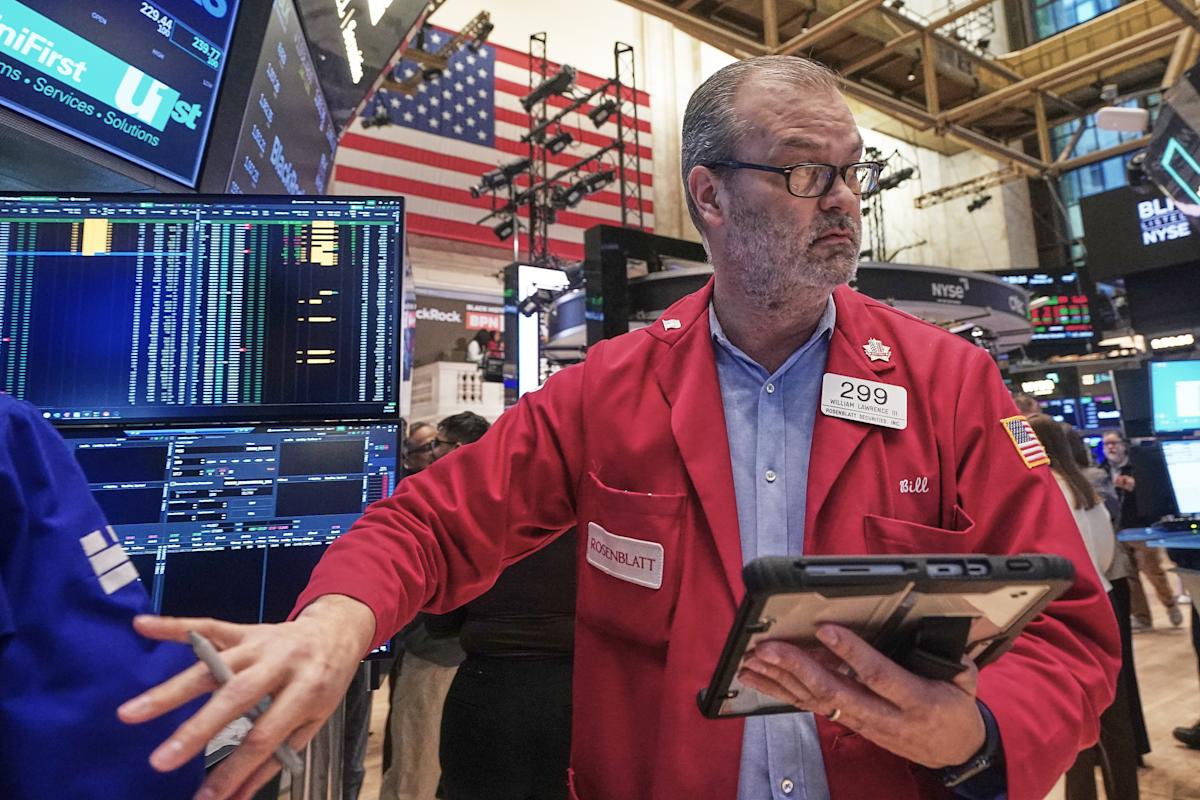
The stock market recently grappled with the potential disruptions posed by artificial intelligence (AI), as investor concerns rippled through multiple sectors, including technology, wealth management, and logistics. Following a tumultuous week, the S&P 500 and Nasdaq Composite both ended down more than 1%, reflecting a broader sell-off that affected Financial Services, Consumer Discretionary, and tech stocks.
The Dow Jones Industrial Average fell 1.2% for the week, while the Nasdaq Composite dropped 2%, and the S&P 500 slipped 1.4%. “That’s the dark side of AI,” stated Tim Urbanowicz, chief investment strategist at Innovator Capital Management, in an interview with Yahoo Finance. Urbanowicz emphasized the necessity of monitoring this trend, suggesting that many industries could face disruption, which poses a significant threat to established revenue models.
Among the hardest hit were shares of transportation firms, with C.H. Robinson closing the week down 11% and Universal Logistics down 9%. These declines followed the announcement of a new tool by a Florida-based company designed to scale freight volumes without increasing workforce numbers. The fears extend to wealth management, too, as stocks like Charles Schwab and Raymond James saw losses of 10% and 8%, respectively, after a new AI-driven tax tool was unveiled. This innovation raises concerns about the potential for automation to pressure the high advisory fees that characterize the industry.
The wave of anxiety surrounding AI—often referred to as the “AI scare trade”—has prompted significant declines in software stocks, which have already been under pressure. Investors are particularly wary of AI’s potential to automate tasks traditionally managed by enterprise giants such as Salesforce and ServiceNow, which could jeopardize their revenue streams. The Tech-Software Sector ETF, which includes major players like Microsoft and Palantir, has fallen 22% year to date.
While some on Wall Street view the sell-off as overly dramatic, Urbanowicz cautioned that the bottom may not yet be in sight. “Margins are through the roof in this category of stocks. Those haven’t come down yet, and valuations still are pretty elevated,” he noted. Despite this caution, Urbanowicz maintains a “very supportive backdrop” for stocks, forecasting the S&P 500 to reach 7,600 by the end of the year, bolstered by favorable regulatory measures and corporate tax incentives from current legislative actions.
Other sectors, such as Energy, Consumer Staples, and Materials, have seen double-digit percentage increases year to date, contrasting sharply with the 2.5% decline in the Technology sector. Amanda Agati, chief investment officer at PNC Asset Management Group, encourages investors to look past the current volatility and focus on broader trends. “I think this is a short-term blip, and the fact that we’re seeing pretty significant market breadth outside of these one-off names… really gives me confidence that the rally is sustainable, even though it’s going to be a choppy year,” she stated.
In light of the current market dynamics, UBS strategists are advising investors to diversify beyond tech to mitigate risks while capitalizing on the potential upside AI may offer across various industries. Ulrike Hoffmann-Burchardi, CIO Americas and global head of equities at UBS Global Wealth Management, commented that companies actively leveraging AI to enhance their operations and evolve their business models are positioned to benefit most, particularly in the financial and healthcare sectors.
As the market navigates these complexities, the interplay between technology and traditional sectors underscores a pivotal moment for investors. The implications of AI extend well beyond tech, reshaping established industries and prompting a reevaluation of business models across the board.
See also AI Tools Disrupt Wealth Management: Charles Schwab Faces Profit Pressure Amid Digital Shift
 Singapore Unveils $10B AI Strategy in 2026 Budget, Focuses on Finance Sector Transformation
 Apollo Global Management Reveals $40T Private Credit Vision and $7T AI Funding Needs at BofA Conference
 Local Startups Account for 67% of AI Patents in Korea’s Finance Sector, Report Reveals
 Agentic AI Sets New Standard in Financial Services Amidst Governance Challenges