






































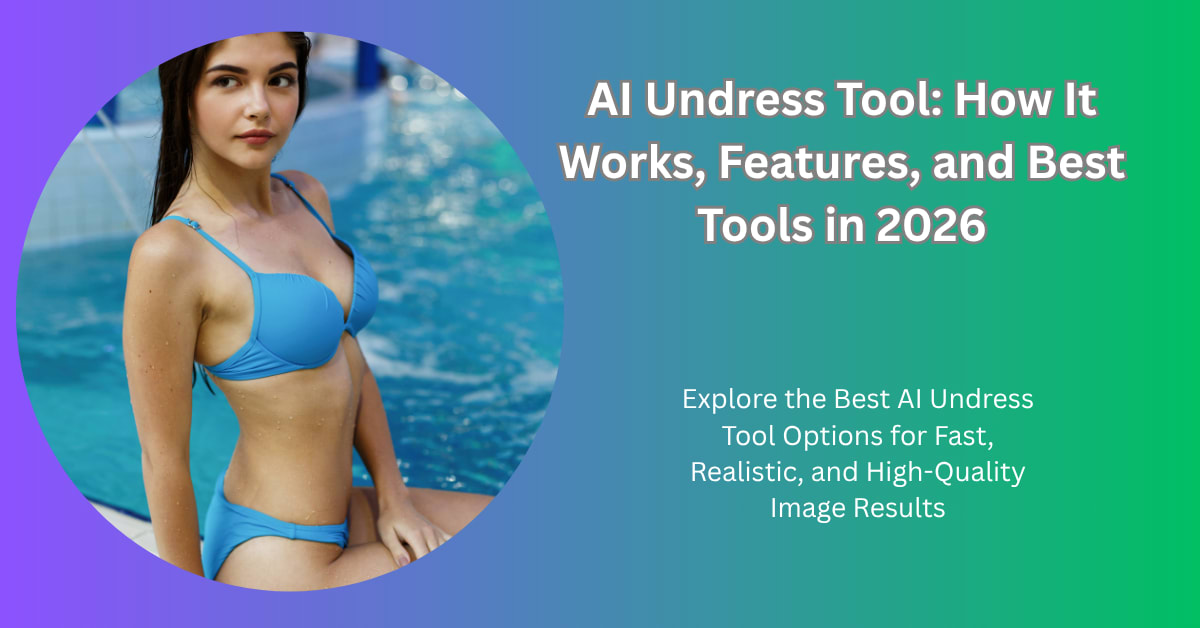
Artificial intelligence is poised to reshape the digital landscape, particularly through innovations in image processing and content creation. Among the most notable advancements is the emergence of AI undress tools, which utilize deep learning, computer vision, and generative adversarial networks (GANs) to analyze and alter images with impressive accuracy. This technology marks a significant leap in AI-driven visual editing, enabling automated and sophisticated transformations of images.
By 2026, the capabilities of AI undress tools have seen remarkable evolution, enhancing realism, accelerating performance, and integrating more advanced customization features. As this technology progresses, understanding how these tools operate—along with their various advantages and limitations—becomes increasingly critical for effective and responsible usage.
An AI undress tool processes images to generate modified visual outputs leveraging trained neural networks. It relies on complex technologies such as computer vision algorithms, deep learning models, and image-to-image transformation systems. Rather than requiring manual editing, the AI identifies patterns, shapes, and textures within an image to produce a reimagined version. These tools are often embedded in comprehensive AI platforms that encompass image enhancement and visual generation systems.
The functioning of an AI undress tool generally unfolds through several stages, powered by machine learning. Initially, users upload an image, which the AI scans to detect crucial visual elements such as body structure, pose, and lighting conditions. Subsequently, feature mapping occurs, where the AI employs its training dataset to establish patterns and structures, ensuring consistency during transformations. Predictive modeling follows, utilizing algorithms to estimate altered visual components. After processing, the AI reconstructs the image using sophisticated rendering techniques, making adjustments to textures and lighting for enhanced realism. Finally, the processed image is generated and delivered to the user, with high-end tools offering detailed and refined outputs.
The 2026 landscape of AI undress tools features various platforms, each providing distinct functionalities. For instance, OurDream.AI stands out as a comprehensive platform that combines powerful AI models with an intuitive interface, appealing to both novices and experienced users. Its key strengths include producing highly realistic outputs with deep learning algorithms and offering flexible settings for users to adjust specifics such as lighting and texture.
Candy.ai, another popular platform, emphasizes versatility and creative control. Users can experiment with various styles through interactive AI models, ensuring high-quality image generation while maintaining smooth rendering technology. In contrast, SoulGen AI specializes in blending text prompts with image inputs, allowing users to create unique visuals tailored to personal preferences.
Meanwhile, BasedLabs AI is noteworthy for its flexibility across multiple AI models, catering to diverse image transformation needs. YouCam AI focuses on enhancing images rather than generating new ones, refining existing visuals for clarity and quality. Artbreeder takes a different approach, allowing users to merge and modify images collaboratively for more creative outcomes. Lastly, DeepImage AI excels at enhancing image clarity and detail, making it particularly effective for low-resolution inputs.
Employing AI undress tools offers numerous benefits for content creators, designers, and digital users. These tools can significantly accelerate processing times, automate time-consuming editing tasks, and provide a range of customization options. Advanced AI models yield highly realistic outputs, helping creators achieve professional-level results without incurring high software costs. Moreover, user-friendly interfaces make these platforms accessible to beginners, democratizing advanced image manipulation.
Despite their advantages, AI undress tools come with inherent limitations. The quality of outputs can be inconsistent, and results may vary based on the quality of input images. Additionally, not all platforms provide advanced customization options, and ethical concerns surrounding AI-generated content necessitate careful consideration regarding privacy and misuse. Users are advised to utilize high-quality images and maintain consistent lighting for optimal results while avoiding excessive edits that could detract from realism.
Looking ahead, the future of AI undress tools holds promise, with anticipated advancements in realism, real-time processing, and user control. Integration with video applications and enhanced AI models is expected to further elevate the capabilities of these tools. As these technologies continue to evolve, responsible usage remains paramount, ensuring that ethical considerations are at the forefront of AI-driven creativity.
The rise of AI undress tools signifies a profound shift in image processing capabilities, making powerful technologies accessible to a broader audience. By employing platforms like OurDream.AI and Candy.ai, users can harness the potential of AI while navigating the complexities of ethical standards and privacy concerns in an increasingly digital world.
See also Sam Altman Praises ChatGPT for Improved Em Dash Handling
 AI Country Song Fails to Top Billboard Chart Amid Viral Buzz
 GPT-5.1 and Claude 4.5 Sonnet Personality Showdown: A Comprehensive Test
 Rethink Your Presentations with OnlyOffice: A Free PowerPoint Alternative
 OpenAI Enhances ChatGPT with Em-Dash Personalization Feature