

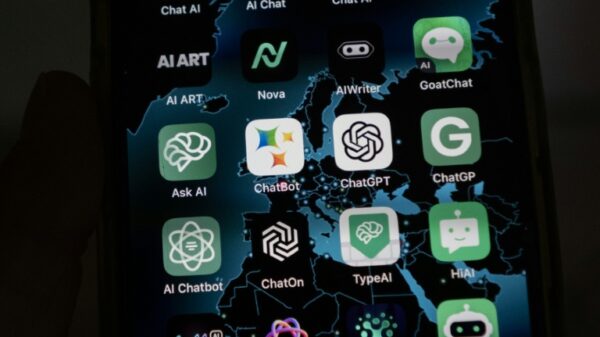



































If educators want to foster genuine human intelligence, they must find ways to limit students’ reliance on artificial intelligence (AI). Generative AI, which creates new content based on user prompts, is poised to transform various fields, though the full extent of its impact remains uncertain. This shift has already begun to create significant challenges within the educational system, particularly as tools like ChatGPT can quickly solve complex math problems and generate written assignments within seconds.
A segment of the educational community argues that the best strategy is to teach students how to effectively integrate AI into their learning processes. In Nevada, for instance, the school district encompassing Las Vegas has initiated trials involving AI in the classroom. Additionally, in April, former President Donald Trump signed an executive order aimed at “promoting the appropriate integration of AI into education.” A recent survey indicated that over a quarter of teenagers reported using ChatGPT to assist with homework in 2024.
While many educators acknowledge the potential advantages of AI in learning, there are substantial risks associated with its unchecked use. Education traditionally serves two primary purposes: to provide moral instruction and to equip students with critical thinking skills. The latter is especially crucial in a world where AI can easily take over basic tasks.
To illustrate this point, consider a hypothetical scenario where a child becomes lost in a forest, far from safety. The first necessity is to know which direction to head—this is akin to having a moral compass. The second requirement is to possess the skills to navigate and overcome obstacles—this represents the intellectual training that schools aim to provide.
As AI continues to evolve, the education system faces a pivotal moment. Striking a balance between leveraging the benefits of these technologies and ensuring that students develop their own reasoning and problem-solving skills will be critical. Educators are now tasked with creating curricula that not only incorporate AI tools but also emphasize the importance of independent thought and ethical considerations in their application.
The potential for AI to assist in personalized learning is significant; however, if students rely too heavily on these tools, the core objectives of education may be compromised. The conversations around this issue are ongoing, with various stakeholders exploring innovative ways to adapt teaching methods to a changing landscape dominated by technology.
Looking forward, the role of AI in education will likely continue to be a contentious topic. As districts implement AI-driven solutions, the need for comprehensive frameworks that guide their use in classrooms will become increasingly apparent. Educational institutions, policymakers, and tech developers must work collaboratively to ensure AI serves as a beneficial tool, rather than a crutch that undermines the foundational goals of education.
See also Uppsala University Reveals SRAM-Frequency Tradeoffs Impacting LLM Energy Efficiency
 OpenAI Reveals GPT-4o’s 320ms Response Time in New Era of Real-Time Multimodal AI
 Ngee Ann Polytechnic Integrates Generative AI into Curriculum for All Students by 2026
 TurboDiffusion Achieves 200x Faster Video Generation, Revolutionizing Content Creation
 Kakao Reveals Kanana-v-4b-Hybrid AI Model with Enhanced Multimodal Capabilities