


















































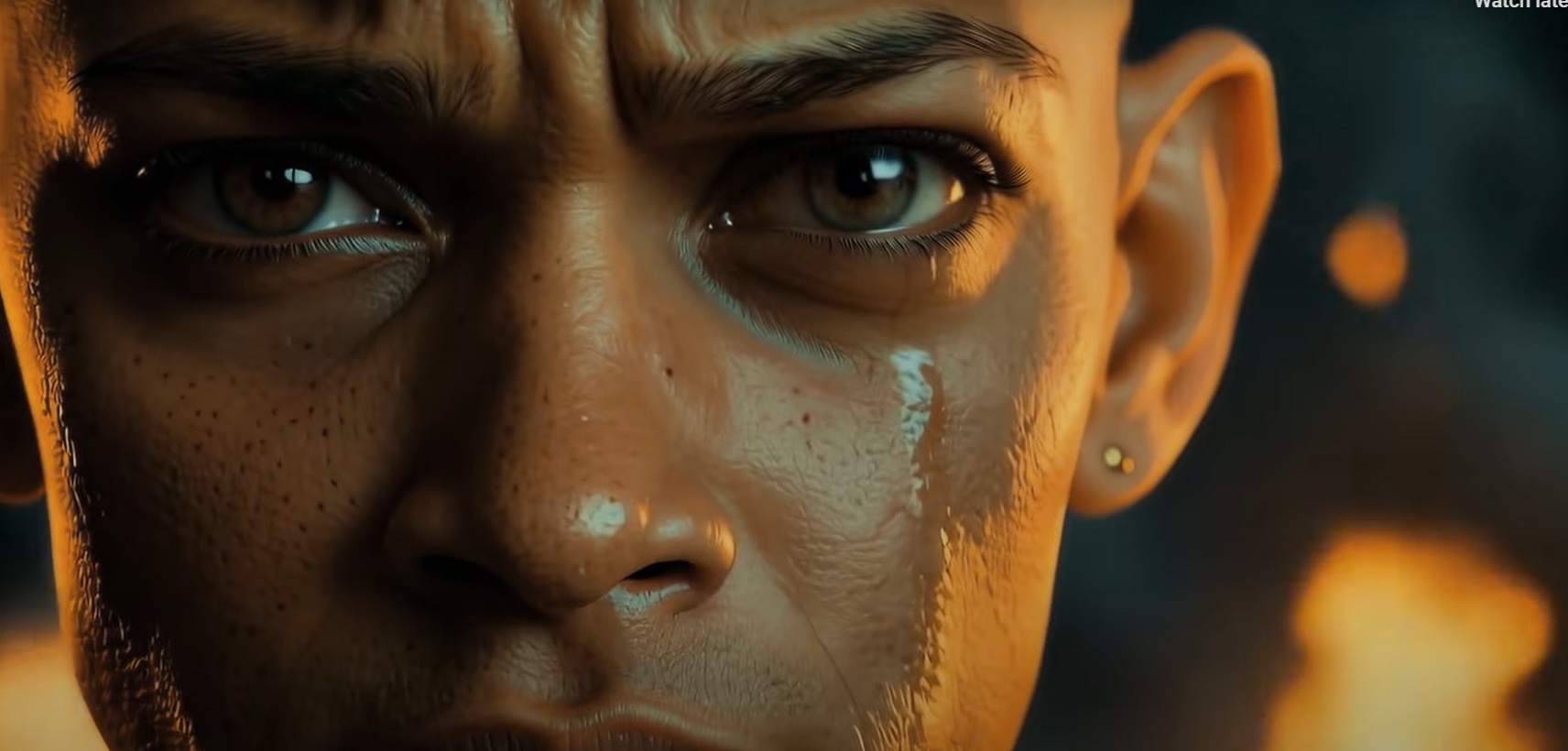
Ajay Devgn, alongside his nephew Danish Devgn, is poised to redefine storytelling through technology with the launch of Lens Vault Studios (LVS), a next-generation entertainment studio. This venture marks a significant step forward with the announcement of its inaugural original property, Bal Tanhaji, a generative AI-driven narrative that signifies a transformative shift in the way Indian stories are created, expanded, and consumed in the digital landscape.
Bal Tanhaji builds on the success of Ajay’s earlier film, Tanhaji: The Unsung Warrior, which became a blockbuster hit in 2020. The new project aims to delve into untapped narrative possibilities, reimagining the franchise for an audience that engages with content across diverse platforms. This initiative reflects LVS’s overarching goal of constructing enduring story worlds that seamlessly integrate various formats and technologies.
At the core of this innovative storytelling is Prismix Studios, LVS’s in-house generative AI and creative technology engine. This advanced platform drives the visual design, narrative scalability, and comprehensive world-building framework of Bal Tanhaji.
In discussing the studio’s vision, Ajay Devgn, Chairman of Lens Vault Studios, stated, “Lens Vault Studios was created to move beyond conventional boundaries of storytelling. Our focus is on discovering formats and mediums that are still largely untapped, while applying the discipline and scale of mainstream cinema. Bal Tanhaji represents the beginning of this journey into future-ready content creation.”
Danish Devgn, Founder and CEO of LVS, elaborated on the studio’s first intellectual property, emphasizing that generative AI opens new pathways for evolving traditional narratives. “With Bal Tanhaji, we are redefining how legacy narratives can evolve through technology. Generative AI allows us to expand story universes in ways that were previously impossible, making them more immersive, scalable, and relevant for new-age audiences. This is the foundation on which Lens Vault Studios is being built,” he remarked.
Ajay Devgn’s interest in technology is not new. He has a history of pioneering advancements in the industry, notably being recognized in the Limca Book of Records for incorporating the first computer graphics in India for his 1998 film, Pyaar To Hona Hi Tha. He managed this feat by utilizing 123 layers independently due to the novelty of the technology at the time. Over the years, he has expanded this fascination into a successful venture, founding the visual effects company NY VFXWAALA in October 2015, named after his children Nysa and Yug. The company has worked on numerous prestigious films, including Prem Ratan Dhan Payo, Bajirao Mastani, and Shivaay, the latter of which won a National award.
Interestingly, Ajay was also involved in Khakee (2004), a landmark film that was the first in India to employ the Digital Intermediate (DI) process. This technique is crucial in post-production, as it allows raw footage to be converted into high-resolution digital formats for meticulous color correction, grading, and visual enhancement, ensuring a polished final product.
With the launch of Bal Tanhaji and the establishment of Lens Vault Studios, Ajay and Danish Devgn are not only innovating in storytelling but also setting a precedent for the integration of technology in Indian cinema. As they venture further into this new realm, the potential for reshaping the narrative landscape appears boundless, engaging audiences in ways that resonate with the demands of the digital age.
See also AI Failures Highlight Serious Risks in Education and Autonomous Systems
 Generative AI Doubles Selling Time, Boosts Productivity for 56% of Sales Reps
![Ollama Launches Experimental Image Generation with FLUX.2 [klein] and Z-Image-Turbo](https://aipressa.com/wp-content/uploads/2026/01/Ollama-Launches-Experimental-Image-Generation-with-FLUX2-klein-and-Z-Image-Turbo-150x150.png) Ollama Launches Experimental Image Generation with FLUX.2 [klein] and Z-Image-Turbo
Ollama Launches Experimental Image Generation with FLUX.2 [klein] and Z-Image-Turbo Lenovo Reveals AI Strategy at Davos, Partners with Global Language Models Amid Regulations
 NVIDIA Optimizes Visual Generative AI on RTX PCs with New ComfyUI and Model Enhancements






