















































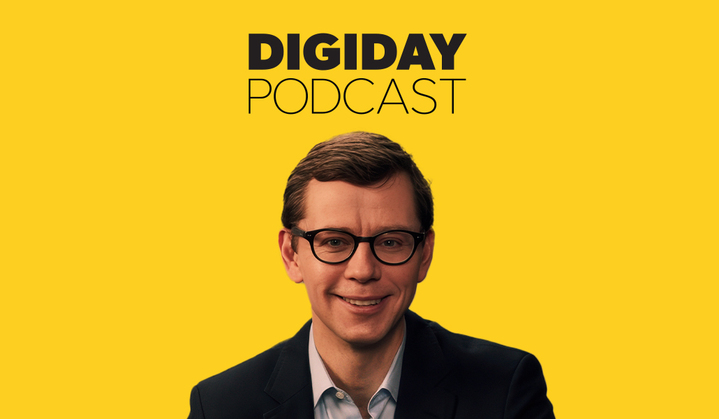
As generative AI technology becomes increasingly integrated into marketing strategies, companies face a complex landscape of copyright risks. Marketers are tasked with evaluating how the use of these AI tools might not only jeopardize their own copyrights and trademarks but also potentially infringe on the rights of others. This intricate legal terrain is explored by Rob Driscoll, a partner at the law firm Davis Wright Tremaine LLP, who recently discussed these challenges on the Digiday Podcast.
The ongoing evolution of generative AI usage among brands has shifted dramatically. Initially, many companies instructed their advertising agencies and design teams to avoid generative AI tools entirely. However, Driscoll notes that this resistance has transformed into acceptance, with firms now mandating the use of AI technologies in their marketing efforts. “Early on there was a lot of activity around brands instructing their ad agencies… ‘Do not use any generative AI tools in connection with our work.’ That has kind of flipped, such that now a lot of companies are embracing it,” he said.
Nonetheless, not every brand is ready to fully outsource their creative processes to AI platforms like ChatGPT or Midjourney. For example, Disney has recently partnered with OpenAI, allowing users to create AI-generated videos featuring iconic characters such as Mickey Mouse and Darth Vader. This move likely involved extensive legal scrutiny to assess the potential risks of trademark dilution, given that brands must maintain control over how their trademarks are used. “One of the trademark law principles is that trademarks have to be used consistently and in a manner that’s under the control of the trademark owner,” Driscoll explained.
The uncertain nature of AI-generated content raises significant copyright concerns. In the United States, copyright law stipulates that if an entity creates a new work that is substantially similar to an existing one, it may be deemed copyright infringement, regardless of the intent to copy. This introduces a notable risk for companies utilizing generative AI, as they may produce creative outputs unknowingly similar to pre-existing works. Driscoll emphasizes this fear, stating, “That’s really the fear with generative AI: that a company is going to use an AI tool to produce some creative material and just not know that… the output is closely similar to something that already exists.”
To manage these copyright concerns, many companies adopt a strategy in which AI-generated content serves as a starting point rather than the final product. This approach includes human oversight and creativity to ensure the output is transformed into a genuinely original creation. While such measures may not be infallible, Driscoll notes that this method is widely employed among brands exploring generative AI capabilities.
Risk tolerance varies significantly among brands when it comes to generative AI. Some organizations refuse to produce advertising that they cannot wholly own, while others are more pragmatic. “We may not own this material… but we’re okay with that because we like the output or we like the message,” Driscoll noted, highlighting the diverse attitudes within the industry. This acceptance of shared ownership is becoming a common trade-off for many marketers leveraging AI technology.
Many sophisticated companies utilizing generative AI opt for enterprise-level software rather than publicly accessible tools. Licensing agreements often include clauses ensuring that the inputs provided by the company will not be used to train the AI model for other users. This approach offers an added layer of protection, allowing firms to feel more secure in their creative processes.
As brands navigate the intersection of generative AI and copyright law, they must carefully weigh the benefits of innovation against the potential legal pitfalls. The broader implications of these technological advancements are still unfolding, but the transition from apprehension to adoption signifies a pivotal moment in marketing. As companies embrace generative AI, the dialogue surrounding intellectual property and creative ownership will likely continue to evolve, making it imperative for marketers to stay informed and agile in this dynamic landscape.
See also Resemble AI Launches Chatterbox Turbo, Revolutionizing Real-Time Voice AI with 350M Parameters
 Unlock Powerful Local AI: 7 Advanced Uses for Your PC Beyond Chatbots and Images
 Adobe Unveils Firefly Video Editor with Unlimited Generations, New AI Editing Tools
 AI Detection Challenges: 5 Lessons from 2025’s Deepfake Surge and Future Implications
 Shanghai AI Lab Launches MemVerse: First Universal Multimodal Memory Framework for Agents