




































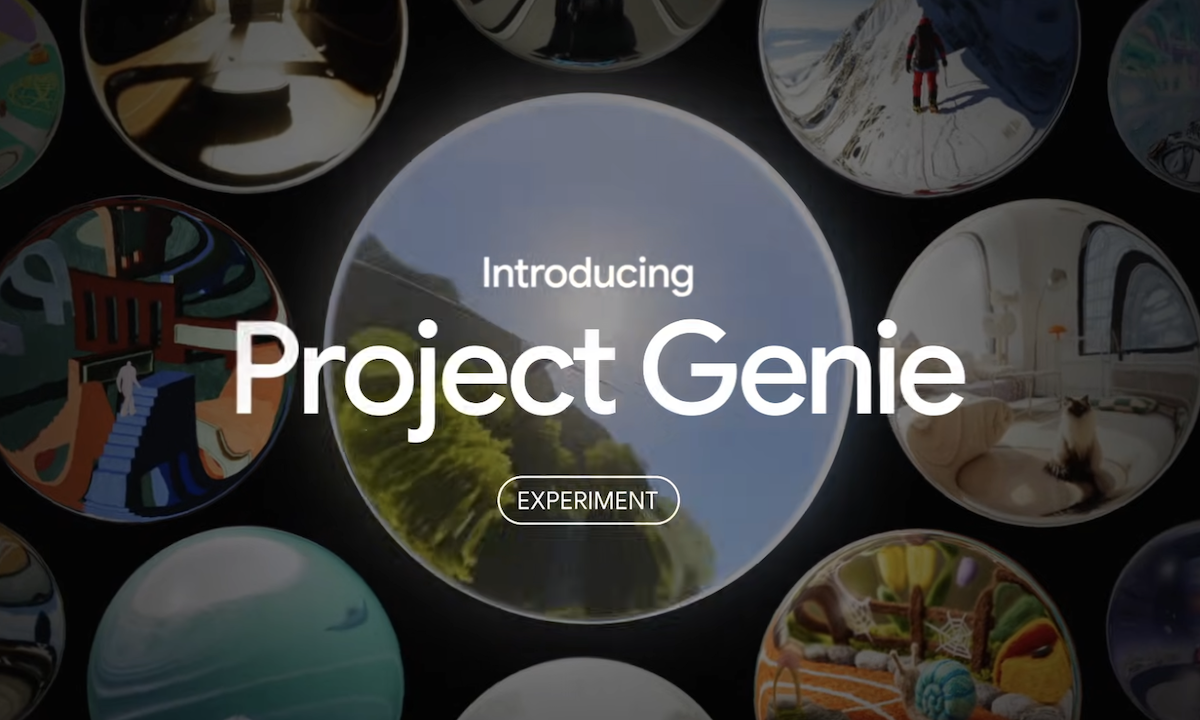
Google DeepMind has launched Project Genie, an experimental research prototype leveraging its latest world-model artificial intelligence (AI) to generate and explore interactive virtual environments, the company announced in a blog post on January 29. This initiative represents a significant advancement in the realm of generative AI, moving beyond simple text or image creation to the dynamic construction of interactive worlds.
At the core of Project Genie is Genie 3, a general-purpose world model capable of producing diverse, explorable environments using straightforward text and image prompts. Users can design landscapes, characters, and environments that evolve in real time, with interactive elements that respond to user movement and actions. This capability aligns with a broader research push by Google into advanced AI systems that facilitate dynamic world-building rather than static content generation.
The simulations generated by Genie can range from natural settings such as deserts and forests to intricate ecosystems and imaginative scenarios, all sculpted from user descriptions. This innovative approach marks a departure from earlier scene generation systems that often lacked continuity and coherence over extended explorations.
Access to Project Genie is currently available to users subscribed to Google AI Ultra in the United States, allowing them to experiment with these new world-generation features firsthand. The introduction of this prototype coincides with Google’s ongoing efforts to enhance its AI capabilities amid intensifying competition from other tech giants like OpenAI and Meta, which are also making strides in the field of dynamic content creation.
Genie 3 was initially unveiled in 2025 as a groundbreaking world model, enabling the construction of interactive environments that maintain logic and continuity over multiple minutes of exploration. This advancement is particularly significant as researchers view world models like Genie as pivotal steps toward achieving more generalized AI, with the ability to learn and reason within simulated environments. Such progress underscores the growing sophistication of AI technology as it seeks to replicate more complex human-like interactions.
Alongside Project Genie, there is a notable trend toward spatial intelligence within the AI industry, emphasizing an AI’s capability to understand and generate three-dimensional environments. This is evidenced by the introduction of Marble, a multimodal world model launched by World Labs in November. Marble is designed to allow AI systems to perceive, predict, and interact with physical spaces, generating navigable 3D scenes from various input types such as text, images, video, or sketches. This further illustrates a significant shift in focus from traditional language and image models to more nuanced and complex spatial interactions.
As the landscape of generative AI continues to evolve, the significance of projects like Genie grows. They not only represent technological advancements but also pave the way for new applications in various fields, from gaming to education and beyond. The ability for users to actively engage in the creation of their virtual worlds suggests a democratization of content generation, where individuals can explore their creativity in unprecedented ways.
Looking ahead, Project Genie exemplifies the potential of AI to transform how we interact with digital environments. As competition in the sector heats up and new technologies emerge, the implications for industries reliant on interactive experiences, storytelling, and user engagement are profound. The ongoing development of such advanced AI systems signifies a future where the boundaries between reality and the virtual world become increasingly blurred, enabling richer, more immersive experiences for users.
See also Pixazo Launches Grok Imagine API for Image-Driven Animation and Sound Integration
 Any Video Converter Launches V9.1.6 with New AI Image and Video Generators
 Springboards Warns AI May Limit Creative Choices in New Advertising Experiment
 OpenAI’s Sam Altman Admits GPT-5.2’s Writing Quality Falls Short, Promises Improvements
 DisrupTV Explores AI, Geopolitical Risks, and Community-Driven Innovation in Episode 426