



































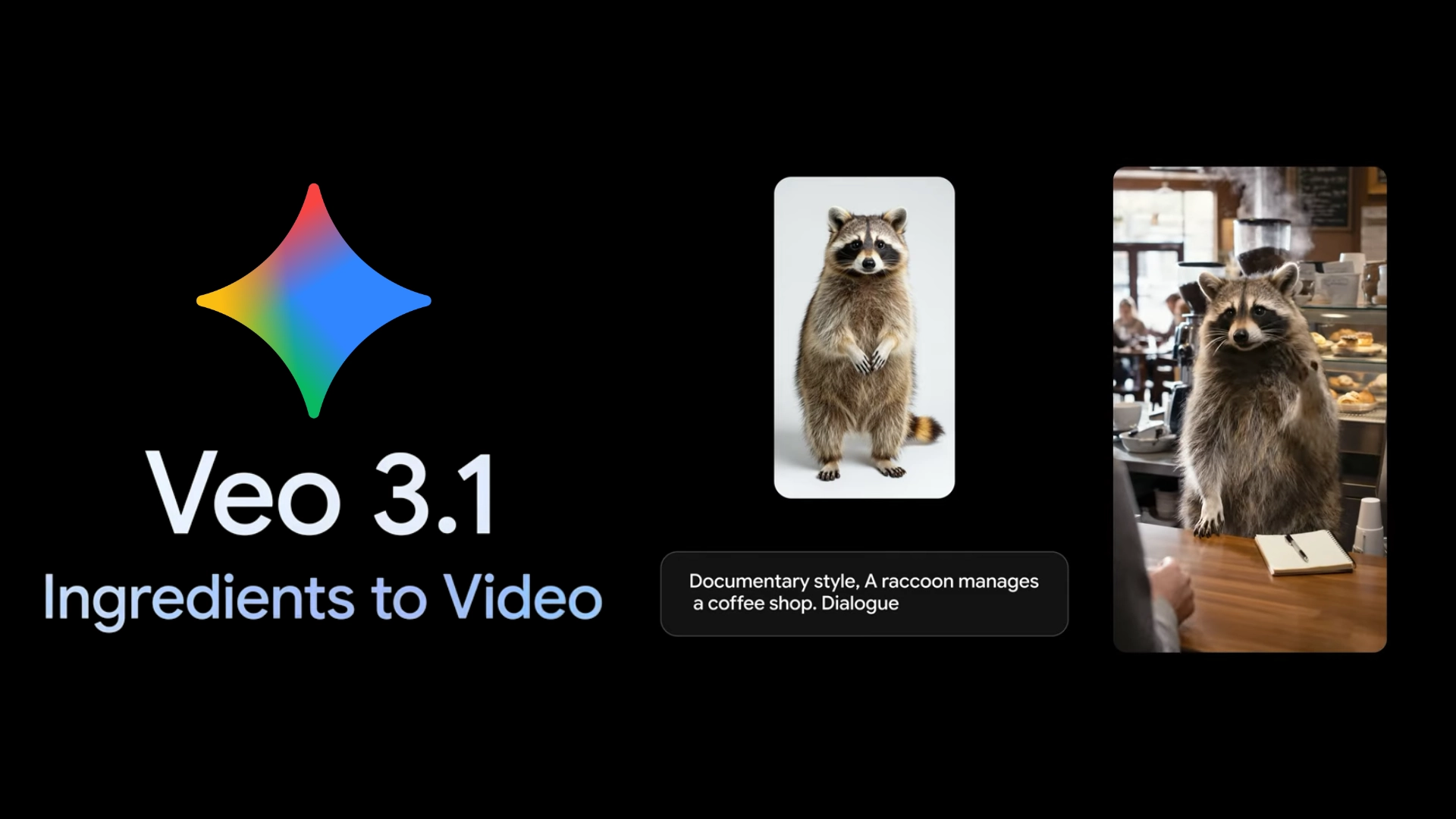
Google has unveiled a significant update to its generative AI video tool, Veo 3.1, enhancing its capabilities to produce professional-grade video content. This update, announced today, focuses on three primary features: the “Ingredients to Video” consistency, native vertical support for mobile content, and high-resolution upscaling. These improvements aim to transition AI-generated videos from experimental clips to high-fidelity productions suitable for professional use.
One of the key advancements in Veo 3.1 is the refinement of character and environment consistency, addressing a longstanding challenge in AI video production. Users can now provide “ingredient” images, which help anchor the AI in maintaining the identity of characters and settings over multiple scenes. This stability allows creators to craft cohesive narratives, moving beyond the limitations of single-shot videos.
As mobile video consumption continues to rise, Google is prioritizing mobile-first creation by introducing native vertical output in a 9:16 aspect ratio. Previously, creators faced quality loss and awkward framing when cropping horizontal AI-generated videos for short-form platforms like YouTube Shorts. The new native support ensures full-screen storytelling tailored for these platforms, emphasizing Google’s commitment to equipping mobile creators with professional tools.
For those in need of higher resolution, Veo 3.1 now offers state-of-the-art upscaling options, including 1080p and 4K resolutions. This feature is rolling out to professional and enterprise environments such as the Gemini API, Vertex AI, and Google Vids. By providing broadcast-ready clarity and enhanced textures, Google positions Veo as a robust tool for high-end production workflows, moving it beyond the realm of mere novelty for social media.
These advancements in Veo 3.1 are now accessible across Google’s product ecosystem. Users can start experimenting with the enhanced features within the Gemini app and YouTube. On the professional side, expanding API support and 4K options empower developers to integrate high-quality video generation into their own applications, broadening the tool’s usability in various contexts.
In line with its focus on transparency and safety, Google is ensuring that all videos generated through these tools are embedded with SynthID, an imperceptible digital watermark. This addition allows users to verify the authenticity of video content easily; by uploading a clip, they can inquire whether it was generated by Google’s AI. Such measures are crucial as the technology evolves to create increasingly lifelike content.
With these updates, Google underscores its ambition to lead in the generative AI space, enabling creators from all backgrounds to produce high-quality video content efficiently. As AI technology continues to advance, tools like Veo 3.1 may redefine content creation standards across various industries, paving the way for innovative storytelling methods and applications.
See also China’s Z.AI Launches GLM-Image Model Trained Entirely on Huawei Chips, No US Hardware
 Z.ai’s GLM-Image Surpasses Google’s Nano Banana Pro with 91.16% Accuracy in Text Rendering
 Apple Reveals Multimodal AI Breakthroughs Enhancing Image Understanding and Generation
 Meituan Launches 6B LongCat-Image Model, Redefining Bilingual Image Generation
 Deepfake Fraud Losses Reach $40 Billion by 2027 Amid Rising Compliance Challenges