








































The rise of AI-generated video content is transforming how creators engage audiences, with models like Grok Imagine and Sora 2 leading the charge. Both platforms offer innovative solutions for converting text and images into videos, but they come with distinct features that cater to different creative needs. As the demand for captivating visual content continues to grow, understanding the capabilities of these AI models becomes essential for professionals across various industries.
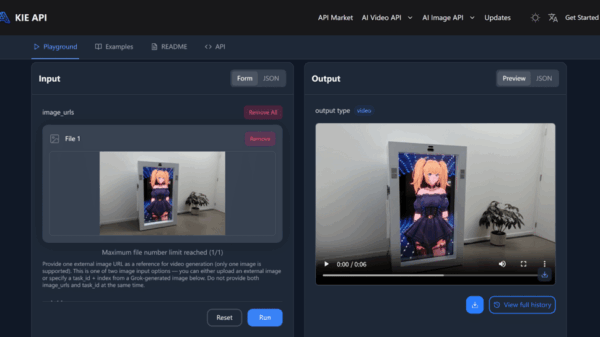
Grok Imagine has emerged as a strong contender in the AI video creation landscape, particularly noted for its advanced rendering capabilities. The platform is designed to deliver hyper-realistic videos that boast smooth transitions and fluid motion. Its support for 3D animations and 360° camera angles enables creators to produce immersive content reminiscent of cinematic experiences. This makes Grok Imagine particularly appealing for projects ranging from promotional videos to game trailers.
Another critical feature of Grok Imagine is its seamless audio synchronization. The platform automatically aligns background music, voiceovers, and sound effects with the visual elements, ensuring that the final product not only looks professional but sounds polished as well. This ease of use is particularly valuable for social media videos and tutorials, where timely production is crucial.
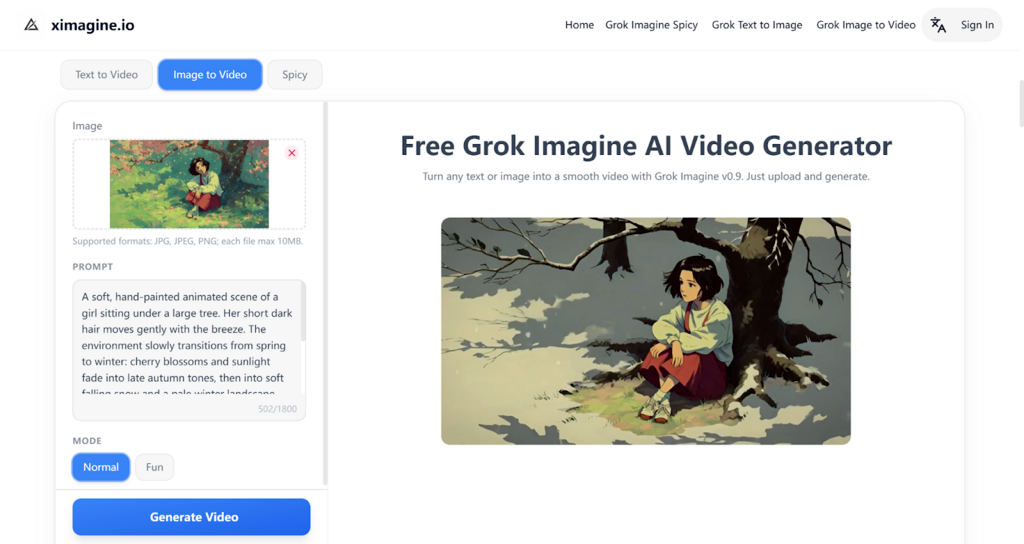
Grok Imagine also offers multiple video modes—Normal, Fun, and Spicy—allowing creators to tailor their content’s tone and style. Each mode has its unique characteristics, with the Spicy Mode providing vibrant colors and bold effects, making it ideal for attention-grabbing social media posts. This flexibility positions Grok Imagine as a versatile tool for various content creation needs.
On the other hand, Sora 2 excels in delivering highly realistic video content. Its strong focus on audio-visual synchronization enhances viewer immersion, integrating complex soundscapes that complement the visual storytelling. This level of detail makes Sora 2 particularly suitable for cinematic projects, where every sound must align with the visual narrative.
One of Sora 2’s standout features is its adherence to physical laws, which ensures that objects behave realistically within the generated environments. This commitment to realism sets it apart from earlier models that often distorted scenes to fit their parameters. By maintaining a consistent and believable world state, Sora 2 is particularly effective for creators aiming to produce detailed environments or dynamic action sequences.
Additionally, Sora 2 offers high control over complex, multi-angle sequences, allowing creators to issue precise instructions for intricate scenes. This capability is invaluable for projects that require meticulous planning, such as commercials and detailed marketing campaigns, where the ability to manage multiple perspectives is critical.
When it comes to video generation speed, Grok Imagine outpaces Sora 2 significantly. It can produce professional-quality videos within minutes, which is a game-changer for creators facing tight deadlines. In contrast, while Sora 2 delivers exceptional detail and realism, its rendering times are generally longer, which may challenge those needing quick turnarounds.
In terms of visual effects, Grok Imagine’s Spicy Mode stands out for its ability to deliver bold animations and engaging visuals. This makes it particularly effective for creators aiming to capture audience attention quickly. Sora 2, while offering high-quality effects, emphasizes realism over stylistic customization, making it less suitable for creators looking to produce vibrant or unconventional content.
Both platforms provide valuable customization options, yet they cater to different priorities. Grok Imagine’s multiple modes offer greater stylistic flexibility, allowing users to easily choose a tone that aligns with their content goals. Conversely, Sora 2 focuses on maintaining a realistic aesthetic, which may appeal to creators looking for precision in dramatic scenes rather than playful or lighthearted animations.
As the demand for AI-generated content evolves, selecting the right model depends on specific project requirements. Grok Imagine shines for its speed and dynamic visual capabilities, making it ideal for marketers needing high-impact content quickly. In contrast, Sora 2’s strengths lie in its realism and meticulous control over detailed scenes, suitable for filmmakers and creators aiming for cinematic quality.
Ultimately, the choice between Grok Imagine and Sora 2 will hinge on the individual needs of creators. As the landscape of AI video generation continues to develop, both models represent significant advancements in content creation technology, underscoring the growing importance of AI in the media and entertainment sectors.
See also SoundHound Achieves 68% Revenue Growth with Hybrid AI Model Outpacing LLMs
 Google TV Launches Gemini Update Enabling Image Generation and Voice-Controlled Settings
 Nine AI Music Video Generators Reviewed for 2026 with Performance Scores and Features
 NVIDIA Reveals RTX Upgrades Boosting 4K AI Video Generation by 3x with 60% VRAM Savings
 Generative AI Market Set to Reach $415.45 Billion by 2031, Driven by Text-to-Image Tech