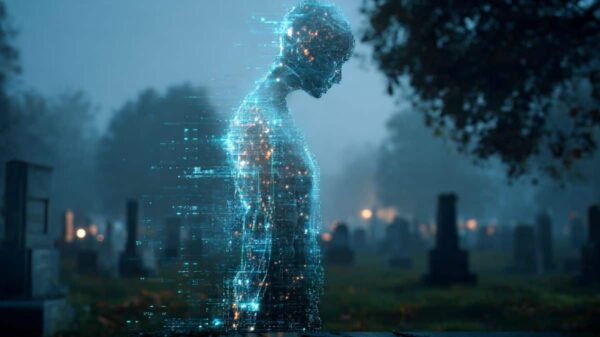



























Generative artificial intelligence is reshaping the landscape of remembrance, enabling technology to conduct “séances” that digitally resurrect deceased individuals. Unlike traditional spiritual gatherings popularized in the 19th and early 20th centuries, these modern iterations serve multiple purposes, from advertising campaigns to providing companionship for grieving families. The digital likenesses of notable figures such as David Ben-Gurion and actor Yehuda Barkan are now being employed commercially, introducing younger generations to historical icons while allowing older individuals to reflect on their memories.
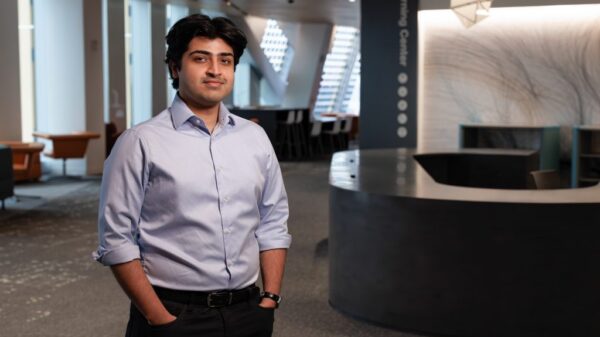
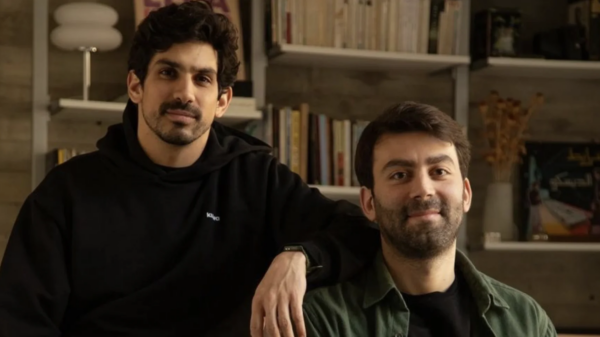
A recent study conducted by Tom Divon, a media researcher from the Hebrew University of Jerusalem, and Prof. Christian Pentzold of Leipzig University, warns that this practice possesses significant ethical concerns. Their work, published in the journal New Media & Society under the title “Artificially alive: An exploration of AI resurrections and spectral labor modes in a postmortal society,” analyzes over 50 instances across various regions, including the US, Europe, the Middle East, and East Asia, where AI technologies have been deployed to recreate the voices, faces, and personalities of the deceased.
The researchers pose critical questions regarding consent and exploitation in a world where the dead can be digitally revived without explicit permission. Divon remarked, “AI resurrections are important because they can happen with little or no consent, clear ownership rules, or accountability, creating a new kind of exploitation we call ‘spectral labor.’” This term describes a scenario where the deceased become involuntary data sources, leaving the living to navigate complex emotional landscapes intertwined with manipulation and nostalgia.
As generative AI continues to evolve, its applications raise poignant questions about how society interacts with memories and the deceased. For instance, during recent political campaigns in Israel, there are concerns about AI being used to fabricate speeches, potentially allowing political opponents to misrepresent candidates through artificial means. “One can already see such things from political parties and anonymous activation of profiles by people hired to do so,” Divon stated, highlighting the potential for manipulation in electoral contexts.
The study’s breadth sets it apart, focusing not just on isolated technologies but presenting a comprehensive view of how AI “resurrections” are forming recognizable social patterns. This includes the revival of Holocaust survivors, who once shared their stories in life but are now invoked as cautionary voices against the resurgence of fascism and to champion human rights.
Engineered Encounters Between Living and Dead
One notable example discussed in the study is that of Ofra Haza, a renowned Israeli-Yemenite singer who passed away in 2000. In a televised performance for Israel’s Independence Day in 2023, her holographic image was merged with that of contemporary pop star Noa Kirel, creating a duet that blended past and present. This performance not only served as a tribute but also transformed Haza’s posthumous image into a commercial spectacle.
The use of AI in commemorating fallen soldiers during the ongoing Israel-Hamas conflict exemplifies the emotional yet ethically fraught terrain of this technology. Families have created videos where the deceased seem to speak, offering loving messages or reaffirming patriotic sentiments. While these reanimations provide profound emotional solace, they also raise concerns about agency and the representation of those who can no longer voice their beliefs.
This interplay of life and death in the digital realm has led researchers to label contemporary society as a “postmortal society.” In this context, immortality is facilitated by data and algorithms rather than traditional religious beliefs. However, the authors clarify that while AI may not conquer death, it keeps individuals in an ambiguous state, neither fully alive nor entirely gone.
As generative AI’s capabilities expand, Divon and Pentzold urge society to confront the ethical and legal ramifications before digital resurrection becomes commonplace and unregulated. They delineate three primary modes through which the dead are being digitally reintroduced: the spectacularization of famous figures for entertainment; sociopoliticization, where victims of violence are reanimated for political purposes; and mundanization, where individuals use chatbots to maintain relationships with deceased loved ones.
In each of these scenarios, the deceased are not merely remembered; they are compelled to fulfill roles, thus enhancing the concept of “spectral labor.” AI systems utilize digital remnants of the dead—photos, videos, and social media posts—to generate new representations without consent, raising critical concerns about exploitation and the potential for misuse.
As society grapples with these profound questions, the ability to manipulate images and voices may lead to unforeseen consequences, particularly in political and commercial domains. “There just must be dialogue with the industry,” Divon concluded, calling for the establishment of guidelines to prevent abuse and protect the dignity of those who have passed.
See also Stable Diffusion Unveils Cantonese Embroidery Image Generator with 2048×2048 Resolution in 50 Seconds
 India’s IT Secretary S Krishnan Advocates for Sector-Specific AI Models Over Generative AI
 Netflix, Nike, and Uber Leverage AI Innovations to Enhance Services and Design
 OpenAI Retires GPT-4o and Older Models, Introduces New Personality Features for ChatGPT
 ComfyUI Simplifies Local AI Image Generation with Streamlined Installation Steps