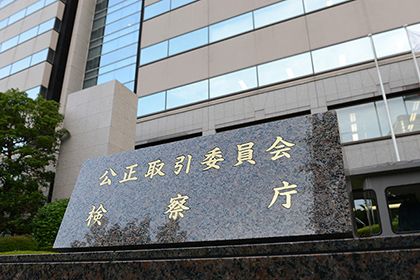
The Japan Fair Trade Commission (JFTC) is set to investigate the relationships between media companies and information technology firms that provide generative artificial intelligence (AI) search services. This inquiry arises amid suspicions that some IT firms may be using articles without authorization, which could be deemed an abuse of superior bargaining power, a violation of the country’s Anti-Monopoly Law.
The focus of the investigation will include AI search providers such as OpenAI Inc.‘s ChatGPT and Perplexity Inc., as well as major technology companies like Google LLC, Microsoft Corp., and Line Yahoo Corp., all of which offer similar services or news distribution platforms. As the popularity of AI chatbots grows due to their ability to provide efficient information gathering, concerns have been raised regarding the legality of how these bots generate their responses, which often involve summarizing information from various websites.
Critics argue that AI-generated answers may involve the unauthorized scraping of news articles, raising questions about the fairness of the financial arrangements between AI service providers and media companies. Determining the terms of these transactions—including usage fees—has emerged as a complex issue, complicating regulatory oversight.
The upcoming investigation follows a report released by the JFTC in 2023, which examined transactions between news platform operators and media companies. The report warned that if a dominant platform operator exploits its position to disadvantage media companies, it would constitute an “abuse of a superior bargaining position” under the Anti-Monopoly Law. Examples cited included unilateral changes to contract terms and the imposition of excessively low usage fees.
In addition to examining potential violations, the JFTC’s current investigation will also assess what improvements, if any, have been implemented since the previous report’s findings. This scrutiny is particularly relevant as the landscape of AI technology continues to evolve rapidly, with increasing reliance on AI-driven search capabilities.
The implications of this investigation could be significant for both the media and technology sectors. As generative AI becomes more integrated into information dissemination, the legal and ethical frameworks governing its use will need to adapt. The JFTC’s findings may lead to recommendations that could reshape how AI companies negotiate with and compensate content creators.
As the probe unfolds, it will not only reflect the regulatory environment in Japan but may also serve as a precedent for other jurisdictions grappling with similar issues regarding the intersection of technology, media, and fair competition. The outcomes could herald a new chapter in the ongoing discourse about the responsibilities of AI providers and their impact on the media landscape.
See also Alibaba Launches Qwen-Image-Edit-2511 with Enhanced Consistency and LoRA Integration
 Government Finalizes Industry Consultations on Mandatory AI Content Labeling Rules
 AI Framework DNA-Diffusion Enables Synthetic Regulatory Element Design with High Precision
 New York’s AI Avatar Disclosure Law Requires Clear Labels for Synthetic Performers
 DuckDuckGo Launches AI Image Generator with Enhanced Privacy Features