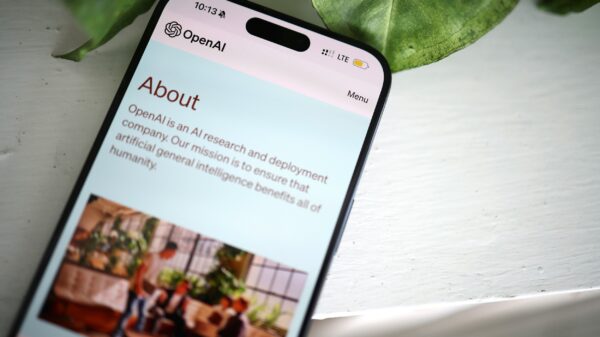






























When Karen Hao’s book Empire of AI: Inside the Reckless Race for Total Domination was released in May 2025, it provided a critical examination of the modern Artificial Intelligence landscape. By framing AI companies akin to the colonial empires of the 18th and 19th centuries, Hao draws a parallel between the extraction of resources by these tech giants and historical imperialistic practices. The book prominently features the rise of US-based OpenAI, which Hao has been tracking closely.
Hao, a former application engineer and a seasoned journalist with contributions to MIT Technology Review, The Wall Street Journal, and The Atlantic, argues that a new lexicon is essential to encapsulate the economic and political influence wielded by tech firms like OpenAI. Speaking at the Bangalore Literature Festival, she discussed her insights and the implications of the unchecked growth of AI companies during an interview with Lounge.
Hao’s analogy to colonial empires was influenced by research she encountered in 2019, particularly the paper Decolonial AI from DeepMind and the book The Costs of Connection: How Data Is Colonizing Human Life and Appropriating It for Capitalism by Nick Couldry and Ulises A. Mejias. She noted this perspective as pivotal in reshaping her understanding of AI’s role in society. “While I initially thought of the entire AI and tech industry as one empire, my editor pointed out that each company functions as its own empire, competing with others,” she explained.
According to Hao, these AI empires are extracting various resources for profit and ideological dominance, including data, land, energy, and intellectual property. “It’s much like the old empires that seized land and cultural artifacts, imposing their knowledge while excavating indigenous wisdom,” she stated. Modern AI firms are seen as seeking to “create a one-size-fits-all model that projects their ideology globally.”
Hao raised concerns about the dangers of this homogenized approach, particularly in historical narratives. “AI often reflects a predominantly American viewpoint, which risks perpetuating biases,” she remarked. As AI-generated content becomes more prevalent, public perception may mistakenly regard it as objective and fair, effectively masking underlying biases.
Highlighting the significant resources that tech companies possess—often exceeding those of nation-states—Hao warned that this concentration of power could undermine global democratic structures. “If these companies continue their unchecked growth, they could exacerbate the democratic backsliding occurring worldwide,” she cautioned. With few accountability measures in place, these entities risk becoming techno-authoritarian forces, sidelining the voices of billions.
Comparing the current AI wave to the rise of social media, Hao remarked on the unprecedented scale of data accumulation that companies like Meta have amassed. Having entered the generative AI landscape with access to data from 4 billion user accounts, Meta’s pursuit of growth included plans to acquire publishing firms for additional data scraping, while disregarding privacy standards established post-Cambridge Analytica.
Hao emphasized the escalating energy demands placed on infrastructure due to AI’s rise, noting that U.S. energy consumption has surged alongside data center expansion, which threatens climate goals. “We’re now talking about needing 100 Earths to sustain generative AI,” she observed, stressing the urgency of addressing these implications.
Furthermore, Hao discussed the dominance of Large Language Models (LLMs) over more specialized AI systems. “LLMs have captivated public interest because they simulate human conversation, making them powerful tools,” she noted. OpenAI effectively packaged existing technologies to resonate with global audiences, leading companies to prioritize projects that attract media attention rather than those with practical applications.
Despite the hype surrounding LLMs, Hao highlighted the existence of specialized models that serve critical purposes, such as preserving endangered languages or addressing climate change. These technologies, while less glamorous, can offer substantial benefits to society. However, as the tech industry continues to prioritize spectacle over substance, the implications of this trend will require careful scrutiny in the years ahead.
See also OpenAI Launches GPT-5.2 Model, Boosting Performance in Reasoning and Coding
 Kent Kaufman Releases AI L4IR: A Practical Leadership Guide for the Fourth Industrial Revolution
 AI Expert Advocates for AI to Combat Misinformation and Deepfakes in Media
 Ant Group Unveils 100B Parameter Diffusion Language Model, Surpassing AR Performance
 Kling 2.6 API Launches with Native Audio Generation for Seamless Video Creation