




















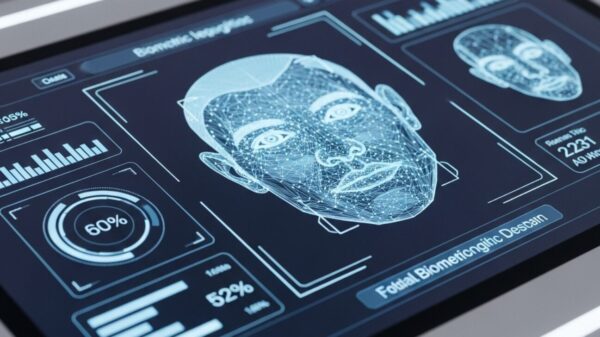























In a significant advancement for digital forensics, Lei’s recent publication, “Application of improved GAN-LSTM-based fake face detection technique in electronic data forensics,” addresses the urgent challenge of detecting artificial faces created by sophisticated algorithms. As the field of artificial intelligence continues to evolve, the proliferation of synthetic media, particularly deepfakes, raises serious concerns regarding misinformation, privacy, and the authenticity of digital communications.
Generative Adversarial Networks (GANs) have transformed the landscape of AI-generated imagery, enabling the creation of hyper-realistic human faces. However, this innovation comes with its own set of risks, as the potential for misuse grows alongside the technology itself. Lei’s research introduces an enhanced GAN-LSTM architecture specifically designed to improve the detection of these fake faces, underscoring the critical need for advanced detection methods in the realm of digital investigations.
The integration of long short-term memory networks (LSTMs) into the GAN framework represents a pivotal shift in methodologies for identifying synthetic images. Traditional GANs operate through two competing neural networks—the generator and the discriminator—working together to produce lifelike visuals. By incorporating LSTMs, which excel at analyzing sequential data, the detection system gains the capability to evaluate multiple images over time, enhancing its ability to discern authenticity through an analysis of temporal consistency.
One of the key hurdles in identifying artificial faces is the subtlety of human expressions and the intricacies of facial details that often elude conventional detection systems. Lei’s approach addresses this challenge by refining the GAN architecture to improve the detail in generated images. Training the model on a curated dataset of both authentic and synthetic faces enables it to identify the minute discrepancies that distinguish real faces from their fake counterparts. This capability is particularly vital in forensic applications, where accuracy is paramount.
Moreover, Lei’s detection technique is adaptable and scalable, making it applicable to a range of fields beyond forensic investigations. For example, its implementation in social media analysis could serve as a deterrent against the spread of misinformation, highlighting the broader implications of deepfake technology in an increasingly digital society. The consequences of disseminating fake images extend beyond personal reputations, impacting societal trust in online media.
The role of AI in electronic data forensics is becoming increasingly vital as incidents of data breaches and identity theft rise. Therefore, developing reliable detection methods is essential. Lei’s enhanced GAN-LSTM technique not only protects individuals from the ramifications of deepfakes but also helps maintain the integrity of digital ecosystems. By refining these detection technologies, investigators can ensure that the evidence remains credible, thus supporting accountability in our digital age.
Lei’s methodology includes rigorous testing and validation processes to demonstrate the efficacy of the GAN-LSTM hybrid model. By comparing this new approach with traditional detection methods, Lei shows marked improvements in accuracy and detection rates. This bodes well for the future of AI-assisted forensic analysis, illustrating how advanced machine learning can contribute to public safety and trust.
The research emphasizes the need for ongoing development in AI technologies to keep pace with the evolving sophistication of synthetic media. As tools for creating deepfakes become more accessible, the potential for misuse increases. Lei calls for continuous collaboration among technologists, ethicists, and law enforcement to develop a comprehensive strategy against misinformation. Prioritizing innovation in detection methods helps address the ethical implications that arise with the rapid advancement of AI capabilities.
In conclusion, Lei’s “Application of improved GAN-LSTM-based fake face detection technique in electronic data forensics” marks a crucial step forward in combating digital deception. The integration of advanced machine learning algorithms not only boosts the detection of artificially generated faces but also holds transformative potential across various sectors concerned with data integrity. As society embraces these technological advancements, it remains essential to refine our approaches, ensuring that the benefits of artificial intelligence are harnessed responsibly and ethically in addressing real-world challenges.
Looking ahead, the developments anticipated in 2025 and beyond promise to shape the future landscape of artificial intelligence and data forensics. The ongoing research spearheaded by innovators like Lei will be instrumental in defining how technology evolves, emphasizing the importance of integrity and purpose as we navigate this complex terrain.
See also Generative Adversarial Networks Market Projected to Grow 27-30% CAGR by 2030
 Google Limits Free Nano Banana Pro Image Generation to Two Daily Amid High Demand
 AI Specialist Reveals 10 Powerful Nano Banana Pro Prompts for Stunning Image Generation
 Benchmarking Large Language Models: 17 Key Tests to Assess AI Performance
 Expert Warns: Large Language Models Lack True Intelligence, Citing Cognitive Research