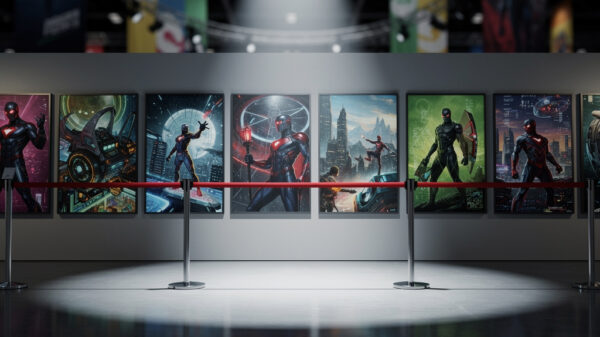
















































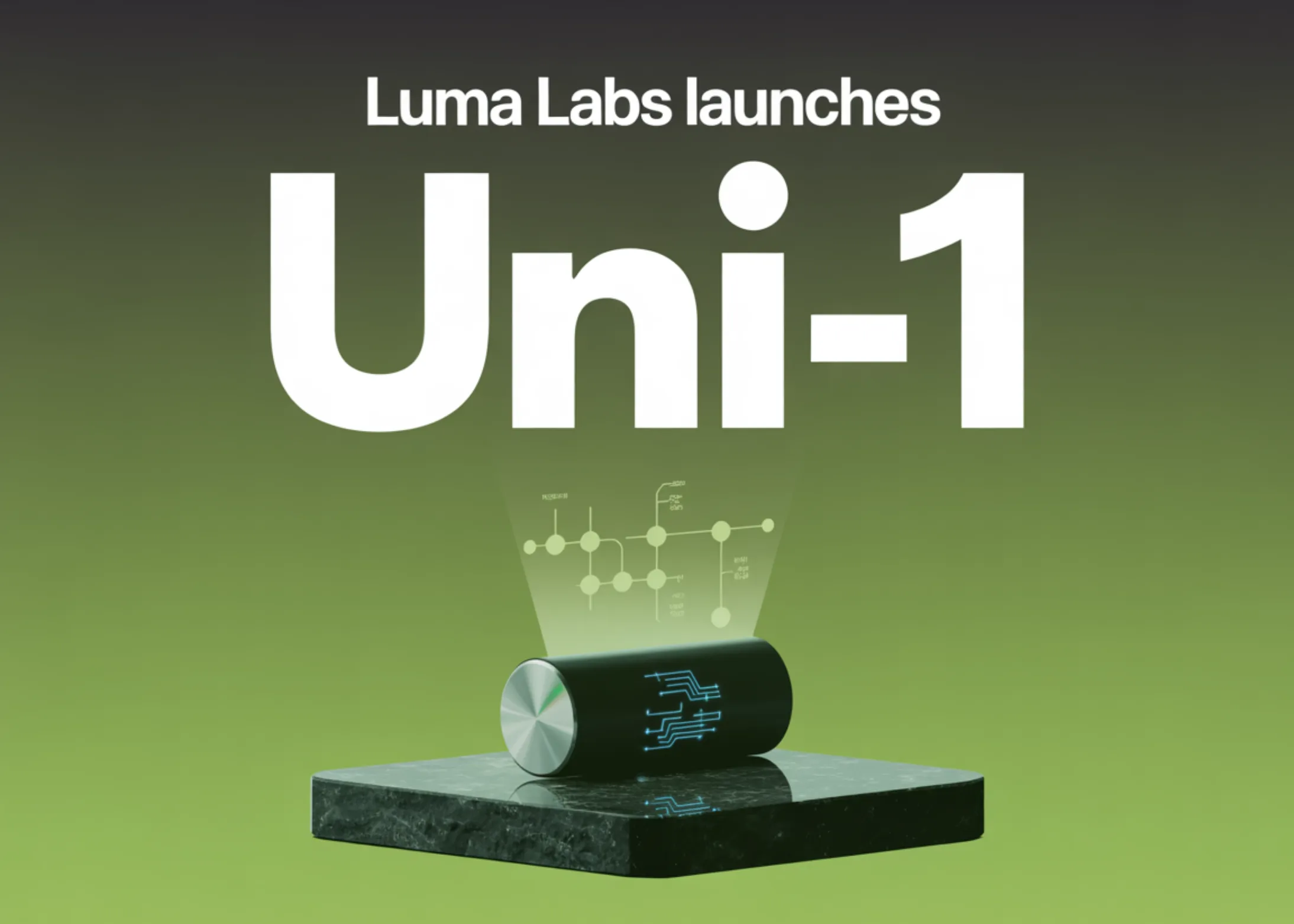
In a significant development in the generative AI landscape, Luma Labs has launched Uni-1, an innovative image model aimed at bridging the ‘intent gap’ prevalent in conventional diffusion pipelines. This new model marks a shift from basic pixel synthesis to structural reasoning, enabling a more intuitive workflow that emphasizes instruction following over complex prompt engineering.
Unlike well-known models such as Stable Diffusion and Flux, which are built on denoising diffusion probabilistic models (DDPMs), Uni-1 employs a decoder-only autoregressive transformer architecture. This change is pivotal, as it allows the model to process text and images as an interleaved sequence of tokens. In this setup, images are converted into discrete visual tokens, enabling the model to predict the next token in a sequence—whether it is a word or a visual element. The result is a feedback loop that facilitates reasoning through text instructions by anticipating the logical spatial arrangement before generating high-resolution imagery.
Key technical features of Uni-1 include its ability to perform both understanding and generation within a single forward pass. By treating text and visual data in a unified manner, the model maintains a heightened awareness of spatial relationships. It also excels in planning the composition’s geometry as part of its sequence prediction, overcoming the limitations that diffusion models often face in spatial reasoning tasks, such as distinguishing between ‘left/right’ or ‘behind/under’.
To evaluate the effectiveness of its ‘Reasoning Before Generating’ methodology, Luma Labs benchmarked Uni-1 against standards that prioritize logical reasoning over aesthetic fidelity. The results show Uni-1 leading in human preference rankings against competitors like Flux Max and Gemini. Notably, Uni-1 scored highly on two significant benchmarks: RISEBench, which focuses on reasoning-informed visual editing, and ODinW-13, which assesses open detection in uncontrolled environments. These benchmarks highlight Uni-1’s high precision in spatial reasoning and its ability to surpass understanding-only models, suggesting that generation capabilities enhance visual cognition.
The performance on ODinW-13 is particularly noteworthy for researchers, as it implies that a model trained to generate images through autoregression develops a more robust internal representation of object detection and classification compared to models aimed solely at computer vision tasks.
Uni-1 is designed to enhance user experience by minimizing the necessity for prompt engineering. Instead, it accepts plain English instructions, making it accessible to a broader user base. Currently available at lumalabs.ai/uni-1, the service is priced at approximately $0.10 per image, reflecting the higher computational demands of its reasoning-first autoregressive model compared to traditional diffusion techniques. Luma Labs has also announced that API access will be made available soon, enabling developers to incorporate Uni-1’s spatial reasoning capabilities into automated creative workflows, including dynamic UI generation and game asset development.
The introduction of Uni-1 represents a fundamental architectural shift in generative AI, as it moves away from traditional diffusion pipelines and treats text and images as a cohesive sequence of tokens. This approach allows for structured internal reasoning and spatial logic prior to rendering, thereby facilitating complex layouts from simple English instructions without the need for elaborate prompt engineering. Its performance on industry benchmarks sets new standards, particularly in the realms of visual editing and object detection.
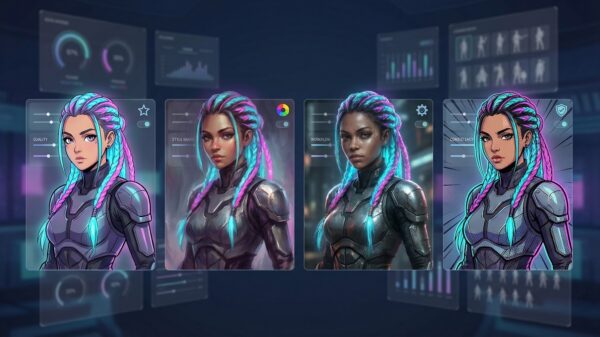
Designed for high-fidelity professional applications, Uni-1 excels in maintaining identity preservation, making it suitable for character sheets and transforming rough sketches into polished artwork with structural accuracy. As the model becomes widely accessible through web platforms and upcoming API capabilities, it positions itself as a premium solution for high-accuracy creative tasks, potentially reshaping how artists and developers approach generative media.
See also Sam Altman Praises ChatGPT for Improved Em Dash Handling
 AI Country Song Fails to Top Billboard Chart Amid Viral Buzz
 GPT-5.1 and Claude 4.5 Sonnet Personality Showdown: A Comprehensive Test
 Rethink Your Presentations with OnlyOffice: A Free PowerPoint Alternative
 OpenAI Enhances ChatGPT with Em-Dash Personalization Feature