

























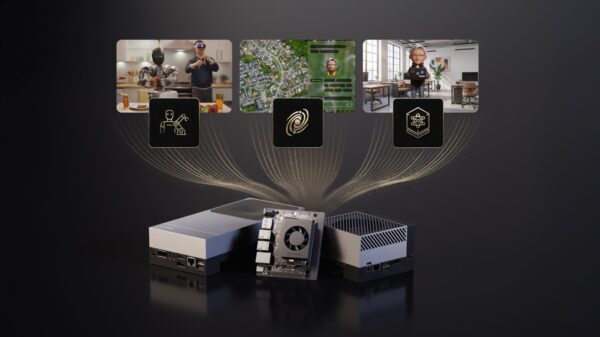


NVIDIA has unveiled its latest advancements in edge AI platforms at CES 2023, showcasing the capabilities of its Jetson technology through various applications in robotics and autonomous systems. Among the highlights is the Cat 306 CR mini-excavator, a machine designed for constrained job sites, such as utility trenches and basement digs. Weighing just under eight tons, it can fit into a standard shipping container, making it a practical choice for contractors.
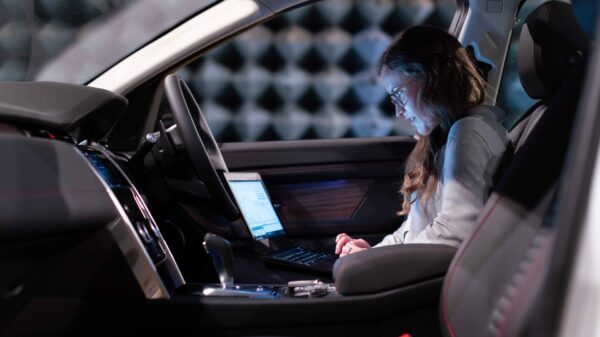
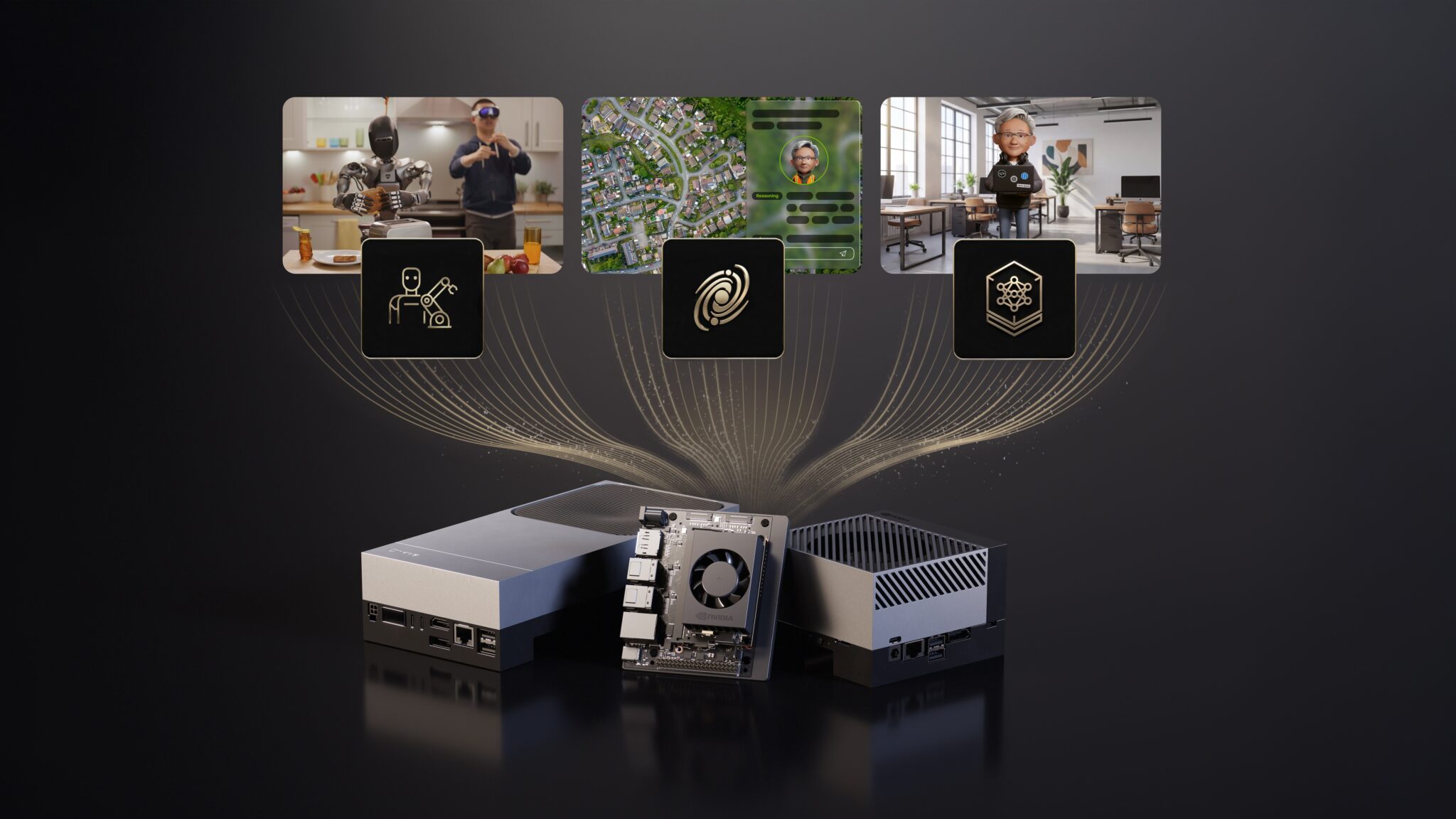
The excavator features a cab comparable to a phone booth size, with operators using joysticks that handle multiple functions. Operating this machine requires significant training, particularly as the complexities increase with speed and efficiency. At the CES demo, the machine was equipped with the Cat AI Assistant, which runs on the NVIDIA Jetson Thor, enabling real-time inference for industrial and robotic systems.
The AI Assistant employs NVIDIA’s Nemotron speech models for swift and accurate voice interactions, while the Qwen3 4B model interprets user requests and provides responses with minimal latency, functioning without a cloud connection. This approach indicates a significant shift from traditional cloud computing, emphasizing the advantages of edge processing, particularly in environments where latency and power limitations are critical.
Physical AI systems are evolving with the introduction of generative AI models that enable advanced functionalities. For instance, the in-cab Cat AI Assistant is designed to enhance operator safety and provide guidance by processing speech and language models locally, combined with trusted machine context. This trend was further illustrated by Franka Robotics, which demonstrated its FR3 Duo dual-arm system running the NVIDIA GR00T N1.6 model completely onboard, executing tasks without pre-scripted instructions.
Research initiatives like NVIDIA’s SONIC project are pushing the boundaries of robotics. It trains a humanoid controller using over 100 million frames of motion-capture data, successfully deploying it on a physical robot with a kinematic planner running on Jetson Orin, achieving a rapid response time of around 12 milliseconds. This integration of hardware and software illustrates a growing capability in the developer community to create autonomous solutions that operate effectively in real-world scenarios.
University-level projects have also demonstrated significant advances. For instance, a dual-arm matcha-making robot developed by UIUC’s SIGRobotics club, leveraging Jetson Thor and the GR00T N1.5 model, won first place at an NVIDIA hackathon. Meanwhile, the NYU Center for Robotics and Embodied Intelligence has successfully utilized Jetson Thor to power its YOR robot, showcasing enhanced flexibility in performing intricate tasks such as cooking and laundry.
In an independent effort, Andrés Marafioti from Hugging Face developed an agentic AI system capable of managing tasks across varying models. In a notable incident, the AI advised him to rest, assuring him that everything would be ready by morning. Another developer, Ajeet Singh Raina, successfully implemented OpenClaw on Jetson Thor, resulting in a personal AI assistant capable of managing emails and calendars locally, thus ensuring data privacy.
The NVIDIA Jetson platform has established itself as a standard for deploying open models at the edge, providing developers with flexibility across a diverse range of AI frameworks. The Jetson AI Lab offers model benchmarks and tutorials for developers, facilitating efficient performance of generative AI models. Notable models include Gemma 3, capable of interpreting complex instructions in over 140 languages, and gpt-oss-20B, designed for local, cost-efficient inference.
The recent introduction of the Mistral 3 model family enhances accuracy and customization, while the NVIDIA Cosmos vision language model allows robots to interact with their environment similarly to humans. These advancements signal a pivotal moment for robotics and AI, demonstrating the potential for real-time decision-making capabilities across various applications.
As the industry continues to evolve, developers are encouraged to explore the latest in AI technology. The upcoming GTC 2026 event will feature insights from NVIDIA’s leadership regarding the future of industrial autonomy, showcasing how open models are being integrated into real-world applications. This evolution not only improves operational efficiencies but also broadens the horizons for future innovations in robotics and autonomous systems.
See also Sam Altman Praises ChatGPT for Improved Em Dash Handling
 AI Country Song Fails to Top Billboard Chart Amid Viral Buzz
 GPT-5.1 and Claude 4.5 Sonnet Personality Showdown: A Comprehensive Test
 Rethink Your Presentations with OnlyOffice: A Free PowerPoint Alternative
 OpenAI Enhances ChatGPT with Em-Dash Personalization Feature