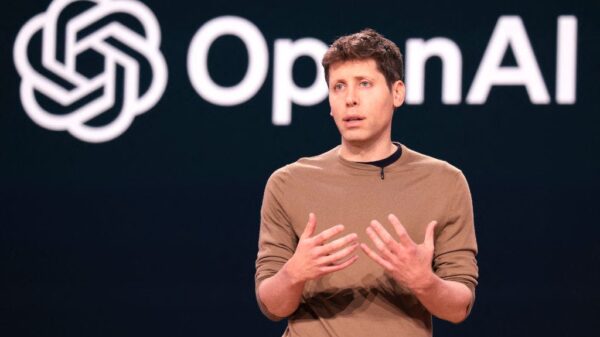










































OpenAI’s ChatGPT has seen explosive growth since its launch in November 2022, now boasting 300 million weekly active users. Initially designed as a productivity tool for generating text, the AI chatbot has evolved into a multifaceted platform, offering features ranging from essay and code writing to advanced voice capabilities. In 2024, OpenAI entered a significant partnership with Apple, introducing Apple Intelligence, and released GPT-4o, which incorporates voice functionalities, alongside its text-to-video model, Sora.
Despite its success, OpenAI has faced internal turbulence, including the departure of high-profile executives like co-founder Ilya Sutskever and CTO Mira Murati. The company is also battling legal challenges, including a copyright infringement lawsuit from Alden Global Capital-owned newspapers and an injunction from Elon Musk aimed at halting its transition to a for-profit model.
As 2025 unfolds, OpenAI is confronted with challenges from Chinese competitors like DeepSeek and is seeking to strengthen its ties with Washington. Alongside these efforts, the firm is reportedly preparing for one of the largest funding rounds in tech history while pursuing an ambitious data center project.
Key Product Updates and Legal Challenges
In November 2025, OpenAI introduced a new AI assistant for online shopping, enhancing user experiences during the holiday shopping season. This feature allows users to provide product specifications or share images to receive personalized recommendations. The shopping initiative aligns with similar moves by competitors, including Perplexity.
Legal scrutiny has increased for OpenAI, particularly following a lawsuit regarding allegations that ChatGPT was misused by a teenager in a tragic suicide case. OpenAI has stated it is not liable, asserting that the chatbot was misapplied. This case is part of a broader concern regarding the mental health implications of AI interactions, as reports indicate that ChatGPT handles over a million conversations related to suicide each week.
In addition to these challenges, a Munich court ruled that ChatGPT violated German copyright law by reproducing lyrics from protected songs. This ruling could establish a precedent in Europe concerning the use of AI-generated content and copyright issues.
OpenAI has also made strides in expanding its product offerings. The recent rollout of GPT-5.1 introduced advanced reasoning capabilities and a user-friendly tone, allowing users to customize ChatGPT’s interaction style. The platform is now equipped with features for group chats, integrating voice mode directly into its main interface, and has reached a milestone of over 1 million business clients globally.
Despite its rapid growth, the app’s expansion appears to be plateauing, with an 8.1% month-over-month decline in new downloads as analyzed by Apptopia. Nevertheless, ChatGPT surpassed 800 million weekly active users and continues to evolve rapidly, with additional integrations planned for major retailers like Walmart.
As OpenAI navigates these multifaceted challenges and opportunities, its trajectory will likely influence the broader AI landscape. The company’s ability to manage legal concerns while innovating in both consumer and enterprise sectors will be crucial in maintaining its position in an increasingly competitive market.
See also Gemini 3 Launches Nano Banana Pro, Revolutionizing AI Image Text Generation
 Faster R-CNN by He Kaiming and Team Wins NeurIPS 2025 Test of Time Award
 Meta Overhauls AI Content Labeling Amid Oversight Board Critique and Election Concerns
 AI’s Impact on Journalism: Can Democracies Navigate the Challenges of Misinformation?
 Google Limits Nano Banana Pro to 2 Daily Photos; OpenAI Cuts Sora Video Generations to 6