







































The dawn of 2026 marks a pivotal transformation in artificial intelligence, as the era of “text-in, text-out” systems has given way to sophisticated “Omni” models. These advanced multimodal platforms, exemplified by the rollout of GPT-4o from OpenAI and Gemini 1.5 Pro from Alphabet Inc. (NASDAQ: GOOGL), have fundamentally altered how users interact with machines. No longer just productivity tools, these AI systems now exhibit a semblance of emotional intelligence and real-time perception, enabling them to perceive the world akin to humans.
This paradigm shift facilitates a seamless integration of text, audio, and visual data into a unified neural architecture, heralding the achievement of full-duplex, low-latency conversation. Users can now engage with AI that can detect nuances like sarcasm or frustration, responding with appropriate emotional inflections. This capability allows AI to diagnose technical issues through visual inputs from smartphones and smart glasses, transforming the nature of human-computer interaction.
The technical backbone of this Omni era lies in the shift from modular AI systems, which processed data sequentially, to native multimodal architectures. Previously, AI assistants operated in a “chain of command” fashion, with separate models handling tasks like speech recognition, reasoning, and response generation, often leading to delays and loss of nuance. GPT-4o and Gemini 1.5 Pro have addressed these challenges with end-to-end neural networks that process multiple data types simultaneously, resulting in significantly reduced latency. GPT-4o boasts an average response time of around 320 milliseconds, closely matching the natural pace of human conversation.
Initial responses from the AI research community have been overwhelmingly positive, with experts proclaiming this development as the “end of the interface.” The inclusion of “prosody,” which refers to the rhythm and intonation of speech, has further blurred the lines between human and AI interactions. Updates in late 2025 introduced “thinking breaths” and micro-pauses, making it increasingly difficult for users to distinguish between AI agents and human callers.
The Multimodal Arms Race
The emergence of Omni models has ignited a competitive frenzy among major tech companies. Microsoft (NASDAQ: MSFT) took an early lead with its partnership with OpenAI, launching real-time voice capabilities through its Copilot ecosystem. This move compelled Google to respond swiftly, leveraging its Android platform to deploy “Gemini Live,” which serves as an interaction layer for over a billion devices.
Other industry players, such as Meta Platforms, Inc. (NASDAQ: META) and Apple Inc. (NASDAQ: AAPL), have adapted their strategies in the face of these advancements. In early 2025, Meta introduced Llama 4, which democratized native multimodality by providing open-weight models comparable to proprietary systems. This opened avenues for startups to create specialized devices like AI pendants, while Apple emphasized user privacy with its “Apple Intelligence,” ensuring that AI interactions remain secure and data is processed on-device.
The repercussions of Omni models extend beyond corporate competition; they are fundamentally reshaping various sectors. In customer service, traditional roles are increasingly being replaced by “Emotion-Aware” agents capable of diagnosing hardware failures through visual inputs. In education, the “Visual Socratic Method” allows AI tutors like Gemini 2.5 to assist students in real time, providing hints precisely when needed.
Beyond the industry implications, the societal impact of Omni models is profound, particularly for the accessibility community. Real-time visual narration through smart glasses is improving the quality of life for blind and low-vision users, while real-time speech-to-sign language translation is making digital interactions universally inclusive. However, the “always-on” nature of these models has sparked a “Transparency Crisis,” raising concerns about surveillance and privacy as AI systems increasingly rely on cameras and microphones for data input.
In response to these issues, the European Union has enacted the EU AI Act, classifying real-time multimodal surveillance as “High Risk.” This has resulted in a fragmented market, with certain features restricted or disabled in various jurisdictions, complicating the global adoption of these technologies.
The rise of AI with emotional capabilities has also ignited debates surrounding “synthetic intimacy.” As AI becomes more human-like and empathetic, experts warn of potential emotional manipulation, emphasizing the ethical implications of relying on companions designed to be entirely agreeable.
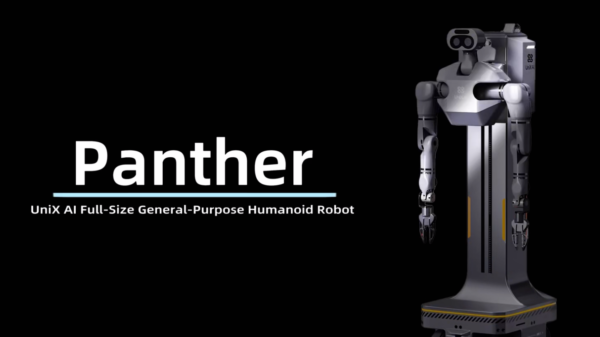
Looking ahead, the future of Omni models promises to shift from reactive to proactive functionalities. Upcoming iterations like GPT-5 and Gemini 3.0 are expected to incorporate “Proactive Audio” and “Environment Monitoring,” enabling AI to anticipate user needs, such as warning about appliances left on or children in unsafe areas without explicit prompts. The integration of these models into humanoid robotics is also on the rise, with companies like Tesla (NASDAQ: TSLA) and Figure working to develop machines that can understand and navigate real-world environments.
The transition into the Omni era signifies a monumental shift in human-AI interaction, moving from traditional interfaces to more natural, intuitive forms of communication. As we advance through 2026, it is clear that latency has become the new benchmark for intelligence, while multimodality establishes a new standard for utility. The long-term ramifications may lead to a “post-smartphone” world, in which our primary connection to the digital realm occurs through wearable technology and conversational interfaces, closing the loop between perception and action.
See also Ngee Ann Polytechnic Integrates Generative AI into Curriculum for All Students by 2026
 TurboDiffusion Achieves 200x Faster Video Generation, Revolutionizing Content Creation
 Kakao Reveals Kanana-v-4b-Hybrid AI Model with Enhanced Multimodal Capabilities
 MiniMax Prices Hong Kong IPO at HK$165, Aiming for US$538M amid AI Boom
 Grok Imagine vs. Sora 2: Which AI Video Generator Delivers Fastest and Most Realistic Results?