














































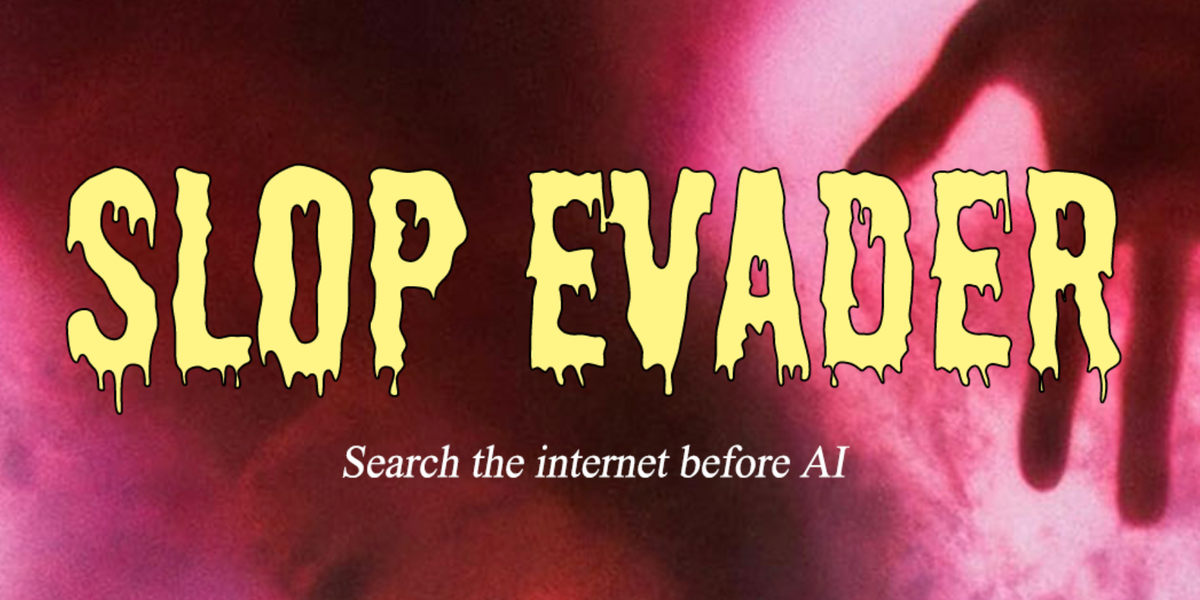
As generative AI tools increasingly permeate online spaces, a new browser extension aims to help users escape what some have dubbed “AI slop.” Known as Slop Evader, this tool filters search results to include only content published before November 30, 2022, the date when ChatGPT was released to the public. Developed by artist and researcher Tega Brain, the extension is available for both Firefox and Chrome, and it seeks to provide a cleaner, less cluttered web experience devoid of synthetic media.
Slop Evader operates by leveraging Google search functions to index popular websites and filter results based on their publication dates. This method effectively serves as a “scorched earth” tactic, ensuring that users encounter minimal AI-generated content while browsing. Brain created this tool in response to widespread discontent regarding the rapid rollout of generative AI technologies, which many feel have overwhelmed online spaces with low-quality content.
“This sowing of mistrust in our relationship with media is a huge thing,” Brain noted in a recent interview, highlighting the cognitive dissonance that arises as users navigate through an ocean of artificial material. The proliferation of generative AI has forced individuals to question the authenticity of what they encounter online, transforming everyday tasks like searching for housing or shopping into exercises fraught with uncertainty.
Slop Evader currently allows users to search pre-2022 archives of seven popular websites, including YouTube, Reddit, Stack Exchange, and parenting platform MumsNet. While this filter offers a nostalgic experience reminiscent of a more human-centered internet, it also has significant limitations. Users will not be able to find current or time-sensitive information. For instance, articles from websites established after 2022, including the one discussing Slop Evader, are off-limits.
Brain has argued that the rise of generative AI tools has exacerbated the cognitive load placed on users, complicating what was once a straightforward browsing experience. “I open up Pinterest and suddenly notice that half of my feed are these incredibly idealized faces of women that are clearly not real people,” Brain said. This saturation of synthetic media not only affects social media feeds but also permeates other online activities, such as selling items on platforms like Facebook Marketplace, where users may compete against bots and AI-generated listings.
The implications of AI-generated content extend beyond mere inconvenience. Brain posits that the increasing prevalence of synthetic media puts ordinary internet users at a disadvantage, as companies leverage AI to cut costs while placing a heavier cognitive burden on individuals to discern what is real. “It’s shoved into your face and into your feed, whether you searched for it or not,” she emphasized, portraying the pervasive influence of this trend.
Looking ahead, Brain plans to expand Slop Evader’s capabilities by incorporating additional websites and potentially utilizing DuckDuckGo for search indexing in future releases. However, her ultimate aim goes beyond merely providing a tool to sift through synthetic content. Brain wants to prompt a broader conversation about how users can collectively resist the dystopian internet shaped by aggressive generative AI deployment.
“I don’t think browser add-ons are gonna save us,” she stated, emphasizing the need for collective action to address the challenges posed by synthetic media. As the tech landscape evolves, she suggests that the emergence of alternative search engines—like DuckDuckGo, which has introduced options to filter out AI-generated images—could play a role in this resistance. The ongoing debate surrounding AI technologies also intersects with larger societal issues, such as environmental concerns related to data centers and their energy consumption.
Ultimately, the success of initiatives like Slop Evader may hinge on a cultural shift that encourages users to reflect on their online experiences and take collective action. “It’s like with the climate debate; we’re not going to get out of this shitshow with individual actions alone,” Brain concluded, reinforcing the notion that addressing the complexities introduced by generative AI will require a unified effort.
See also Lei Unveils Improved GAN-LSTM Method Boosting Fake Face Detection Accuracy by 30%
 Generative Adversarial Networks Market Projected to Grow 27-30% CAGR by 2030
 Google Limits Free Nano Banana Pro Image Generation to Two Daily Amid High Demand
 AI Specialist Reveals 10 Powerful Nano Banana Pro Prompts for Stunning Image Generation
 Benchmarking Large Language Models: 17 Key Tests to Assess AI Performance