A recent agreement between Google and Meta to lease access to Google’s custom AI chips for training large artificial intelligence models marks a pivotal moment in the tech landscape. While at first glance, this partnership may appear to be just another instance of big-tech companies bolstering their computing power in the ongoing global AI arms race, the term “lease” in the announcement reveals a deeper significance.
Leasing is typically associated with assets expected to retain value for an extended period, such as cars or aircraft. These assets can serve multiple projects over their lifecycle. However, the landscape of AI chips is markedly different. Modern accelerator chips, which can cost tens of thousands of dollars, often lose their relevance within just a few years as newer generations emerge, boasting significant improvements in speed and efficiency. In demanding training environments, where chips are pushed to their limits, the lifespan of hardware can shrink to mere months.
This leads to an essential question: why would a company lease access to a rapidly depreciating asset? The answer unveils a new economic structure within the Data Economy, one where the focus shifts from hardware and software to the capacity to generate intelligence.
Leasing Intelligence Capacity
While it may seem that Meta is leasing Google’s AI chips, what the company is truly acquiring is access to substantial computational output over time. This shift from purchasing hardware to leasing compute capacity signifies a fundamental economic change. Historically, organizations owned their computing machines, which were depreciated over extended periods.
The advent of cloud computing transformed this model, allowing businesses to rent portions of expansive shared infrastructure from providers such as Amazon and Microsoft, thereby separating ownership from consumption. AI is now advancing this model further, as the focus shifts to the computational results delivered rather than the underlying hardware itself. This evolution raises concerns about a potential SaaSpocalypse, as AI systems become essential infrastructure for delivering computational intelligence.
Leasing provides Meta with several advantages. It reduces the risk of technological obsolescence, as AI accelerators evolve quickly. By renting AI compute capacity, Meta avoids the substantial investment in hardware that may soon become outdated. Additionally, leasing adds diversity to an already constrained chip market, allowing Meta to mitigate risks associated with dependency on a single hardware provider. Finally, leasing grants Meta the flexibility to adapt its infrastructure strategy as the technology landscape continues to evolve, ensuring they can focus on developing AI models without the complexities of hardware management.
For Google, this leasing model offers an even more significant advantage: control over the infrastructure. Historically, Google’s Tensor Processing Units (TPUs) were designed for internal use, powering the company’s machine learning workloads. Now, Google recognizes that these chips could support a larger business model focused on selling access to computational outputs rather than just hardware. This strategy allows Google to capture a continuous revenue stream, as long as customers utilize workloads on its infrastructure.
The comprehensive control over the entire stack enables Google to function as a compute utility, akin to traditional utilities that have thrived in the market. The utility model that AWS established in the cloud era may be where Google gains early traction in the Data Economy.
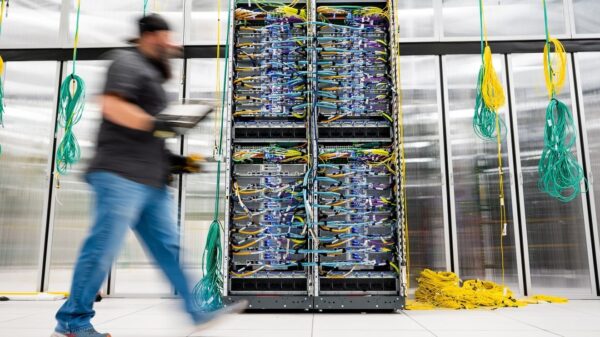
This transformation mirrors historical industrial transitions. In the Industrial Age, factories often required vast amounts of power and sometimes built their own plants. Over time, centralized utilities emerged to supply power more efficiently. Today, large tech firms like Google and Amazon are constructing extensive data centers filled with specialized silicon, optimized networks, and cooling systems to meet their colossal computing demands. Once these internal “compute plants” are established, selling excess capacity becomes a logical next step.
Looking at the Google and Meta partnership through this lens, it is evident that we are witnessing a significant evolution in economic infrastructure. The output of AI infrastructure is not merely software or physical goods, but rather intelligence itself. As companies tap into AI infrastructure, they may find themselves connecting to a global network capable of producing intelligence on demand.
This shift also poses questions for traditional semiconductor companies. If infrastructure providers begin to dominate AI computing by designing their own chips and offering compute as a service, the traditional hardware business model is poised for disruption. Companies like Nvidia and AMD have historically thrived by selling powerful accelerators. However, as hyperscalers build their own silicon and operate compute utilities, the balance of power in the industry may shift significantly.
In the end, the Google/Meta agreement provides a glimpse into the next infrastructure layer of the digital economy. As intelligence is increasingly recognized as a utility, it will likely attract investments similar to those supporting traditional infrastructure. In this emerging Data Economy, intelligence might just become the most valuable utility of all.
See also Nebius Group Secures $24.4B in Deals with Microsoft, Meta, and Nvidia—Is It a 2026 Buy?
 Nebius Secures $27B AI Infrastructure Deal with Meta, Boosting Stock by 14%
 Parents Demand Stricter AI Safeguards in Schools, Survey Reveals 86% Support Warnings
 Mistral AI Launches Leanstral: Open-Source Proof Verification for Efficient AI Coding
 Amazon and NVIDIA Collaborate to Launch AI-Powered In-Car Assistants for Automakers